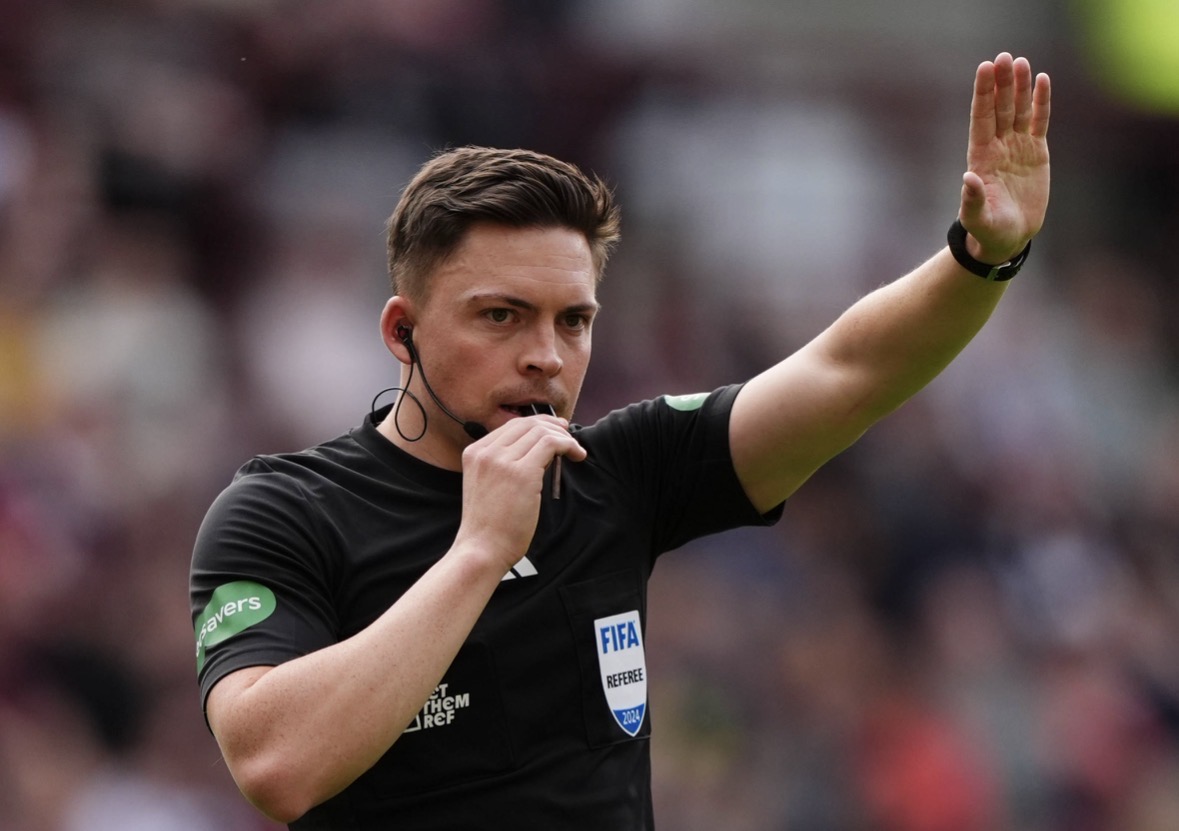
Hearts Call for Referee Removal as VAR Claims Ignite Fresh Scottish Premiership Controversy
The Scottish Premiership title race has taken yet another dramatic twist, with Heart of Midlothian FC reportedly pushing for the removal of referee Mathew McDermid from their crucial final fixture of the season. The move comes amid explosive claims from a so-called “VAR insider” alleging questionable interactions between match officials and Rangers FC.
the mere suggestion has sent shockwaves through Scottish football. In a season already defined by razor-thin margins, controversial decisions, and mounting pressure, this latest development has raised serious questions about refereeing standards, transparency, and the integrity of the title race.
This is not just about one match official. It is about trust in the system, credibility of officiating, and the fragile balance of fairness in one of Europe’s most emotionally charged leagues.
Timeline of Events: From Title Dream to Officiating Storm
Hearts’ remarkable campaign has been one of the standout stories of the Scottish season. As recently as last week, they were firmly in control of their destiny, pushing to break the dominance of the Old Firm.
However, recent results have tightened the race significantly. A tense 2-2 draw, combined with a strong run from Rangers, has left the gap at the top dangerously narrow.
At the same time, scrutiny of refereeing decisions has intensified. Across multiple fixtures this season, clubs—including Rangers themselves—have publicly criticised officiating standards. In fact, Rangers formally called for discussions with other Premiership clubs regarding refereeing consistency earlier this year.
This context is crucial. Complaints about referees are not new in Scotland. But what makes this situation different is the timing—and the severity of the claims now emerging.
According to circulating reports, a VAR insider has suggested that meetings involving referees and club representatives may have taken place. While such claims remain unverified, they have fuelled suspicion among supporters and intensified pressure on governing bodies.
The Referee at the Centre: Why McDermid Is Under Scrutiny
The focus on Mathew McDermid stems from a series of controversial decisions in recent matches involving title contenders. Although not all incidents have been formally reviewed, fan discourse and media coverage have placed his performances under the microscope.
Scottish football has a long history of contentious officiating moments. Independent reviews in recent seasons have even found that some key decisions—ranging from penalties to red cards—were incorrect.
In such an environment, even the perception of bias can be damaging.
For Hearts, the stakes could not be higher. A single decision in their final game could determine whether they secure a historic title or fall short at the final hurdle. Their reported request for a referee change, therefore, reflects both competitive anxiety and a broader concern about fairness.
VAR: A System Under Fire
The introduction of Video Assistant Referee (VAR) technology was supposed to reduce controversy. Instead, in Scotland, it has arguably amplified it.
Several managers and clubs have openly criticised the system. St Mirren boss Stephen Robinson famously described VAR as “not fit for purpose” following a string of contentious calls.
The problem is not just the decisions themselves, but the lack of transparency. Fans often do not hear the communication between officials, leading to confusion and mistrust.
In high-stakes matches involving clubs like Hearts, Rangers, and Celtic, every VAR intervention is dissected. When decisions appear inconsistent—or poorly explained—it creates fertile ground for conspiracy theories.
Rangers’ Role in the Narrative
It is important to separate fact from speculation.
There is documented evidence that Rangers have engaged in discussions about refereeing standards. The club has previously expressed frustration and sought dialogue with officials to improve consistency.
However, there is no verified evidence of any improper meetings aimed at influencing referees.
That distinction matters.
In modern football, clubs frequently meet with governing bodies to discuss officiating concerns. These meetings are part of standard governance, not evidence of wrongdoing. But when combined with controversial decisions and high-pressure title races, such interactions can easily be misinterpreted.
Tactical Context: Why This Matters on the Pitch
From a footballing perspective, Hearts’ situation is precarious.
Their success this season has been built on structure, discipline, and efficient attacking play—often centred around key figures like Lawrence Shankland. But as the title race tightens, psychological pressure becomes just as important as tactical execution.
If players feel that officiating decisions may go against them, it can subtly influence their behaviour:
- Defenders may hesitate in challenges
- Attackers may lose confidence in marginal calls
- Teams may become more cautious overall
In contrast, Rangers—experienced in title run-ins—are often better equipped to handle external noise. That experience could prove decisive in the closing stages.
Fan Reactions: Scotland Meets Nigeria
The reaction from fans has been explosive.
In Scotland, social media has been flooded with debates over refereeing integrity. Some Hearts supporters believe their club is being unfairly treated, while others urge caution, warning against unproven accusations.
Among Rangers fans, the response has been equally strong—many rejecting the claims outright and pointing to their own history of controversial decisions going against them.
Interestingly, the debate has also resonated with Nigerian football fans. Given Nigeria’s passionate following of European football, discussions around fairness, officiating, and VAR have found a global audience.
Nigerian fans, in particular, have drawn parallels with officiating controversies in domestic competitions, highlighting how trust in referees is a universal issue in football.
The Bigger Picture: Governance and Credibility
At the heart of this controversy lies a fundamental question: Can fans trust the system?
Scottish football authorities now face a delicate balancing act. On one hand, they must protect referees from unfounded accusations. On the other, they must ensure transparency and accountability.
Historically, disputes over refereeing have even led to extreme outcomes, including tensions that contributed to referee strikes and widespread criticism of governance structures.
If the current situation is not handled carefully, it risks undermining confidence in the league at a critical moment.
What Happens Next?
Several outcomes are possible:
- Hearts’ Request Is Denied
This would likely escalate tensions and increase scrutiny on the match itself. - A Referee Change Is Approved
While this might calm immediate concerns, it could set a precedent for future disputes. - Official Investigation Launched
If governing bodies address the VAR claims directly, it could restore some confidence—provided the process is transparent.
Regardless of the outcome, the final matches of the season will be played under intense scrutiny.
Conclusion
The Scottish Premiership title race was always going to be dramatic. But few could have predicted that it would be overshadowed by such a significant refereeing controversy.
For Heart of Midlothian FC, the focus remains on achieving a historic triumph. For Rangers FC, it is about capitalising on any slip and asserting their dominance.
Yet beyond the battle on the pitch, this situation highlights deeper issues within the game—issues of trust, transparency, and the human element of officiating.
Whether the claims prove baseless or lead to further revelations, one thing is certain: the spotlight on Scottish football has never been brighter.
And as the season reaches its climax, every whistle, every VAR check, and every decision will carry weight—not just for the title, but for the credibility of the game itself.










Post Comment