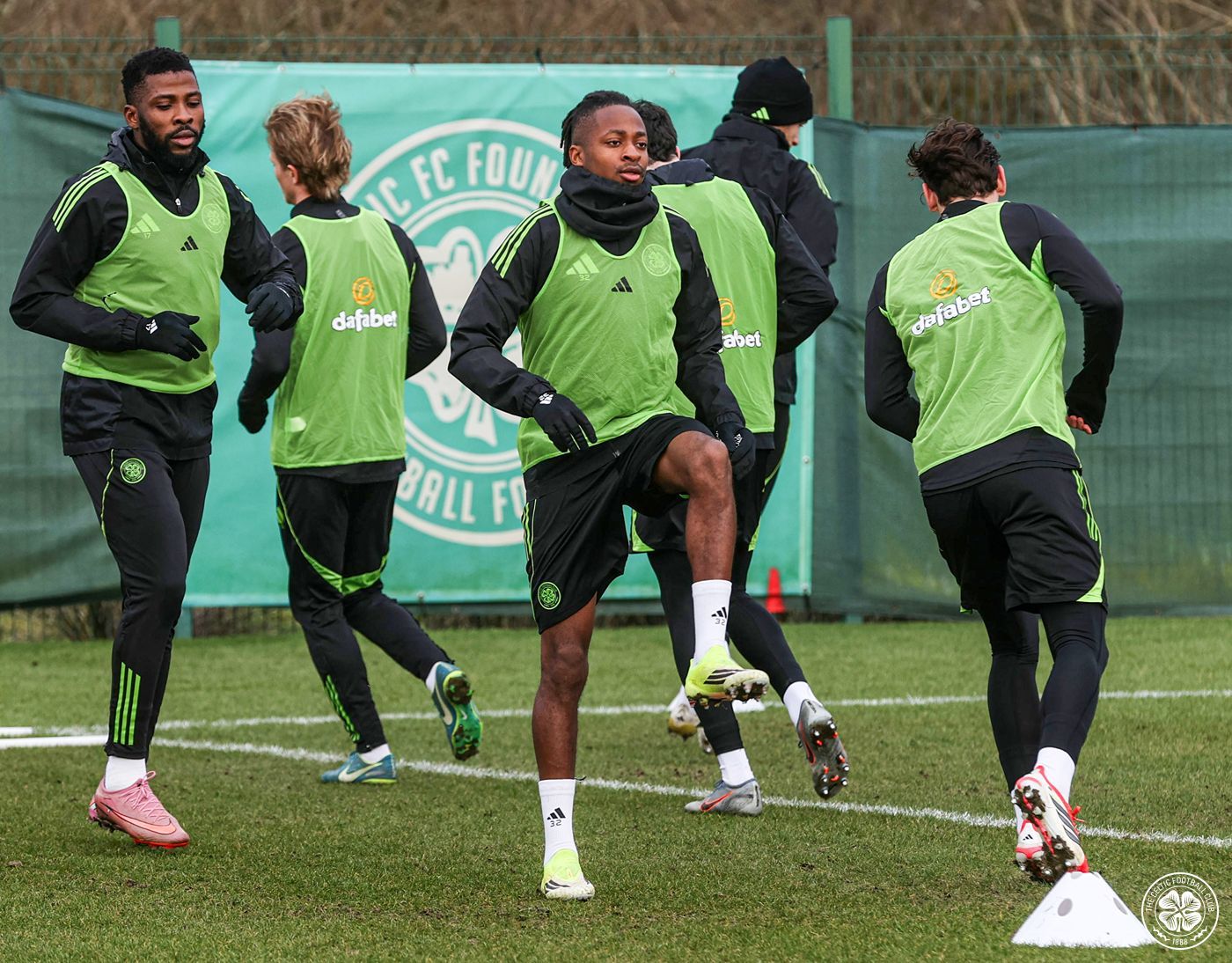
Celtic star leaves training early after talks with manager Martin O’Neill
Tensions have reportedly flared at Celtic ahead of their upcoming fixture against St Mirren, after a first-team player was sent home from training following a heated exchange with manager Martin O’Neill.
The incident, which is said to have taken place during a high-intensity training session at the club’s Lennoxtown base, has sparked widespread discussion among supporters, although sources stress the matter is being handled internally and is not expected to derail preparations for the weekend match.
The player involved has not been publicly identified, and neither has the club confirmed any disciplinary action beyond acknowledging an “internal matter.”
Despite the headline-grabbing nature of the reports, insiders suggest the situation is more reflective of the competitive environment within the squad rather than a long-term breakdown in relations.
Heated exchange during preparation for St Mirren clash
The alleged confrontation is understood to have occurred during tactical drills focused on Celtic’s approach for their upcoming Scottish Premiership fixture against St Mirren F.C..
Training sessions in the build-up to league matches are often intense, with managers demanding sharp execution of tactical instructions and full concentration from players. According to sources close to the club, it was during one such drill that disagreement arose between the player and O’Neill over positioning and decision-making in a structured phase of play.
The discussion reportedly escalated quickly, with both parties expressing frustration over what was perceived as a breakdown in communication. Coaching staff stepped in shortly afterwards, and the decision was taken for the player to leave training early.
While such incidents can sometimes appear dramatic from the outside, those familiar with elite football environments say they are not uncommon when stakes are high and competition for places is strong.
Decision to send player home
The decision to remove the player from the remainder of the session is understood to have been made as a precautionary measure rather than a punitive one. Club staff reportedly wanted to prevent the situation from escalating further and allow emotions to settle away from the training ground.
Sources indicate that the player complied without resistance and left the facility shortly after the exchange. There is no suggestion at this stage that the incident will lead to formal disciplinary measures or long-term consequences.
Within the club, the emphasis is said to be on maintaining focus ahead of a busy schedule rather than allowing a single training-ground disagreement to become a distraction.
Club stance: internal matter only
Celtic F.C. have not issued a detailed public statement, but the club is believed to be treating the matter as a routine internal issue that has been dealt with behind closed doors.
It is understood that senior figures within the coaching staff were quick to de-escalate the situation, with informal discussions taking place shortly after training concluded. The club’s internal message is reportedly that training-ground tensions occasionally arise in high-performance environments and do not necessarily reflect wider problems within the squad.
Celtic’s leadership is said to be confident that preparations for the St Mirren match will continue without disruption.
Martin O’Neill’s demanding standards
Manager Martin O’Neill is widely recognised for his demanding coaching style and emphasis on discipline, structure, and tactical clarity.
Throughout his managerial career, O’Neill has built a reputation for setting high standards in training sessions, expecting players to fully commit to instructions and maintain intensity in every drill. While this approach has delivered success over many years, it can occasionally lead to friction, particularly when players interpret tactical demands differently in fast-moving scenarios.
Those familiar with his methods note that O’Neill values direct communication and is not hesitant to correct players when he feels standards are slipping. In most cases, such exchanges are considered part of the normal rhythm of elite football preparation rather than unusual occurrences.
In this instance, the disagreement is believed to have centred on specific tactical responsibilities within Celtic’s pressing structure and transitional play.
Player response and dressing room reaction
The player at the centre of the incident is understood to have been left frustrated by the exchange but did not escalate the situation further after being instructed to leave training.
Teammates reportedly remained focused on the session, with senior squad members helping to maintain calm and continuity during the remainder of training. There is no indication of wider unrest within the dressing room, and the general mood is said to remain professional and forward-looking.
Those close to the squad describe the group as competitive but united, with internal standards remaining high as players continue to compete for starting positions.
In environments such as Celtic’s, where expectations are consistently high, brief moments of tension can occur, particularly during tactical refinement phases leading into important fixtures.
No expected impact on St Mirren match preparations
Despite the attention surrounding the incident, there is no suggestion that it will affect Celtic’s preparations for their upcoming match against St Mirren F.C..
Training is expected to resume as normal, with focus shifting quickly back to tactical planning and match readiness. The player involved is also expected to return to the squad environment once internal discussions have taken place and the situation has cooled.
Club staff are said to be confident that the matter will not influence team selection or performance, and that the squad remains fully focused on maintaining momentum in the league campaign.
Managing pressure in elite football
Incidents of this nature are not unusual in professional football, particularly in clubs where competition for places is intense and tactical demands are constantly evolving.
Managers often push players to operate at the highest level of precision, while players themselves are under pressure to secure or maintain starting roles. In such environments, emotions can occasionally run high, especially during detailed tactical sessions.
Football analysts frequently note that these moments, while sometimes reported dramatically, are often resolved quickly and do not indicate deeper structural problems within a squad.
The key factor is how quickly communication is restored and normal training standards are resumed. In this case, all indications suggest the situation has already been contained internally.
Focus shifts back to football
As attention briefly turns away from the training ground incident, Celtic’s focus remains firmly on the pitch and the challenges ahead. The club continues to compete in a demanding fixture schedule, where consistency and squad depth are essential.
Supporters will be eager to see how the team responds in their upcoming match, but internally the message is clear: one training-ground disagreement is not expected to define the broader trajectory of the season.
With experienced leadership in place and a strong competitive culture, Celtic will be aiming to move forward quickly and ensure that preparations for the St Mirren clash remain unaffected.
Conclusion
What has been described as a “furious bust-up” between a Celtic player and manager Martin O’Neill has resulted in the player being sent home from training ahead of the match against St Mirren F.C..
However, despite the dramatic framing of the incident, all indications suggest it is being treated internally as a contained disagreement within a high-pressure training environment rather than a sign of deeper unrest.
With Celtic F.C. continuing preparations as normal, attention is expected to quickly return to football matters, where performance on the pitch remains the ultimate priority.








Post Comment