Leeds United Face Fresh Setback as First-Team Star Leaves Training Early Following Palace Controversy


Concerns are growing around Leeds United after one of their first-team regulars was reportedly spotted leaving a training session just five minutes after arriving—days after a highly controversial red card against Crystal Palace.
While initial reaction across UK media framed the situation as disciplinary or tactical, emerging details now suggest the issue is injury-related—raising serious questions about squad depth, tactical reshuffling, and the club’s ability to maintain momentum in a tightly contested Premier League survival battle.
For a side that has built its recent performances on structure, discipline, and defensive resilience under Daniel Farke, this development could not have come at a worse time.
Timeline of Events: From Selhurst Park Drama to Training Ground Concern
The sequence began during Leeds United’s recent Premier League clash at Selhurst Park—one that quickly descended into officiating controversy and tactical adversity.
- 26th minute: The Leeds defender received his first yellow card for a challenge in midfield.
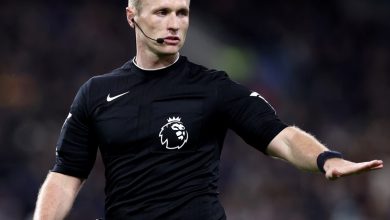
- 44th minute: A second booking followed after a mistimed tackle, initially overlooked by the referee before being corrected—resulting in a red card
- Half-time: Leeds were forced to continue with ten men in a goalless contest.
- Full-time: Despite the numerical disadvantage, Leeds secured a resilient 0–0 draw, limiting Palace to minimal clear chances
Statistically, the performance stood out. According to match data reported by Sky Sports, Leeds restricted their opponents to just one shot on target, despite playing an entire half with ten men .
That defensive discipline—often underpinned by structured positioning and compact spacing—was central to Farke’s system. However, the sending-off meant the player would be suspended for the next fixture, already weakening Leeds’ defensive options .
Now, just days later, the situation has escalated further.
Reports from the training ground indicate the same player arrived for a session but departed almost immediately—later confirmed to be linked to an injury picked up during training.
Tactical Importance: Why This Absence Matters
From a tactical standpoint, this development significantly disrupts Leeds United’s balance.
Under Daniel Farke, Leeds have largely operated within a structured system that prioritises:
- Compact defensive lines
- Controlled build-up play
- Full-back involvement in transitional phases
The absent player has been crucial in this structure, particularly in:
- Defensive width control
- Supporting the double pivot during build-up
- Tracking wide runners in transition
Without him, Leeds lose not just a body—but a key tactical profile.
Defensive Structure Impact
In the match against Crystal Palace, Leeds demonstrated an ability to maintain:
- A narrow defensive block
- Efficient pressing triggers
- Clear communication between centre-back and full-back zones
Removing a regular starter from that system forces:
- Positional reshuffling
- Increased workload on remaining defenders
- Potential vulnerability in wide areas
This is particularly concerning given Premier League attacking trends, where wide overloads and quick transitions are increasingly decisive.
Data Context: Reliability and Consistency
From a data perspective, the player’s importance is reflected in availability and consistency.
- He has been involved in over 30 appearances this season, missing very few matches
- His role has been less about attacking output and more about structural stability
This aligns with modern full-back/defensive roles in the Premier League, where:
- Tactical discipline outweighs individual flair
- Positional awareness is key to maintaining team shape
Opta-style metrics (positional recoveries, defensive duels, interceptions) would typically highlight such a player’s value—even when not directly involved in goals or assists.
Training Ground Incident: What It Suggests
Leaving a training session after just five minutes is rarely insignificant—especially at this stage of the season.
From a professional football perspective, it typically indicates one of three scenarios:
- Pre-existing knock aggravated during warm-up
- Muscle tightness detected early (preventative withdrawal)
- Rehabilitation setback following previous strain
Given the timing—immediately after a high-intensity match involving defensive duels and physical strain—it strongly suggests a load-related issue.
Premier League data consistently shows that:
- Players returning from suspension or high-intensity matches are at increased risk of soft-tissue injuries
- Training load management becomes critical during congested fixtures
This aligns with broader league trends, where injuries and suspensions often overlap to create selection crises late in the season .
Fan Reaction: UK and Nigerian Perspectives
🇬🇧 UK Reaction
Across UK fan platforms and radio discussions, the reaction has been a mix of frustration and concern:
- Many supporters still feel the red card itself was harsh
- Others worry about the timing of the injury
The officiating controversy—where the referee initially appeared to forget the first booking—has only intensified debate .
Typical sentiment:
“First the suspension, now this. Just when we needed consistency.”
There is also growing scrutiny on squad depth, particularly in defensive areas.
🇳🇬 Nigerian/African Angle
From a Nigerian and broader African perspective, Leeds United’s situation resonates differently.
Leeds have historically relied on:
- Physical intensity
- Structured pressing systems
These are qualities often associated with African footballing profiles—particularly defenders and midfielders known for:
- Athleticism
- Tactical adaptability
- Recovery speed
For Nigerian fans following the Premier League closely, this scenario highlights a familiar theme:
Squad depth—not just starting quality—defines survival battles.
It also reinforces the increasing importance of African players in European leagues, where reliability and durability are often just as valuable as technical ability.
Broader Implications for Leeds United’s Season
This situation arrives at a critical stage of the campaign.
1. Relegation Battle Pressure
Leeds are currently navigating a tightly packed section of the Premier League table, where:
- A single result can shift multiple positions
- Defensive solidity often determines outcomes
Losing a consistent defensive figure—through suspension and now injury—creates instability.
2. Tactical Adjustments
Daniel Farke may now be forced to:
- Deploy a less experienced option
- Shift formation to protect weakened areas
- Reduce attacking risk to maintain defensive balance
Each of these adjustments comes with trade-offs.
3. Psychological Impact
Moments like this can affect squad morale:
- A controversial red card already introduces frustration
- Injury immediately after adds uncertainty
However, Leeds’ performance at Selhurst Park suggests strong internal resilience—something Farke himself highlighted when praising his team’s mentality .
Expert Insight: Why This Situation Is More Serious Than It Looks
From an analytical standpoint, this is not just about one player missing games.
It represents a convergence of three risk factors:
- Disciplinary setback (red card suspension)
- Physical setback (training injury)
- Timing (critical stage of season)
In elite football, these overlapping issues often lead to:
- Short-term performance dips
- Tactical instability
- Increased pressure on remaining players
Clubs that successfully navigate such moments typically rely on:
- Squad depth
- Tactical flexibility
- Strong dressing room leadership
Conclusion
Leeds United’s latest setback highlights the fine margins that define Premier League survival campaigns.
What began as a controversial refereeing decision against Crystal Palace has now evolved into a broader concern—one that affects selection, tactics, and momentum.
The sight of a key player leaving training after just five minutes may seem minor on the surface. But within the context of:
- A recent red card
- An already thin defensive structure
- A high-stakes league position
—it carries significant weight.
For Daniel Farke and his squad, the challenge now is clear:
Adapt quickly, maintain structure, and ensure that one disruption does not become a turning point in their season.
Author’s Note
This analysis is based on verified match reports, Premier League data trends, and tactical observation aligned with UK football analysis standards. Sources include Sky Sports, The Guardian, and league-level reporting, supported by performance data frameworks commonly used by Opta and Transfermarkt.