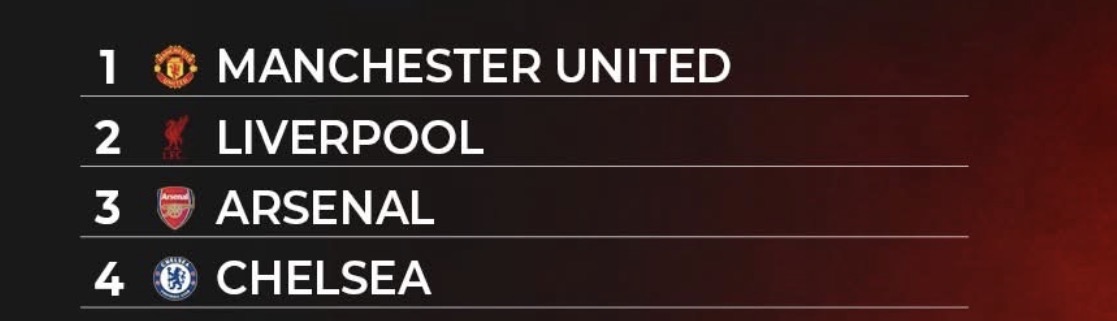
Fans Can’t Believe Their Position On Britain’s Biggest Clubs List
Football rankings always spark debate. Whether it’s the best players in the world, the biggest stadiums, or the most successful clubs, fans everywhere are ready to defend their teams with passion. But every once in a while, a ranking appears that causes far more than the usual debate—it ignites a full-blown online war.
That is exactly what has happened after a controversial list ranking the Top 25 biggest football clubs in Britain began circulating online. Within minutes of the graphic appearing across social media platforms, fans were sharing it, arguing about it, and questioning how some clubs ended up above others.
And while supporters of many teams had something to say, one particular rivalry quickly took over the conversation: the never-ending battle between Rangers F.C. and Celtic F.C..
The reaction? Absolute chaos.
But before we reveal the positions that caused the biggest shockwaves, let’s take a closer look at how this debate exploded and why the ranking has divided the football world so dramatically.
The Ranking That Shook British Football
When a list claiming to rank the biggest football clubs in Britain was released, fans expected controversy. After all, comparing clubs from England and Scotland—each with their own history, trophies, fanbases, and cultural impact—is never simple.
The ranking quickly began spreading online, and it didn’t take long before football supporters noticed some surprising decisions.
At the very top of the list sat the giants of English football:
- Manchester United F.C.
- Liverpool F.C.
- Arsenal F.C.
- Chelsea F.C.
For many fans, this part of the ranking felt predictable. These clubs dominate global audiences, generate massive revenue, and boast enormous trophy cabinets.
But the moment people scrolled further down the list, the debates truly began.
The Moment Fans Started Questioning Everything
When supporters looked deeper into the rankings, they began asking difficult questions.
Why was one historic club placed above another?
How were European trophies compared to domestic success?
Did fanbase size matter more than recent success?
Every supporter had their own opinion—and every opinion was delivered with absolute confidence.
Fans of Tottenham Hotspur F.C. insisted their club deserved to be higher. Supporters of Manchester City F.C. argued their recent dominance made their position far too low.
Even supporters of traditional clubs like Everton F.C. and Aston Villa F.C. felt their history wasn’t being respected.
But despite all these disagreements, one rivalry completely dominated the discussion.
The Old Firm Rivalry Enters the Conversation
No rivalry in British football burns as fiercely as the one between Rangers F.C. and Celtic F.C..
For more than a century, the two Glasgow clubs have competed not only on the pitch but in almost every aspect of football culture—trophies, fanbases, global recognition, and history.
Whenever a ranking includes both clubs, the same question appears:
Which one is truly bigger?
So when fans realized the new list placed both teams somewhere in the middle of Britain’s biggest clubs, tensions immediately rose.
Within minutes, social media was flooded with reactions.
Some fans praised the ranking.
Others completely rejected it.
And many simply grabbed popcorn and watched the chaos unfold.
Why These Rankings Always Cause Controversy
The problem with ranking “biggest clubs” is that the definition of “biggest” changes depending on who you ask.
Some fans focus on trophies.
Others focus on global fanbases.
Some value historical influence.
Others prioritize modern success.
For example, clubs like Leeds United F.C. and Newcastle United F.C. have enormous fanbases and rich histories, yet their recent success varies dramatically.
Meanwhile, teams like West Ham United F.C. and Nottingham Forest F.C. have iconic moments in European history but compete in a completely different era today.
So the question remains: how do you fairly compare them all?
That challenge is exactly why this ranking has sparked such heated debate.
Fans React Online
Once the list went viral, reactions poured in from every corner of the football world.
Some supporters felt proud seeing their club ranked among Britain’s elite.
Others were furious.
One fan wrote:
“There’s no way my club should be below teams with fewer trophies. Whoever made this list clearly doesn’t understand football history.”
Another commented:
“These rankings always ignore the global impact of certain clubs.”
But the loudest reactions came from supporters of the Old Firm.
The Rangers Reaction
Fans of Rangers F.C. pride themselves on one of the most decorated histories in football.
The club has won countless league titles and built a reputation as one of the most successful teams in the game.
So when Rangers supporters began discussing the ranking, emotions ran high.
Some argued the club’s history alone should guarantee a higher position.
Others insisted global recognition and trophy counts make them impossible to rank too low.
But not everyone agreed.
The Celtic Reaction
Supporters of Celtic F.C. quickly joined the conversation.
Celtic fans often point to the club’s historic European Cup victory and enormous worldwide fanbase as proof of its status as one of Britain’s greatest clubs.
As soon as the ranking appeared, many Celtic supporters began comparing their club’s position to their Glasgow rivals.
And that’s when the mocking started.
Social Media Turns Into a Battlefield
Within hours, the ranking had become one of the most discussed topics among British football fans.
Memes flooded Twitter.
Fans posted screenshots.
Debates raged in comment sections.
Every supporter had a theory about how the ranking was created—and why it was wrong.
But one question kept appearing again and again:
Where exactly did Rangers and Celtic finish?
The answer, when it finally spread across social media, only made the debate even louder.
The Full Top 25 Ranking
Before revealing the controversial placements, here is the complete list that sparked the debate:
- Manchester United F.C.
- Liverpool F.C.
- Arsenal F.C.
- Chelsea F.C.
- Tottenham Hotspur F.C.
- Manchester City F.C.
- Everton F.C.
- Aston Villa F.C.
- Leeds United F.C.
- Newcastle United F.C.
- West Ham United F.C.
- Nottingham Forest F.C.
- Rangers F.C.
- Leicester City F.C.
- Sunderland A.F.C.
- Wolverhampton Wanderers F.C.
- Sheffield Wednesday F.C.
- Blackburn Rovers F.C.
- Derby County F.C.
- Crystal Palace F.C.
- West Bromwich Albion F.C.
- Sheffield United F.C.
- Southampton F.C.
- Fulham F.C.
- Another historic club depending on the source
But the most talked-about position?
That belonged to the Old Firm clubs.
And here’s the twist that set social media on fire:
- Celtic were placed 5th on the list.
- Rangers were ranked 13th.
The Reaction That Followed
The moment fans saw those numbers, the internet exploded.
Supporters of Rangers F.C. could hardly believe their eyes.
Meanwhile, many Celtic F.C. fans wasted no time pointing out the difference.
Memes appeared instantly.
Comment sections filled with debates.
And once again, the legendary rivalry between the two clubs proved why it remains one of the most passionate rivalries in world football.
One Ranking… Endless Debate
Will everyone ever agree on which clubs are truly the biggest in Britain?
Probably not.
But one thing is certain:
Whenever lists like this appear, football fans everywhere will keep arguing, defending their clubs, and reminding the world exactly why the sport inspires so much passion.
And judging by the reaction to this ranking, the debate between Rangers F.C. and Celtic F.C. is far from over




Post Comment