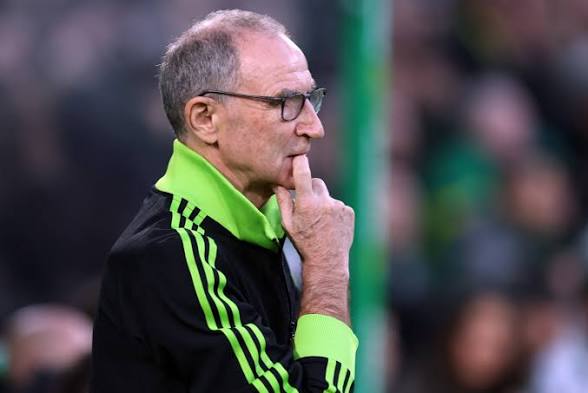
Celtic’s search for direction has taken an unexpected turn in the immediate aftermath of their damaging defeat to Dundee FC, with a surprise managerial candidate now reportedly close to being appointed at Celtic FC. The result has not only intensified scrutiny on the current coaching structure but also accelerated discussions behind the scenes, as the club weighs a bold shift in leadership at a crucial stage of the season.
For a club of Celtic’s stature—defined by domestic dominance and European ambition—such a move carries significant weight. Yet the timing, coming directly after a disappointing performance, suggests urgency rather than long-term planning has begun to dictate decisions.
Match timeline and key moments
Celtic’s defeat to Dundee was not merely a poor result—it exposed structural weaknesses that have been gradually surfacing.
Key moments:
18th minute: Dundee capitalised on a defensive lapse, breaking through Celtic’s high line with a direct ball over the top. The finish was composed, highlighting Celtic’s vulnerability in transition.
34th minute: Celtic responded with sustained possession (finishing the half with over 65%), but struggled to create clear-cut chances. Their expected goals (xG) remained under 0.6 by half-time—an indicator of sterile dominance.
52nd minute: A second Dundee goal followed from a set-piece, where Celtic failed to track runners inside the box—an issue that has persisted in recent weeks.
Late stages: Despite introducing attacking substitutions, Celtic relied heavily on crosses and speculative efforts, ending the match with over 15 attempts but only 3 on target.
Statistical snapshot:
Possession: Celtic 68% – Dundee 32%
Shots: Celtic 16 – Dundee 7
Shots on target: Celtic 3 – Dundee 4
xG: Celtic ~1.1 – Dundee ~1.5
The numbers underline a recurring theme: Celtic dominate the ball but lack efficiency in both boxes.
Tactical analysis: why the system is under scrutiny
The defeat has reignited debate around Celtic’s tactical identity. In recent months, their approach has leaned heavily on positional play, with full-backs inverting into midfield and wingers holding width. While this structure can overwhelm lesser opposition, it has also created vulnerabilities.
1. High defensive line exposed
Celtic’s aggressive defensive positioning leaves space in behind—something Dundee exploited repeatedly. Without sufficient pressure on the ball carrier, the backline becomes exposed to direct passes.
2. Predictability in attack
Opponents have begun to anticipate Celtic’s patterns:
Wide progression followed by crosses
Limited central penetration
Over-reliance on individual moments rather than structured chance creation
This predictability reduces the effectiveness of their possession dominance.
3. Midfield imbalance
The inversion of full-backs often crowds central areas without adding creativity. Instead of unlocking defences, it slows circulation and allows opponents to maintain compact shapes.
The managerial situation: why a surprise name is emerging
In the wake of this defeat, Celtic’s hierarchy appears to be considering a managerial change that deviates from conventional expectations. Rather than pursuing a high-profile, established name, reports suggest the club is leaning towards a less obvious candidate—someone viewed as tactically progressive but relatively untested at the highest level.
This approach reflects a broader trend in modern football, where clubs prioritise:
Tactical innovation over reputation
Data-driven coaching methods
Long-term squad development
However, for a club like Celtic, this represents a calculated risk. The expectation to win immediately—especially in the Scottish Premiership—leaves little margin for experimentation.
Fan reactions: frustration, division, and cautious curiosity
UK fan sentiment
Among supporters in Glasgow and across the UK, the reaction has been mixed but largely sceptical. Many fans see the potential appointment as a gamble at a time when stability is needed.
Common themes emerging from supporter discussions:
Concern over lack of top-level experience
Frustration with recent performances rather than just results
Doubts about whether a “project manager” suits Celtic’s immediate demands
One widely shared sentiment is that Celtic should prioritise proven leadership, particularly with European ambitions still in focus.
Nigerian fan perspective
Celtic’s following in Nigeria—though smaller compared to Premier League clubs—remains engaged, particularly among fans who track African players in European leagues.
From a Nigerian viewpoint:
There is intrigue around fresh tactical ideas, especially given the success of progressive coaches globally
However, there is also caution—Nigerian fans often value managerial authority and experience, especially in high-pressure environments
The debate mirrors conversations seen around clubs like Rangers FC and even Premier League sides, where managerial appointments increasingly balance innovation with immediate results.
Broader implications for Celtic’s season
1. Title race pressure
While Celtic remain competitive domestically, any instability in management could open the door for rivals. Momentum is crucial in the latter stages of the season, and uncertainty at the top often translates to inconsistency on the pitch.
2. European ambitions
Celtic’s long-term objective is to re-establish credibility in European competitions. A managerial shift towards a more progressive style could aid this ambition—but only if given time, which is rarely afforded at the club.
3. Squad development
A new manager, particularly one with a distinct tactical philosophy, could reshape:
Player roles
Transfer priorities
Youth integration
This may benefit emerging talents but could also disrupt established players accustomed to the current system.
Historical context: Celtic and managerial risk
Celtic’s history shows a mix of conservative and bold managerial decisions. Periods of dominance have often coincided with stability, while transitional phases have brought experimentation.
The potential appointment of an unconventional candidate echoes past moments where the club sought to modernise its approach. However, the success of such moves has depended heavily on:
Boardroom alignment
Fan patience
Early results to build confidence
Conclusion: a defining moment for Celtic’s direction
Celtic now stand at a crossroads. The defeat to Dundee has not only exposed tactical shortcomings but also accelerated a decision that could define the club’s immediate future.
Opting for a surprise managerial appointment signals a willingness to evolve—but also introduces uncertainty at a critical juncture. The balance between innovation and expectation will be key. If the incoming manager can quickly address defensive vulnerabilities while refining attacking structure, the gamble may pay off.
However, failure to stabilise performances could see pressure intensify rapidly, particularly in an environment where success is not just desired but demanded.
For now, all eyes remain on Celtic’s next move—one that could reshape both their season and their longer-term identity.