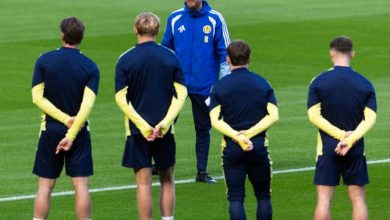
SCOTLAND STAR ANNOUNCES SHOCK RETIREMENT AHEAD OF SWITZERLAND CLASH AS SEBASTIEN POCONOLI SENDS FAREWELL MESSAGE


Scotland entered their latest international campaign with a significant change between the posts after veteran goalkeeper Craig Gordon brought his remarkable playing career to an end.
Gordon’s retirement represented the conclusion of one of the longest and most memorable goalkeeping careers in modern Scottish football. The 43-year-old had remained involved at the highest level deep into his career and was part of Scotland’s 2026 World Cup squad before deciding that the time had come to step away from the game. His departure subsequently became one of the major changes facing the national team as a new era began under Sébastien Pocognoli.
The timing made the transition particularly significant. Scotland were not simply replacing an experienced goalkeeper; they were entering an entirely new managerial period following Steve Clarke’s departure and the appointment of Pocognoli as his successor.
Pocognoli was appointed Scotland head coach in August 2026 on an initial two-year contract. The 39-year-old Belgian arrived with the task of building a new-look national team and introducing his own footballing philosophy.
That meant Gordon’s retirement became part of a much broader transformation.
A CAREER THAT SPANNED GENERATIONS
Gordon’s international career was remarkable for its longevity.
The goalkeeper earned 84 Scotland caps, placing him among the country’s most experienced international players. His career included multiple different generations of Scottish footballers, several managers and major tournaments.
His experience was especially valuable because goalkeeping is a position where international continuity can be difficult to establish. Scotland had already experienced uncertainty over the position during the latter stages of Clarke’s reign, and Gordon’s departure created another major selection question for Pocognoli.
Gordon had also demonstrated extraordinary resilience throughout his career. Injuries had interrupted different stages of his playing life, but he repeatedly returned to professional football and eventually regained his place among Scotland’s international options.
His presence at the 2026 World Cup therefore represented another chapter in a career that had already lasted for many years.
Following the tournament, however, Gordon decided to retire, meaning Pocognoli inherited a Scotland squad without one of its most experienced goalkeepers.
THE SCOTTISH FA’S TRIBUTE
The Scottish Football Association acknowledged Gordon’s contribution through a tribute titled “Thank You Craig” on its Scotland men’s national-team platform.
The tribute appeared on 16 July 2026, while Pocognoli’s appointment came later, on 16 August. That timeline is important because it means the farewell was associated with Gordon’s retirement and Scotland’s previous setup rather than being a personal farewell from Pocognoli at the moment Gordon announced his retirement.
Nevertheless, Gordon’s retirement remained highly relevant once Pocognoli took over.
The new manager immediately had to consider his goalkeeping options. Scotland’s squad for the Nations League included Angus Gunn, Scott Bain, Liam Kelly and Jon McCracken, with Gordon no longer available.
That created an opportunity for a new goalkeeper to establish himself as Pocognoli’s long-term No. 1.
POCOGNOLI’S NEW ERA BEGINS
Pocognoli’s arrival marked a significant change for Scotland.
The Belgian coach had previously managed Union Saint-Gilloise and Monaco and arrived in Scotland with a reputation for wanting his teams to play proactive football.
The Scottish FA described him as one of Europe’s emerging coaching talents when announcing his appointment. His first senior managerial season at Union Saint-Gilloise had brought the Belgian Pro League title, while the club also reached the Champions League group stage for the first time in its history.
Pocognoli’s first Scotland squad reflected his intention to make changes.
Seven uncapped players were included in his initial group, while only 14 members of Steve Clarke’s final World Cup squad were retained. The squad also included the return of Oli McBurnie and Billy Gilmour, alongside several younger players being given an opportunity at senior level.
The manager explained that he wanted to begin a new journey rather than simply continue the previous cycle.
That approach meant that Gordon’s retirement was not an isolated event. It was part of a wider process in which Scotland were attempting to refresh the squad while retaining enough experienced players to provide leadership.
THE FIRST TEST AGAINST SLOVENIA
Pocognoli’s first match in charge came against Slovenia in the Nations League.
Scotland were held to a 0-0 draw in Ljubljana, with the team showing two very different performances across the two halves.
The first half was difficult for Scotland, but the side improved considerably after the interval and created several opportunities. Oli McBurnie and Kieron Bowie were among the players to have chances, while Slovenia goalkeeper Jan Oblak produced important saves.
The result meant Pocognoli’s competitive debut ended without a victory, but it also gave him an early opportunity to assess his squad.
The manager highlighted the improvements he saw after half-time and pointed to the team’s attacking intent.
The challenge was then to take those positive elements into the next match.
That match was against Switzerland at Hampden Park.
SWITZERLAND PRESENTED A DIFFERENT CHALLENGE
The Switzerland match was particularly important because it was Pocognoli’s first game in charge at Scotland’s national stadium.
The Scottish FA confirmed that Switzerland had opened their Nations League campaign with a 3-0 victory over North Macedonia, meaning they arrived in Glasgow with confidence and three points already secured.
Scotland, meanwhile, had one point from their opening game after the goalless draw with Slovenia.
Pocognoli spoke before the match about the need for Scotland to turn their chances into goals. He said he was not concerned about the lack of scoring from the Slovenia match because he believed Scotland had capable strikers and could create opportunities in different ways.
The match therefore represented an early examination of whether Pocognoli’s ideas could translate into competitive results.
It also provided another reminder of the changes taking place within the Scotland squad.
THE GOALKEEPING QUESTION AFTER GORDON
Perhaps one of the biggest questions following Gordon’s retirement was who would take responsibility for Scotland’s goalkeeping position in the long term.
Angus Gunn had started Scotland’s three World Cup group matches and remained part of the squad under Pocognoli. Gunn had moved to San Jose Earthquakes during the summer after his Nottingham Forest contract expired and was playing regularly in Major League Soccer.
Scott Bain was another option after returning to the Scotland setup, while Jon McCracken was also included.
Liam Kelly remained another experienced option, although his club situation meant there were questions around regular playing time.
Gordon’s retirement therefore opened the door for one of the younger goalkeepers to potentially establish himself.
For Pocognoli, this was another part of the rebuilding process.
A NEW GENERATION TAKES ITS CHANCE
The changes were not limited to the goalkeeper position.
Pocognoli’s first squad included players such as Luis Binks, Colby Donovan, Josh McPake, Robbie Ure and Stephen Welsh, all of whom were handed senior opportunities.
The inclusion of younger players demonstrated that the new manager was prepared to look beyond the established names.
At the same time, experienced figures such as Andy Robertson, Kieran Tierney, John McGinn, Ryan Christie, Scott McKenna and others remained involved.
That balance was important.
Pocognoli spoke about the need to find the right mixture between experienced players and younger talent. The established members of the squad were expected to help pass on the culture of representing Scotland while the newcomers attempted to establish themselves.
Gordon’s retirement consequently removed one experienced voice from the dressing room, but the remaining senior players still had an important role to play.
THE SWITZERLAND MATCH ENDS IN DEFEAT
Scotland’s first home match under Pocognoli ultimately ended in disappointment.
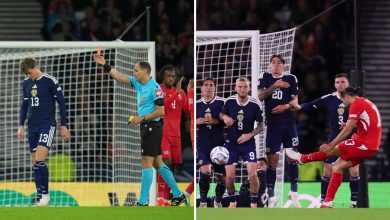
Switzerland won 3-0 at Hampden Park on 29 September 2026. Scotland’s task became significantly harder when Jack Hendry was shown a red card early in the match following a VAR review. Ricardo Rodríguez subsequently scored from the resulting free-kick.
Nico Elvedi added Switzerland’s second goal before Zeki Amdouni completed the scoring.
The defeat meant Pocognoli’s first two matches as Scotland manager produced a 0-0 draw against Slovenia followed by a 3-0 loss against Switzerland.
The result also highlighted how difficult the rebuilding process could be.
Scotland were forced to play with ten men for most of the match, limiting Pocognoli’s ability to fully implement his preferred approach.
WHY GORDON’S RETIREMENT STILL MATTERS
Even though Gordon retired before Pocognoli was appointed, his departure remains significant to the new manager’s project.
A goalkeeper with 84 international appearances cannot simply be replaced overnight.
Gordon’s experience at major tournaments, his understanding of international football and his long association with the Scotland setup represented qualities that the younger goalkeepers will now have to develop for themselves.
The responsibility has shifted to the next generation.
For Pocognoli, the objective is not necessarily to find another Craig Gordon immediately. Instead, the task is to identify the goalkeeper capable of becoming a reliable part of Scotland’s next cycle.
That process may involve competition between several players before a clear first choice emerges.
THE END OF ONE ERA AND THE START OF ANOTHER
Craig Gordon’s retirement therefore carries significance beyond the end of an individual career.
It represents the closing of a chapter for a Scotland team that has undergone substantial change during 2026.
Steve Clarke’s departure, Pocognoli’s appointment, the introduction of new players and the retirement of senior figures have all contributed to a major transition.
The Scottish FA’s tribute to Gordon acknowledged his contribution, while Pocognoli’s arrival has since placed responsibility for the next stage of Scotland’s development in new hands.
The Switzerland defeat has made that rebuilding process more difficult in the short term, but the new manager has repeatedly described his work as a process.
There are still several Nations League fixtures ahead, giving Pocognoli further opportunities to assess his squad and establish his preferred style.
WHAT COMES NEXT FOR SCOTLAND?
Scotland’s Nations League campaign continues with further fixtures against North Macedonia and Slovenia, while another meeting with Switzerland is scheduled later in the campaign.
The coming matches will provide opportunities for Pocognoli to continue experimenting with his squad.
The goalkeeper position will remain one of the areas to watch following Gordon’s retirement. Young players will also continue competing for places as the manager determines which members of his first squad can become regular international performers.
For the supporters, the transition may be accompanied by mixed emotions.
Gordon’s departure marks the end of a hugely experienced international career, while Pocognoli represents a new beginning.
The two stories are connected by timing, even though Pocognoli did not personally deliver Gordon’s original farewell message.
Scotland have moved from one era into another, and the challenge now is to build a team capable of establishing its own identity.
For Gordon, the international chapter is closed.
For Pocognoli, the real work has only just begun.
The retirement of one of Scotland’s most experienced goalkeepers has left a significant space to fill, while the arrival of a new manager has created an opportunity for a different generation of players to step forward.
The next stage of Scotland’s story will be defined by how successfully those players respond to that opportunity.