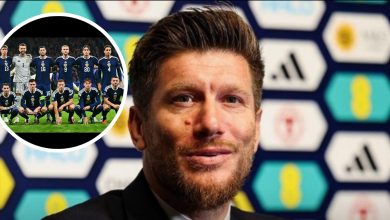
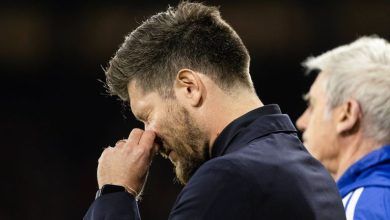
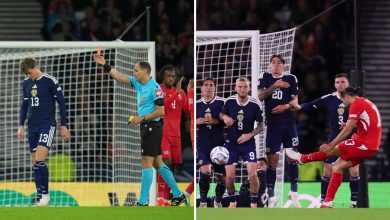
Dressing room meltdown: Scotland DUMP Andy Robertson as captain hours before Nations League clash after explosive row with new coach


In one of the most dramatic and unexpected upheavals in recent Scottish football history, Andy Robertson has been stripped of the Scotland captaincy just hours before a crucial UEFA Nations League fixture. The decision, confirmed by the Scottish Football Association late on Friday evening, followed an explosive dressing-room confrontation between the Liverpool and Tottenham-bound left-back and the newly appointed national team head coach. What began as a routine pre-match meeting reportedly escalated into a heated exchange that left the squad stunned and forced the SFA hierarchy into an emergency intervention.

Sources close to the camp describe a tense atmosphere at the team’s training base near Glasgow. The new coach, who had taken charge only weeks earlier following Steve Clarke’s post-World Cup resignation, had called a leadership meeting to outline tactical expectations and disciplinary standards for the upcoming Nations League campaign. According to multiple accounts from within the squad, Robertson, the long-serving captain and one of the most capped players in the current group, pushed back strongly against certain elements of the new regime’s approach. What started as a professional disagreement rapidly intensified. Voices were raised. Accusations flew. At one point, staff members intervening to separate the two men reportedly had to physically step between them.

Within hours, the SFA issued a terse statement: Andy Robertson would no longer serve as captain. The armband would pass on a temporary basis to a senior colleague, with a permanent decision to be reviewed after the international window. Robertson himself was said to be “deeply disappointed” but remained with the squad and available for selection. No further public comments were released by either the player or the coach before the team departed for the match venue.
Background: From Clarke’s Departure to a New Era
To understand the shockwaves this decision has sent through Scottish football, it is necessary to recall the context. Steve Clarke’s seven-year tenure ended in the immediate aftermath of Scotland’s group-stage exit from the 2026 World Cup. Clarke had guided the team to three successive major tournaments—an unprecedented achievement in the modern era—yet the side once again failed to progress beyond the group phase. His resignation, coming just weeks after he had signed a new four-year contract, left the SFA searching for a successor who could both honour the progress made and inject fresh ideas.
The new coach arrived with a reputation for discipline, high-intensity training methods, and a low tolerance for established hierarchies that might resist change. In early interviews he spoke of “raising standards,” “collective accountability,” and “moving beyond comfort zones.” Those phrases, initially welcomed by supporters hungry for a deeper tournament run, appear to have landed differently inside the dressing room. Robertson, who had served as Clarke’s captain throughout the latter years of that era and who had publicly praised his former manager in emotional terms after the World Cup, was the most visible embodiment of the previous regime’s continuity.
Players who had grown accustomed to Clarke’s more measured, relationship-driven style suddenly found themselves under a coach whose methods demanded rapid adaptation. Training sessions were reportedly longer and more physically demanding. Meetings were shorter and more direct. The leadership group was expected to enforce rather than merely represent the new culture. For a captain of Robertson’s stature—respected by teammates, admired by the Tartan Army, and still performing at a high level for a Premier League club—the transition was never going to be seamless.
The Flashpoint
Details of the precise argument remain closely guarded, but consistent elements have emerged from sources familiar with the events. The coach is said to have challenged the leadership group on what he perceived as lingering complacency after the World Cup disappointment. Specific references were allegedly made to individual performances, preparation habits, and the need for senior players to model absolute commitment to the new tactical system. Robertson, according to those present, responded by defending the squad’s efforts and questioning whether the coach fully understood the unique pressures of representing Scotland—balancing club demands, international ambition, and the intense scrutiny that comes with the national team.
The exchange escalated when the coach reportedly told Robertson that captaincy was not a right earned by longevity but a responsibility that had to be continually justified. Robertson is said to have replied that respect was a two-way street and that undermining established leaders risked fracturing the dressing room at the worst possible moment. Voices rose. At least one other senior player attempted to mediate. When the coach insisted that any player unwilling to fully buy into the new standards should consider their future involvement, the confrontation reached its peak. Staff intervened. The meeting was abruptly ended.
Within a short time, SFA officials were informed. After consultations that stretched into the evening, the decision was taken to remove Robertson from the captaincy with immediate effect. The official line emphasised the need for unity and a clear chain of command ahead of the Nations League match. Unofficially, the message was unmistakable: no individual, however decorated, stood above the new project.
Immediate Fallout and Squad Reaction
The news spread quickly through the squad. Younger players were reportedly shocked into silence. Senior figures who had shared the dressing room with Robertson for years expressed private concern that the episode risked creating lasting divisions. One source described the atmosphere as “like a bomb had gone off.” Another noted that while some players privately agreed that a stronger disciplinary edge was needed, the manner and timing of Robertson’s demotion left many uneasy.
Robertson himself is understood to have accepted the decision with professionalism, training as normal the following morning and making clear to teammates that he remained fully committed to the cause. Those who know him best point to his track record of leadership under pressure—both at club level during title-winning seasons and with Scotland through qualification campaigns and major tournaments—as evidence that he would prioritise the team over personal grievance. Yet the personal impact cannot be understated. Captaincy of one’s country is among the highest honours in the game. To lose it in such circumstances, hours before a competitive fixture, cuts deep.
The temporary captain, whose identity was confirmed only shortly before the squad announcement, faces an unenviable task: unifying a group still processing the events while delivering a performance worthy of the Tartan Army’s expectations. The new coach, for his part, faces an immediate test of authority. Success on the pitch would validate the hard line. Any sign of disarray would invite accusations that the confrontation had been mishandled.
Wider Implications for Scottish Football
This episode raises profound questions about leadership transitions in national teams. Long-serving captains often become institutional figures, their authority intertwined with the culture of the side. When a new coach arrives determined to reset that culture, friction is almost inevitable. The challenge lies in managing that friction without destroying the cohesion that previous success depended upon.
For Scotland, the stakes are particularly high. The Nations League offers both competitive matches and a pathway toward future qualification campaigns. Euro 2028, which Scotland will co-host, already looms on the horizon. A fractured dressing room would undermine the progress painstakingly built over the Clarke years. Conversely, if the new coach can channel the tension into sharper performances and clearer standards, the confrontation may ultimately be remembered as a necessary, if painful, turning point.
Supporters remain divided. Some view Robertson’s demotion as a decisive assertion of managerial authority and a signal that no player is bigger than the team. Others see it as a reckless gamble that risks alienating a player who has given everything for the national cause and who still possesses the quality and leadership to contribute for years. Social media has been flooded with competing narratives—praise for the coach’s ruthlessness on one side, calls for reconciliation on the other.
What is clear is that the episode has laid bare the tensions inherent in any changing of the guard. Continuity and change, respect and authority, individual status and collective ambition: these forces collide most dramatically in the pressure-cooker environment of international football. Scotland’s dressing room has just experienced that collision in the most public and painful way possible.
As the team prepares to take the field, the focus will inevitably shift to results. Yet the images and accounts of Friday’s meltdown will linger long after the final whistle. Andy Robertson’s Scotland career is far from over, but the chapter of his captaincy has closed in circumstances no one anticipated. The new coach has drawn a line. Whether that line leads to renewed purpose or prolonged discord remains the central question facing Scottish football in the weeks and months ahead.
The Tartan Army will watch closely, hoping that the wounds heal quickly and that the team can channel the intensity of the moment into performances worthy of the shirt. For now, the dressing room is quieter than usual, the hierarchy has been reset, and a proud captain finds himself without the armband he had worn with distinction. In the unforgiving world of elite football, even legends can find themselves on the wrong side of a new beginning.