SCOTLAND WEBSITE CRASHES HOURS AFTER UEFA NATIONS LEAGUE OPENER AS SÉBASTIEN POCNOGOLI DROPS TWO FAN FAVOURITES

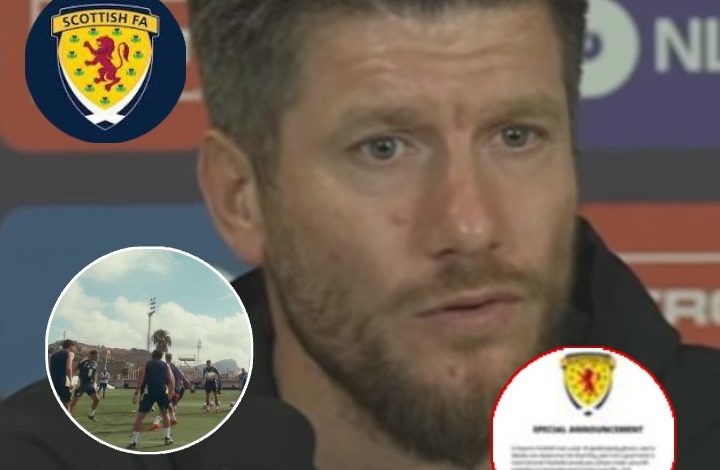
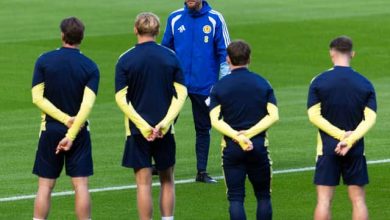
Scotland have entered a new international era under Sébastien Pocognoli with major changes to the national-team squad, as the Belgian head coach begins reshaping the side ahead of a demanding UEFA Nations League campaign
Pocognoli was appointed Scotland head coach in August on an initial two-year contract, replacing Steve Clarke after the 2026 World Cup. The Scottish FA confirmed that the 39-year-old would lead the national team into the Nations League, with his first competitive match coming against Slovenia in Ljubljana on 26 September.
The new manager’s first selection immediately attracted attention because of the number of established names missing from the squad.
Among the most notable changes were the absences of experienced Scotland internationals Kieran Tierney and Kenny McLean, who subsequently withdrew from the Nations League group, while several other familiar names were also unavailable through injury or were not selected.
That has created a very different look to the Scotland squad as Pocognoli attempts to establish his own footballing identity.
A new era begins in Ljubljana
Scotland’s opening Nations League fixture is against Slovenia at Stadion Stožice, with kick-off scheduled for 2pm UK time on Saturday 26 September.
The match represents Pocognoli’s first competitive game as Scotland manager and the beginning of a four-match international window.
Scotland are in Nations League Group B1 alongside Slovenia, Switzerland and North Macedonia. UEFA’s official fixture list confirms that Scotland will then host Switzerland at Hampden on 29 September before travelling to North Macedonia on 3 October. Slovenia will visit Glasgow on 6 October.
The demanding schedule means Pocognoli has little time to experiment.
He must quickly establish his preferred tactical structure while also finding the right balance between experienced internationals and the younger players he has introduced.
Two familiar faces missing
Kieran Tierney and Kenny McLean were among the experienced players whose absence attracted particular attention.
The pair have a combined 119 Scotland caps, according to reports surrounding their withdrawals, highlighting the experience lost from Pocognoli’s group.
Tierney’s absence is particularly significant given his experience at international level and his ability to operate in different defensive roles.
McLean, meanwhile, has been an important midfield option for Scotland over several years.
Their withdrawals have contributed to the feeling that Pocognoli is starting with a squad that is considerably different from the one Scotland took to the 2026 World Cup.
However, it is important to distinguish between players being dropped, players being omitted, and players being unavailable through injury.
The Scottish FA’s own announcement makes clear that Pocognoli’s first squad included 14 players who had not been part of Scotland’s World Cup squad. Seven players were also included who could still feature at Under-21 level.
Pocognoli chooses youth alongside experience
The new manager has not simply discarded Scotland’s established core.
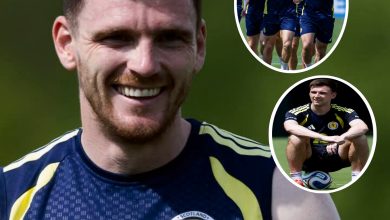
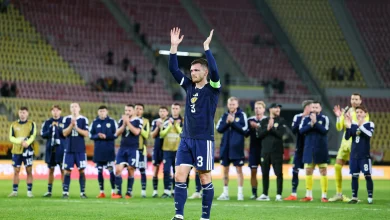
Andy Robertson remains captain and entered the camp with 97 international caps, while John McGinn continues as vice-captain. Billy Gilmour also returned after missing the World Cup through injury.
At the same time, Pocognoli has opened the door to a number of younger players.
Robbie Ure, Luis Binks, Colby Donovan, Stephen Welsh and Josh McPake were among the players receiving first senior call-ups.
Ure’s selection was particularly notable after he scored 20 goals in 20 matches for Sirius before completing a reported £5.5 million move to Sevilla during the summer.
McPake has also been rewarded for his early-season form at Hearts, while Donovan’s progress at Celtic has earned him an opportunity at senior international level.
The selection indicates that Pocognoli is prepared to give emerging players an opportunity rather than relying exclusively on the group that represented Scotland at the World Cup.
The McTominay situation
One of the biggest names missing from the squad is Scott McTominay.
The Napoli midfielder was unavailable as he recovered from a recent heart procedure, according to the Scottish FA. Che Adams was also unavailable because of injury.
Other familiar players have also been absent from the first squad.
That includes players such as Grant Hanley, John Souttar and Anthony Ralston, while several forwards were also missing.
The result is a Scotland squad that looks considerably different from the team supporters became accustomed to under Clarke.
What Pocognoli wants from Scotland
Pocognoli’s coaching philosophy suggests that supporters can expect an emphasis on intensity and proactive football.
The Belgian coach has previously described his preferred approach in terms of being dominant with and without the ball, using pressing and counter-pressing while maintaining control in possession.
That philosophy could have a major influence on the selection of players during his time in charge.
A more aggressive pressing structure requires players capable of covering ground quickly, reacting immediately after losing possession and maintaining concentration when Scotland push higher up the pitch.
It also explains why introducing younger players could become an important part of Pocognoli’s approach.
Supporters watching closely
For Scotland supporters, the most interesting part of the new era will be whether the squad changes translate into a noticeable difference on the pitch.
The appointment of Pocognoli already represented a major change following Clarke’s departure.
Now the squad is changing as well.
Supporters will naturally compare the new manager’s decisions with the selections made by his predecessor, particularly when established internationals are absent and younger players are given opportunities.
But Pocognoli has already indicated that the first squad should not be viewed as a permanent list.
James Penrice, who was left out of the initial group, was subsequently discussed by Pocognoli as a player who could still earn a future call-up if his club form continues.
That message is significant.
It suggests that players outside the current group still have an opportunity to force their way into Scotland’s plans.
A different Scotland taking shape
The Nations League campaign therefore represents more than six fixtures.
It is the first real opportunity to see how Pocognoli’s ideas translate into competitive international football.
Scotland have retained experienced leaders such as Robertson and McGinn, but the squad also contains a significant number of new faces.
The Scottish FA confirmed that the initial selection was deliberately refreshed, with 14 players who did not feature at the World Cup included in the extended squad.
For a national team preparing for another cycle, that mixture of experience and youth could become an important theme.
The immediate focus, however, is Slovenia.
Pocognoli’s first competitive assignment will provide the first meaningful indication of how quickly his players have adapted to his methods and whether the new Scotland era can begin with a strong performance.
With Switzerland, North Macedonia and another meeting with Slovenia following in the same international window, there will be plenty of opportunities for the new manager to assess his squad.
For the supporters, the changes may be difficult to digest at first, particularly when familiar names are missing.
But Pocognoli has made one thing clear through his first selection: Scotland’s squad is entering a period of transition, and places in the team are likely to be contested throughout the Nations League campaign.