SPFL Respond as New Angle of Daizen Maeda “Onside” Goal Sparks Fresh VAR Storm – Hibernian Left Furious
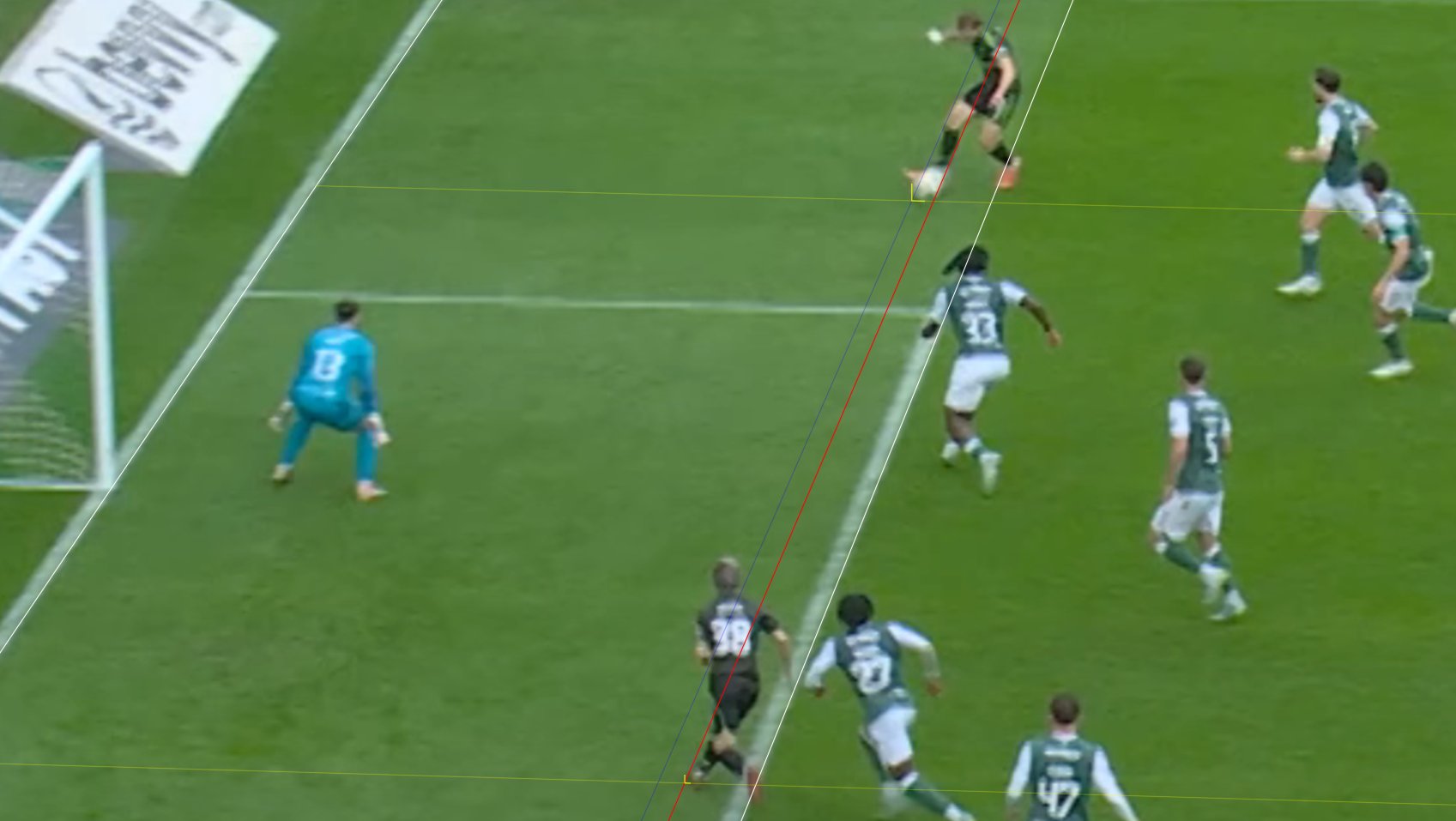
The fallout from Celtic’s controversial victory over Hibernian has escalated dramatically after a new alternate camera angle of Daizen Maeda’s decisive goal surfaced online—triggering widespread debate, fury from fans, and an official response from the Scottish Professional Football League.
What initially appeared to be just another contentious VAR call in Scottish football has now exploded into one of the most talked-about officiating controversies of the season. With Hibernian F.C. issuing a strong statement questioning the decision-making process, and governing authorities stepping in to defend the officials, the incident has reignited long-standing concerns about transparency, consistency, and trust in VAR across the league.
The Incident That Sparked Chaos
The moment at the heart of the controversy came late in the first half of Celtic’s 2-1 win over Hibernian. With the game finely poised, a quick attacking move from Celtic F.C. saw the ball played across goal, where Maeda tapped in from close range.
Initially, the assistant referee raised the flag for offside—seemingly ruling out the goal. However, after a VAR review, the decision was overturned and the goal was awarded.
At the time, the decision appeared marginal but defensible. VAR officials concluded that Maeda was onside at the moment the ball was played, overturning the on-field call.
But what followed in the hours—and now days—after the match has changed everything.
The Alternate Angle That Changed the Narrative
A new camera angle, widely circulated on social media, has thrown the original VAR decision into serious doubt. Unlike the broadcast angle used during the match, this alternate view appears to show Maeda in a far tighter position relative to the last defender.
For many fans and analysts, the new footage raises a crucial question: Was the VAR decision based on the most accurate angle available?
The clip—shared widely online—has gone viral, with thousands of fans dissecting frame-by-frame footage. The reaction has been explosive:
- Some argue the new angle clearly shows Maeda was offside.
- Others insist it remains too tight to overturn the VAR decision.
- Many are simply demanding transparency—asking why this angle was not used during the review.
The phrase “it changes everything” has become a common refrain across fan discussions, reflecting how dramatically perceptions have shifted since the game ended.
Hibernian’s Strong Statement
In response to the controversy, Hibernian F.C. released a strongly worded statement expressing concern over the officiating process.
While stopping short of directly accusing officials of wrongdoing, the club reportedly questioned:
- The consistency of VAR usage
- The availability and selection of camera angles
- The lack of transparency in decision-making
The statement reflects a broader frustration that has been building not just within Hibernian, but across Scottish football.
This is not the first time VAR decisions involving Celtic and Hibernian have sparked debate. Historical incidents have already created a sense of mistrust, and this latest controversy has only deepened that divide.
SPFL Responds – Defending the Officials
With tensions rising, the Scottish Professional Football League moved quickly to address the situation.
In its response, the governing body is understood to have:
- Backed the VAR officials’ decision, stating that the goal was correctly awarded based on the available evidence at the time
- Emphasised that VAR decisions are made using approved broadcast angles, not unofficial or post-match footage
- Reiterated confidence in the integrity of match officials
The key message from the SPFL is clear:
👉 The decision stands, and there will be no retrospective change.
However, notably, the response does not fully address the central issue raised by fans—why certain angles may not have been used during the review.
VAR in Scotland – A System Under Pressure
This incident is just the latest in a growing list of VAR controversies in Scottish football.
Since its introduction, VAR has been intended to reduce errors and improve fairness. Instead, it has often done the opposite—creating new debates rather than eliminating them.
Recurring issues include:
- Inconsistent use of camera angles
- Lack of communication with fans
- Perceived bias or uneven application of rules
The Maeda incident highlights a critical flaw:
Even when VAR reaches a decision, the perception of fairness can be just as important as the decision itself.
If fans do not trust the process, the credibility of the outcome is immediately undermined.
Tactical Context – Why the Goal Mattered
Beyond the controversy, the goal itself was hugely significant in the context of the match.
At the time:
- Hibernian were already down to 10 men after an early red card
- Celtic were dominating possession but struggling to break through
- The match was finely balanced and could have swung either way
Maeda’s goal gave Celtic the breakthrough they needed, shifting momentum decisively in their favour.
From a tactical perspective:
- Celtic’s high pressing forced errors in Hibernian’s defensive structure
- Quick interchanges in the final third created space behind the back line
- Maeda’s movement exploited the narrow defensive shape of Hibernian
In short, it was a classic Celtic attacking move—but one now overshadowed by controversy.
Fan Reaction – “Speechless” and Furious
The reaction from fans has been nothing short of explosive.
Across social media platforms, supporters from both sides—and neutrals—have weighed in.
Celtic Fans:
- Many defend the decision, arguing VAR made the correct call
- Some point out that marginal offside calls are part of modern football
- Others believe the outrage is exaggerated
Hibernian Fans:
- Furious at what they see as another injustice
- Demanding full transparency from officials
- Calling for the release of all VAR footage used in the decision
Neutral Fans:
- Increasingly frustrated with VAR as a whole
- Questioning whether the technology is improving the game
- Highlighting similar controversies across leagues
The phrase “fans are speechless” reflects not silence—but disbelief. The sheer volume of debate shows just how deeply this incident has resonated.
The Bigger Picture – Trust in the Game
At its core, this controversy is about more than one goal.
It is about trust.
Trust in:
- Officials
- Technology
- Governing bodies
When an alternate angle emerges that appears to contradict an official decision, it creates a credibility gap. Even if the original decision was technically correct, the lack of transparency fuels suspicion.
For Scottish football, this presents a serious challenge:
👉 How do you maintain confidence in the system when fans feel they are not seeing the full picture?
Could This Lead to Change?
There is growing pressure for reform in how VAR is used and communicated in Scotland.
Possible changes being discussed include:
- Releasing VAR audio (as seen in other leagues)
- Publishing all camera angles used in decisions
- Improving communication during matches
- Introducing clearer guidelines for offside calls
Whether the SPFL takes action remains to be seen—but incidents like this make change increasingly inevitable.
Conclusion
The controversy surrounding Daizen Maeda’s goal against Hibernian is a perfect storm of modern football issues: marginal decisions, evolving technology, and a growing demand for transparency.
While the Scottish Professional Football League has stood by the decision, the emergence of a new angle has ensured that this debate is far from over.
For Hibernian F.C., it is another bitter pill to swallow.
For Celtic F.C., it is a victory overshadowed by controversy.
And for Scottish football as a whole, it is yet another reminder that VAR—far from settling arguments—may still be creating more than it resolves.
One thing is certain:
This is not the last time we’ll see a moment like this dominate headlines.







Post Comment