“GAME IS TRULY GONE” – SPFL EXPLAINS WHY ALISTAIR JOHNSTON ESCAPED A RED CARD AS VAR DECISION LEAVES RANGERS FANS FURIOUS
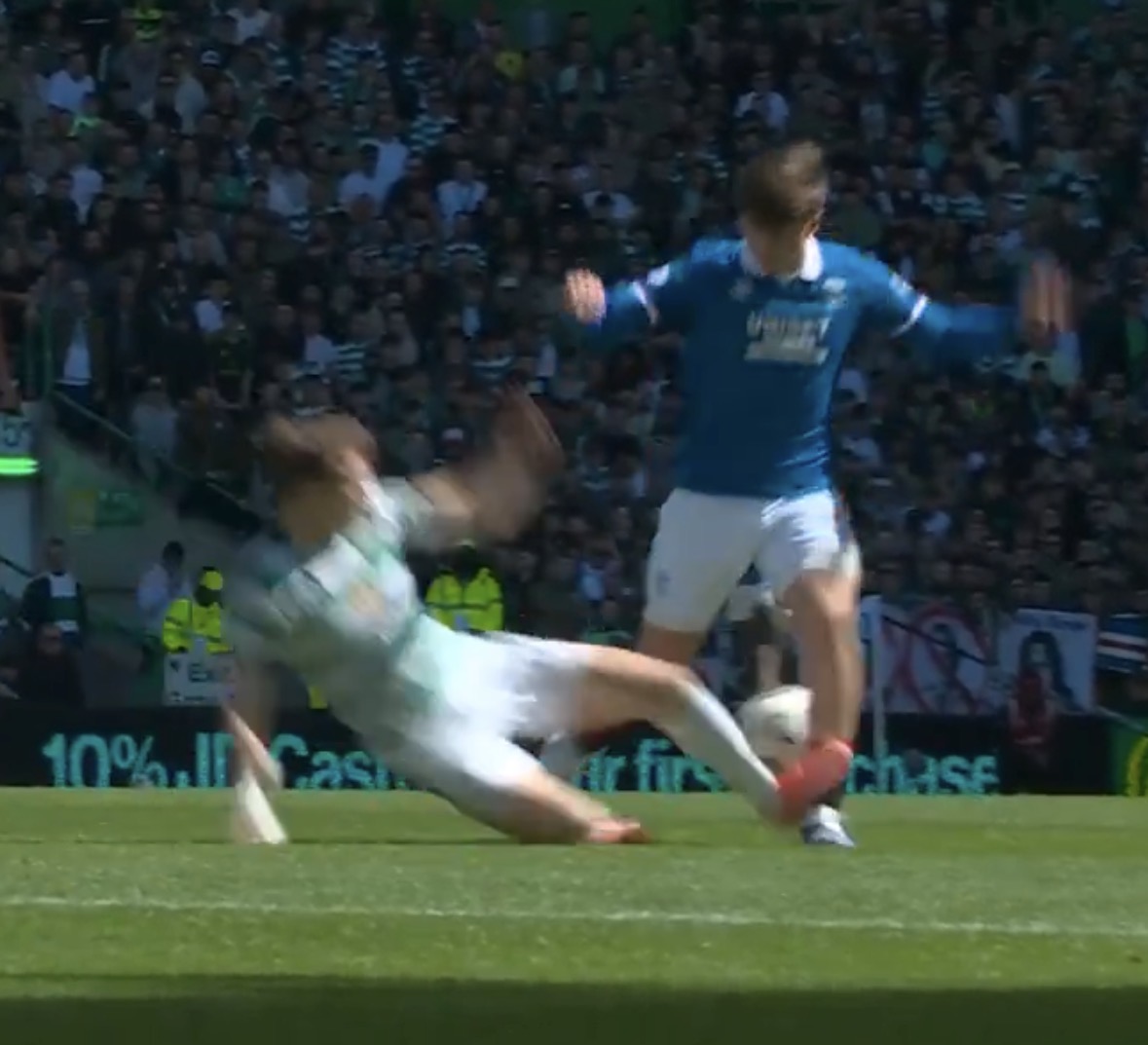
The latest Old Firm clash between Celtic FC and Rangers FC has exploded into yet another major refereeing controversy after Celtic defender Alistair Johnston avoided a red card following a dangerous tackle on Rangers youngster Mikey Moore.
The incident, which occurred around the 39th minute of the heated derby at Celtic Park, immediately sparked outrage among Rangers supporters, pundits, and even neutral observers. Johnston lunged into a challenge on Moore near the halfway line, appearing to catch the Rangers winger high on the ankle with his studs showing.
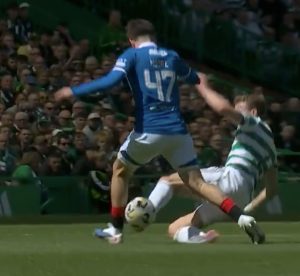
Referee initially produced only a yellow card, but the controversy intensified moments later when VAR chose not to intervene and recommend an on-field review.
Within minutes, social media erupted.
“Game is truly gone.”
“VAR is biased.”
“That’s a red card every day of the week.”
Those were just some of the reactions flooding online platforms as fans struggled to understand how Johnston remained on the pitch.
Now, the SPFL and refereeing officials have reportedly clarified the reasoning behind the decision — and the explanation has only added more fuel to the fire.
The Tackle That Changed the Atmosphere of the Match
At the time of the incident, the match was finely balanced. Rangers had started brightly, with Mikey Moore causing constant problems down the flank using his pace and direct running. Celtic were beginning to regain control after a frantic opening period, but tension was already boiling over due to the intensity of the derby atmosphere.
Then came the challenge.
Johnston slid in aggressively as Moore attempted to turn away from pressure. While the Celtic defender appeared to make slight contact with the ball initially, the follow-through saw his studs collide with Moore above the ankle.
The Rangers winger immediately went down in pain.
The stadium atmosphere shifted instantly.
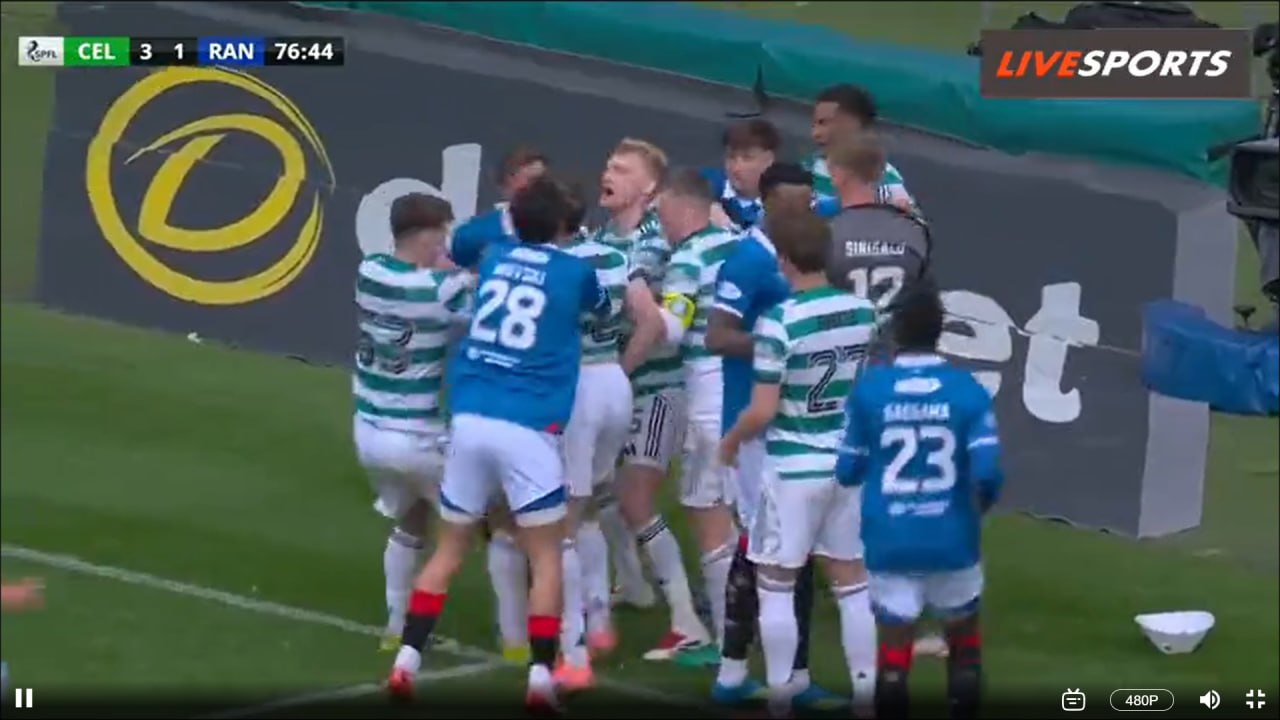
Rangers players surrounded the referee demanding a dismissal, while Celtic players argued Johnston had won the ball first. Replays shown moments later only deepened the debate, with several camera angles appearing to show excessive force and dangerous contact.
Nick Walsh reached for a yellow card.
VAR checked the incident.
No review was recommended.
Play continued.
That decision would become the dominant talking point of the afternoon.
According to reports emerging after the game, officials believed Johnston’s initial contact with the ball and the angle of the tackle reduced the threshold for “serious foul play” under VAR protocol.
But that explanation has done little to calm the outrage.
Pundits Reverse Their Opinions After Seeing Replay
One of the most remarkable aspects of the controversy was how quickly television pundits changed their minds after viewing alternative replay angles.
Initially, former players including Kris Boyd, Neil Lennon, and James McFadden believed the challenge looked firm but fair in real time.
However, once slow-motion replays from the reverse angle were shown, the tone changed dramatically.
Boyd openly admitted the challenge looked far worse than first thought and declared it was “a red card all day long.”
McFadden echoed those sentiments, admitting Johnston was fortunate to remain on the pitch after seeing the studs connect high on Moore’s leg. Lennon agreed immediately.
That unanimous reaction from former professionals only intensified criticism of the VAR officials.
Fans began asking the obvious question:
If experienced ex-players could instantly change their minds after one replay, how did VAR officials not see enough to send the referee to the monitor?
Rangers Fans Explode Online
Within minutes of the incident, Rangers supporters flooded social media with accusations of inconsistency and bias.
Many compared Johnston’s tackle to previous red cards given elsewhere in the Scottish Premiership this season, arguing similar challenges had resulted in immediate dismissals.
Others pointed to earlier controversies involving VAR decisions in Old Firm matches, claiming Rangers consistently receive harsher treatment than Celtic.
The phrase “VAR was biased” quickly began trending among furious supporters.
Some fans posted screenshots of the contact point, arguing Johnston’s studs landed dangerously above the ankle — traditionally one of the clearest indicators for serious foul play.
Others highlighted how Mikey Moore was one of Rangers’ brightest attacking threats at the time, suggesting the decision significantly altered the balance of the game.
The anger only grew stronger as Celtic went on to seize control of the contest.
Celtic Capitalise As Rangers Lose Momentum
Before the challenge, Rangers looked dangerous every time Moore attacked down the wing. His movement and confidence had unsettled Celtic’s defensive structure repeatedly.
But after the incident, the emotional momentum of the match shifted dramatically.
Celtic appeared energised by surviving the scare, while Rangers players seemed distracted and frustrated by the officiating.
The match eventually swung decisively in Celtic’s favour as Daizen Maeda produced a devastating second-half performance to help Celtic secure a 3-1 victory.
For Rangers supporters, that only made the controversy hurt even more.
Many argued Johnston should never have been on the pitch long enough to influence the remainder of the match defensively.
Others claimed the psychological effect of the non-red card visibly affected Rangers players for the rest of the afternoon.
The SPFL’s Reported Explanation
Following the storm of criticism, reports surrounding the officials’ interpretation began circulating.
According to the explanation being discussed after the match, VAR believed:
- Johnston made initial contact with the ball
- The tackle was reckless rather than intentionally dangerous
- The force of impact did not meet the threshold for “clear and obvious” serious foul play
- The referee’s yellow-card decision was therefore not considered a major officiating error
That interpretation has sparked enormous debate across Scottish football.
Critics argue that modern officiating guidelines clearly state that winning the ball first does not automatically excuse dangerous follow-through contact.
Many former referees and analysts have repeatedly explained in recent years that studs-up contact above the ankle is frequently punished regardless of whether the ball is touched first.
That is why so many supporters remain unconvinced by the explanation.
“Consistency” Debate Returns Again
The biggest issue raised by the controversy is consistency.
Fans across Scotland have spent years complaining about inconsistent VAR interventions, especially in emotionally charged Old Firm matches where every major decision is magnified.
The Johnston challenge has now become another example added to a growing list of disputed calls.
Supporters pointed to incidents earlier in the season where players received straight red cards for seemingly comparable tackles.
Questions immediately emerged:
Why was this challenge different?
Why did VAR not recommend an on-field review?
Why are some dangerous tackles upgraded while others are ignored?
Those questions are now dominating Scottish football discussion shows and online fan forums.
Mikey Moore’s Reaction
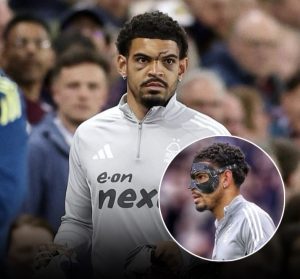
Despite the severity of the challenge, Mikey Moore attempted to continue and showed remarkable composure throughout the match.
The young Rangers star has quickly become one of the club’s most exciting attacking players, and his fearless performance before the tackle earned widespread praise from supporters.
Many Rangers fans were especially angered because Moore is still developing physically as a young player, making the nature of Johnston’s challenge appear even more reckless in their eyes.
While Moore avoided serious injury, supporters argued the outcome should not determine whether a red card is shown.
Modern football laws focus on the danger of the challenge itself rather than the injury caused.
That point has become central to the post-match debate.
Celtic Fans Defend Johnston
Not everyone agreed the tackle deserved a dismissal.
Many Celtic supporters argued Johnston clearly won the ball and insisted the challenge looked worse in slow motion than it did at full speed.
Others claimed Rangers fans were exaggerating the incident because of the emotional nature of the rivalry.
Some pointed out that football remains a physical sport and argued strong tackles should not automatically result in red cards.
Several Celtic fans also highlighted other moments during the match where they believed Rangers escaped punishment for aggressive challenges.
As always with the Old Firm rivalry, opinions were sharply divided depending on club allegiance.
VAR Under Pressure Again
The incident has once again placed Scottish football’s VAR system under intense scrutiny.
Since its introduction, VAR has repeatedly been accused of inconsistency, slow decision-making, and lack of transparency.
Supporters often complain that fans inside stadiums receive little explanation about how decisions are reached.
That frustration was obvious during this latest controversy.
Inside Celtic Park, confusion spread quickly because many supporters could not understand why the incident was not reviewed more thoroughly.
Television viewers saw multiple replay angles within seconds, yet the referee was never sent to the pitchside monitor.
That disconnect continues to frustrate fans across the league.
The Bigger Problem for Scottish Football
Beyond the specific incident itself, the controversy highlights a broader issue facing Scottish football.
Every major Old Firm match now seems to generate massive officiating debates that overshadow the actual football.
Instead of discussions focusing purely on tactics, performances, or goals, refereeing decisions dominate headlines for days afterward.
That has become exhausting for many supporters.
The Johnston-Moore incident is likely to remain one of the defining moments of this derby, not because of the football quality, but because of the VAR fallout surrounding it.
Final Thoughts
Whether supporters believe it was a red card or not, one thing is undeniable: the decision has reignited the never-ending debate about consistency and VAR standards in Scottish football.
For Rangers fans, the explanation offered by officials will feel deeply unsatisfying. Many remain convinced Johnston should have been sent off immediately and believe the decision changed the direction of the match entirely.
For Celtic supporters, the incident will likely be viewed as a strong but fair challenge that has been exaggerated by rival fans desperate for controversy.
But for neutral observers, the real issue may be the continued uncertainty around VAR interpretation itself.
When pundits, former professionals, supporters, and commentators all reach completely different conclusions over the same replay, confidence in the system inevitably suffers.
And after another explosive Old Firm controversy, Scottish football once again finds itself asking the same uncomfortable question:
If VAR still cannot deliver clarity in moments like this, what exactly is it there for?










Post Comment