FA Clarifies Why Tottenham Were Denied Penalty as VAR Decision Sparks Fury and Fresh Bias Claims
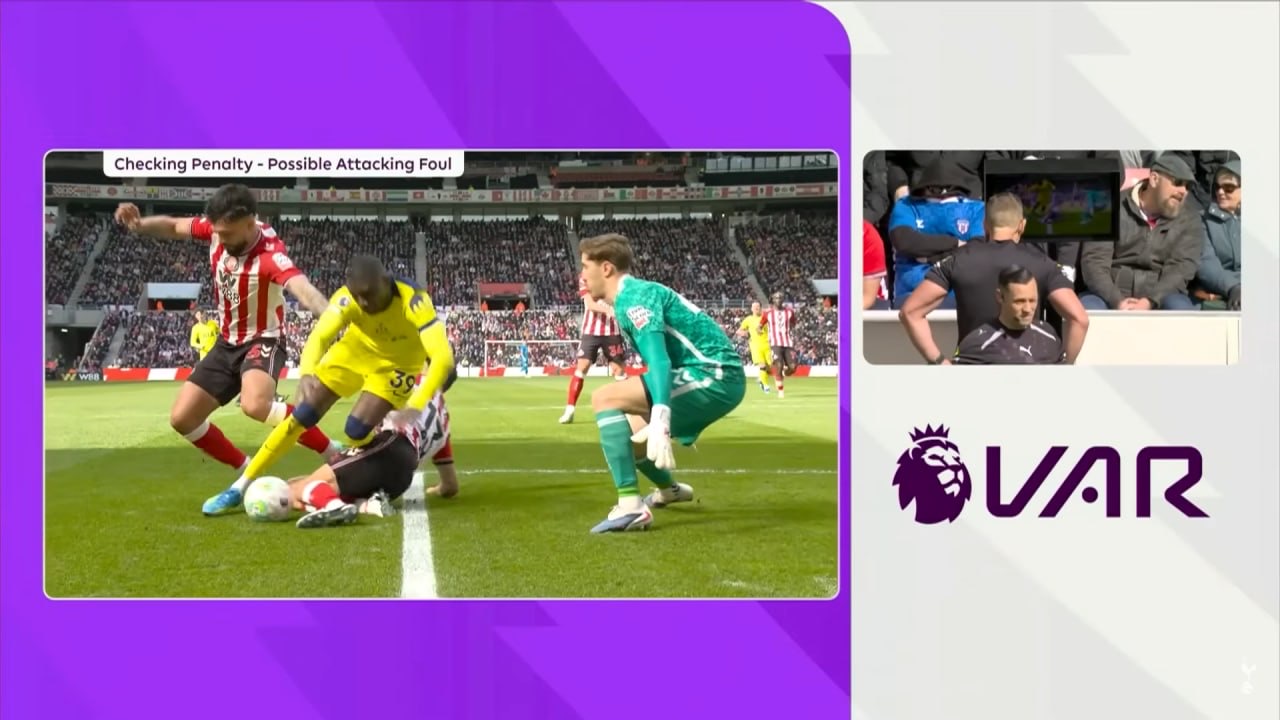
Controversy once again engulfed the Tottenham Hotspur fanbase following their 1-0 defeat to Sunderland AFC, as a crucial first-half penalty decision involving Randal Kolo Muani was dramatically overturned after a VAR review.
What initially appeared to be a straightforward foul inside the box quickly turned into yet another flashpoint in a season filled with officiating frustrations for Spurs. The Football Association (FA) has now released the reasoning behind the decision—but instead of calming tensions, it has only intensified accusations of inconsistency and bias.
For a club already battling relegation and enduring one of its worst Premier League runs in decades, the incident has become symbolic of a much deeper issue.
The Incident: What Happened on the Pitch
The defining moment came in the 21st minute at the Stadium of Light. Tottenham were awarded a penalty after Kolo Muani went down under a challenge inside the area. The referee initially pointed to the spot, triggering relief among Spurs players and fans alike.
However, that relief was short-lived.
Following a VAR check, the referee reversed his decision, ruling that the Sunderland defender had made sufficient contact with the ball.
Reports indicate that the challenge—initially perceived as a trip—was deemed a fair tackle upon review, with the defender judged to have won the ball cleanly before any contact with Kolo Muani.
Yet, the situation was far from universally accepted.
Fans and pundits quickly pointed out that there appeared to be clear contact on the attacker, raising the familiar question: what actually constitutes a foul anymore?
The FA’s Explanation: Why No Penalty Was Given
According to post-match clarification, the key reasoning behind the overturned decision rested on two main points:
1. “Clear Contact with the Ball”
The VAR team determined that the Sunderland defender made a legitimate attempt to play the ball—and succeeded. Under current laws, if a defender clearly wins the ball first, subsequent contact with the attacker may not automatically result in a foul.
2. “No Clear and Obvious Error” Threshold
VAR is only meant to intervene when there is a “clear and obvious error.” In this case, officials concluded that the on-field decision (after review) did not meet that threshold for awarding a penalty.
This is where frustration truly begins.
Because from Tottenham’s perspective, the issue is not just whether the ball was touched—it is whether the overall challenge was safe, fair, and legal.
Why Spurs Fans Are Furious
The reaction from Spurs supporters has been explosive—and not without reason.
“We’ve Seen Those Given”
One of the biggest complaints is inconsistency. Similar incidents across the league have resulted in penalties being awarded, even when defenders got slight touches on the ball.
Fans argue that:
- Contact on Kolo Muani was significant enough to impede him.
- The defender’s follow-through contributed to the fall.
- In other matches, such incidents are routinely penalised.
A Season of Decisions Going Against Spurs
This incident did not occur in isolation. Tottenham’s 2025/26 campaign has been riddled with controversial refereeing moments.
From missed fouls to questionable VAR calls, there is a growing perception that Spurs are on the wrong end of decisions more often than most.
And when you combine that with their current league position—hovering in the relegation zone—the stakes become even higher.
Tottenham are currently enduring a 14-match winless run, their worst since 1935.
In such a fragile context, decisions like this feel season-defining.
Tactical Context: Why the Decision Mattered So Much
From a tactical standpoint, the penalty could have completely changed the match.
Under new manager Roberto De Zerbi, Tottenham are attempting to implement a more possession-based, structured attacking system.
However, the early penalty represented:
- A chance to take the lead
- A confidence boost for a struggling attack
- A way to force Sunderland out of their defensive shape
Instead, the reversal had the opposite effect:
- Momentum shifted back to Sunderland
- Tottenham’s attacking rhythm stalled
- Frustration visibly crept into their play
Ultimately, Sunderland capitalised, scoring the only goal of the game via a deflected effort.
The Bigger VAR Debate: Is the System Working?
This incident has reignited a broader debate around VAR in English football.
Inconsistency Across Matches
One of the most common criticisms is that similar incidents are judged differently depending on:
- The referee
- The VAR official
- The match context
Subjectivity Still Dominates
Despite the introduction of technology, decisions still rely heavily on human interpretation.
Questions being asked include:
- What counts as “winning the ball”?
- How much contact is too much?
- When should VAR override a referee?
Fan Trust Is Eroding
Perhaps the most worrying trend is the erosion of trust.
When fans begin to believe their team is being treated unfairly, it undermines the credibility of the competition itself.
UK and Nigerian Fan Reactions
UK Perspective
In the UK, pundits have been divided:
- Some argue the decision was technically correct under current laws
- Others believe it lacked “common sense”
The phrase “we’ve seen those given” has dominated post-match analysis.
Nigerian Perspective
Tottenham have a strong following in Nigeria, and reactions have been equally intense.
Many Nigerian fans:
- Viewed the decision as harsh and unnecessary
- Questioned the consistency of VAR decisions across different teams
- Expressed frustration on social media, echoing global sentiment
For a global club like Tottenham, these controversies resonate far beyond England.
Implications for Tottenham’s Season
This is where the situation becomes critical.
Tottenham are not just dealing with a bad decision—they are fighting for survival.
Relegation Threat
The defeat leaves Spurs:
- In the bottom three
- Two points from safety
Psychological Impact
Repeated controversial decisions can:
- Damage player confidence
- Create a sense of injustice
- Affect performance levels
Pressure on De Zerbi
For De Zerbi, this was already a difficult first game in charge.
Now, he must:
- Lift a demoralised squad
- Navigate intense scrutiny
- Deliver results under immense pressure
Conclusion
The FA’s explanation may provide clarity—but it has not provided closure.
For Tottenham fans, the issue is not just this one decision. It is the accumulation of moments like this throughout the season that creates a sense of injustice.
Was the defender technically within his rights? Perhaps.
Was the decision consistent with others across the league? That is far more debatable.
And that is where the real controversy lies.
As VAR continues to shape modern football, one thing is becoming increasingly clear:
Technology has not removed controversy—it has simply changed its form.
For Tottenham, the consequences could be far more serious than just one missed penalty. It could define their entire season.






Post Comment