REFEREE MARCO GUIDA FINALLY EXPLAINS WHY HE DIDN’T END THE MATCH ON TIME .FANS ARE SHOCKED

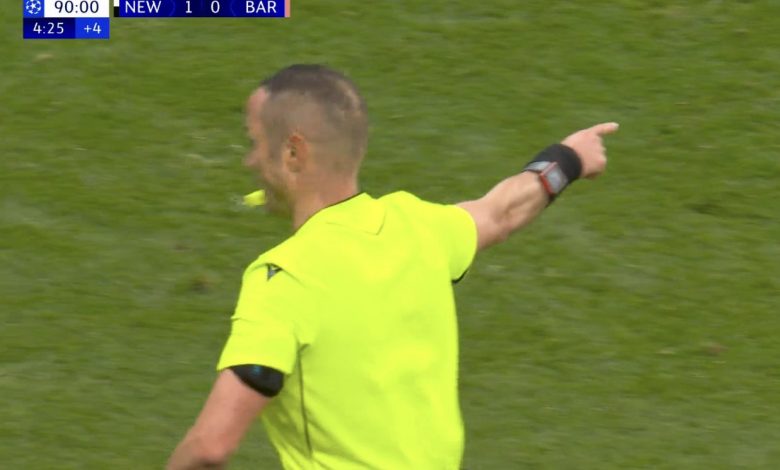
In the high-stakes world of European football, few moments spark as much debate as a referee’s decision in the dying seconds of a match.
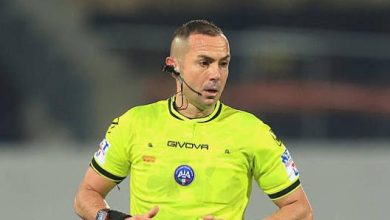
Italian official Marco Guida found himself at the center of intense scrutiny following a recent UEFA Champions League encounter between Newcastle United and Barcelona.
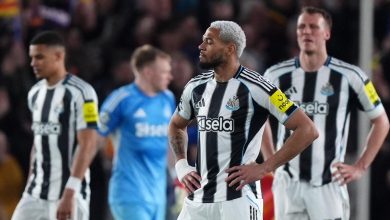
The game, a tense Round of 16 first-leg clash at St. James’ Park, ended in dramatic fashion when Guida awarded Barcelona a last-gasp penalty, allowing the Catalan giants to salvage a draw after Newcastle had dominated much of the contest.
Fans, pundits, and analysts alike questioned why the referee did not blow the final whistle earlier, instead permitting play to continue long enough for Dani Olmo to be fouled in the box by Malick Thiaw, leading to Lamine Yamal’s composed conversion from the spot.
Refereeing decisions in stoppage time are always magnified under the spotlight, especially in knockout ties where every second counts. Guida, a 44-year-old Serie A veteran and FIFA-listed official since 2014, has built a reputation for handling big games, having officiated in Italy’s top flight for over a decade and taken charge of various European fixtures.
Yet this particular call reignited discussions about time management, the application of added time, and the balance between strict adherence to the laws of the game and common-sense officiating. In the aftermath, Guida addressed the controversy directly in post-match comments and subsequent interviews, providing insight into his thought process during those frantic final moments.
According to Guida, the decision to extend play stemmed from his assessment of ongoing action and events that warranted additional time. Stoppage time is not arbitrary; referees add minutes based on factors such as substitutions, injuries, goal celebrations, VAR interventions, and any delays that interrupt the flow of the game.
In this match, the second half had seen multiple interruptions, including tactical changes, medical attention on the pitch, and a brief VAR review earlier in the proceedings. Guida explained that he had already allocated a significant amount of added time—reportedly around seven or eight minutes—due to these cumulative stoppages. However, as the clock ticked into what many perceived as the absolute final seconds, a sequence of events unfolded that prevented an immediate whistle.
The key moment came deep into stoppage time when Newcastle were pushing for a decisive goal, only for Barcelona to regain possession and launch a quick counter. Guida emphasized that the ball remained in play, with attacking moves still developing. “The match isn’t over until the ball is out of play or a clear stoppage occurs,” he stated in his explanation.
He pointed out that referees are instructed not to end games prematurely while genuine footballing action continues, particularly when one team is on the attack or in a promising position. Blowing the whistle mid-phase could invite accusations of bias or denying a legitimate opportunity.
In this case, Barcelona’s transition led to Olmo driving forward, drawing the challenge from Thiaw inside the penalty area. Guida, positioned well to view the incident, deemed it a clear foul—contact that impeded Olmo’s progress without any legitimate attempt to play the ball.
Critics argued that the foul occurred beyond the originally indicated added time, fueling claims that Guida “let” Barcelona benefit from extra seconds. Yet the referee countered this by referencing UEFA guidelines and IFAB laws, which grant officials discretion in calculating and extending added time dynamically.
“Time is indicative, not fixed,” Guida noted. “If play continues without interruption, and especially if there’s potential for a decisive incident, the referee must allow it to conclude naturally.” He drew parallels to other high-profile matches where late penalties or goals have been allowed after seemingly excessive added time, underscoring that the priority is fairness over rigid chronometry. In his view, halting the game artificially would have been more contentious than permitting the sequence to play out.
This incident was not isolated in Guida’s career. The Italian has faced criticism before for controversial decisions involving penalties and time management. For instance, in previous Champions League outings, he awarded or was involved in debated spot-kicks, such as a handball call against Atletico Madrid that drew formal complaints.
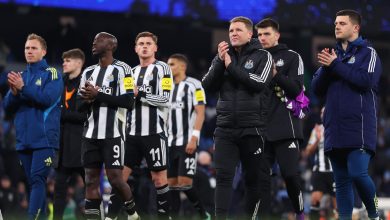
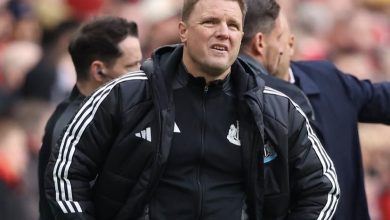
Earlier in his career, Serie A suspensions and criticisms arose from missed calls or perceived inconsistencies. Despite this, UEFA continues to appoint him for major ties, reflecting confidence in his experience. His handling of the Newcastle-Barcelona game drew mixed reactions: Newcastle supporters and former players like Alan Shearer expressed frustration at what they saw as a “lifeline” handed to Barcelona, while others acknowledged the foul’s legitimacy and the referee’s duty to play advantage in live situations.
Guida also addressed the broader pressures referees face in the modern era. With VAR, multiple camera angles, and instant replays available to viewers, every call is dissected in real time. He admitted the emotional weight of such decisions but maintained that his focus remains on the laws and the game’s integrity.
“We don’t favor one team over another,” he insisted. “The penalty was clear from my angle—there was contact, and it denied a goal-scoring opportunity. Ending the match seconds earlier would have ignored that.” The referee highlighted how stoppage time often feels elongated to fans but is meticulously tracked by the fourth official and himself, accounting for every delay.
The fallout from the match extended beyond the pitch. Media outlets described it as a “heartbreaking” moment for Newcastle, who had outplayed Barcelona for large portions, creating chances and controlling possession. Barcelona, meanwhile, celebrated the resilience shown by snatching a crucial away goal (or draw equivalent in the tie context). Yamal’s cool finish under pressure preserved their hopes ahead of the return leg. For Guida, the episode served as a reminder of the fine line referees walk—balancing precision timing with the unpredictable nature of football.
Ultimately, Marco Guida’s rationale boils down to a fundamental principle: the game continues until it naturally concludes. By not prematurely ending the match, he allowed a legitimate penalty opportunity to materialize, one that he deemed worthy of review and award. While opinions remain divided, with Newcastle fans decrying favoritism toward Barcelona and neutrals debating the spirit versus the letter of the laws, Guida stands by his judgment. In elite competition, where margins are razor-thin, such decisions define legacies—for better or worse. As the tie progresses, this late drama will linger as a pivotal chapter, underscoring why refereeing remains one of football’s most scrutinized and thankless roles.