Harry Kane Becomes the First England Player to Break Silence as Argentina Fans Launch Petition to Replay the 2026 FIFA World Cup Final

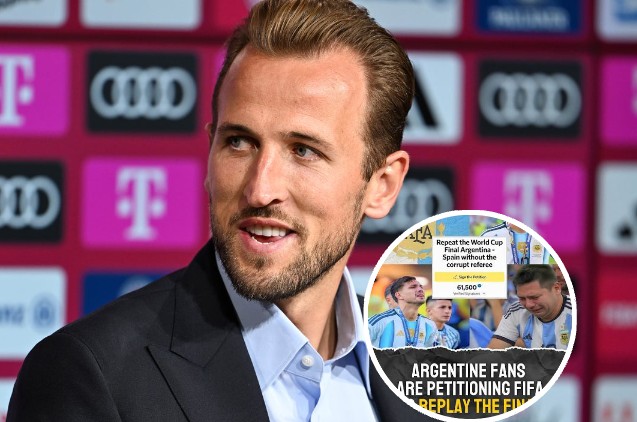
In the aftermath of one of the most dramatic and contentious FIFA World Cup tournaments in recent memory, the football world continues to buzz with controversy. Spain emerged victorious in the 2026 final, defeating defending champions Argentina 1-0 after extra time at MetLife Stadium in East Rutherford, New Jersey, on July 19. Ferran Torres scored the decisive goal in the 106th minute, securing Spain’s second World Cup title. Yet, the result has sparked fierce debate, particularly among Argentine supporters who have mobilized online, launching a Change.org petition demanding a replay. Amid this storm, England captain Harry Kane has become the first player from the Three Lions squad to publicly address the situation, adding an unexpected layer to the global discourse.
The 2026 World Cup, co-hosted by the United States, Canada, and Mexico, was billed as a celebration of football’s global reach. It delivered high drama, stunning upsets, and moments of brilliance, but also plenty of officiating disputes. England, under manager Thomas Tuchel, enjoyed a strong run, reaching the semi-finals where they faced a resilient Argentina side. In a tense encounter on July 15 in Atlanta, Anthony Gordon gave England the lead in the 55th minute, only for Enzo Fernández to equalize in the 85th and Lautaro Martínez to snatch a 2-1 victory deep into stoppage time. Argentina advanced to the final, where they were outplayed by a dominant Spanish team that registered 20 shots to Argentina’s two, with zero shots on target for La Albiceleste in regular time.
Spain’s triumph was deserved on the pitch. Rodri was named the tournament’s best player, and the team showcased tactical maturity and attacking flair throughout. However, for many Argentine fans, the narrative shifted quickly to perceived injustices. A petition created by supporter Gisela Sánchez on Change.org rapidly gained traction, surpassing 80,000 signatures within days. The petition accuses Slovenian referee Slavko Vinčić of controversial decisions that allegedly disadvantaged Argentina, including the red card to Enzo Fernández for a second yellow and other calls that “tarnished” the match. It calls on FIFA to review the incidents with “seriousness and transparency” and consider replaying the final “without the influence of a corrupt referee.” While the petition provides no concrete evidence of match-fixing or severe breaches, it has resonated with disappointed fans grieving what many saw as the end of Lionel Messi’s World Cup journey.
FIFA has remained silent on any potential replay, and regulations make such an outcome highly unlikely. Matches are only replayed in extraordinary circumstances involving proven match-fixing or extreme irregularities, not fan dissatisfaction or disputed calls. Similar petitions, including one after France’s semi-final loss to Spain, have gone nowhere. A rival “Argentina Out” petition, demanding Argentina’s exclusion from future tournaments, gathered over 23 million signatures before closing, highlighting the polarized emotions online.
Enter Harry Kane. The Tottenham Hotspur and England striker, who has shouldered the weight of national expectations for years, broke his silence on the matter in a measured interview. Kane, whose team was eliminated by Argentina in the semis, spoke candidly about the broader implications for the sport. “Football is a game of emotion, and I get why fans are upset,” Kane said. “We felt the pain in the semi-final too – that late goal from Lautaro hurt deeply. But calling for replays sets a dangerous precedent. The refereeing had its moments, like in every big match, but Spain were the better team on the day. We have to respect the result and move forward. As players, our job is to perform, not fuel division.”
Kane’s comments mark the first public statement from an England player on the petition saga. Other squad members, including Jude Bellingham and Declan Rice, have stayed quiet on social media, focusing instead on club duties or recovery. Kane’s intervention carries weight: as captain and one of the tournament’s standout performers despite England’s exit, his voice commands respect across borders. Observers note that his words strike a balance – acknowledging fan frustration while emphasizing sportsmanship and the integrity of the competition. This comes at a time when England fans still lament their semi-final defeat, with many pointing to tactical shifts by Tuchel and missed opportunities as key factors.
The petition and Kane’s response have ignited debates about refereeing standards, VAR’s role, and the influence of social media on football governance. Critics argue that petitions like Sánchez’s undermine the authority of officials and dilute the finality of results. Supporters counter that in an era of massive television revenues and global scrutiny, transparency is paramount. Former referees and pundits, including some from England, have weighed in, suggesting that while Vinčić’s performance wasn’t flawless, it didn’t warrant a replay. “No game is perfect,” one ex-Premier League official noted anonymously. “Argentina had chances to adapt, but Spain controlled the match comprehensively.”
Broader Context: England’s Journey and Lingering Rivalries
England’s path to the semi-finals was marked by resilience. After navigating a competitive group stage, they progressed through knockouts with solid defensive displays and clinical finishing. The clash with Argentina revived historic rivalries, echoing past encounters like the 1966 World Cup final, 1986’s “Hand of God,” and penalty shootout heartbreaks. The 2026 semi-final was no less intense, with physical battles and late drama. Kane, though not scoring in that match, led the line with characteristic poise, creating opportunities and embodying leadership.
Post-tournament, England faces introspection. Questions linger about squad depth, tactical flexibility, and the transition from veterans to younger talents. Kane’s leadership will be crucial as the team eyes Euro 2028 and the 2030 World Cup. His willingness to address the Argentina petition reflects a maturing perspective – one that prioritizes unity in the sport over national grievances.
For Argentina, the loss stings deeply. Messi, in what may be his final World Cup, was largely neutralized, touching the ball sparingly in the final. Coach Lionel Scaloni defended his players, refusing to blame the referee outright: “Spain played better. We gave everything.” Yet fan discontent persists, fueled by social media echo chambers. The petition, while symbolic, underscores the passion of Argentine supporters, who have backed their team through thick and thin.
The Role of Social Media and Petitions in Modern Football
The 2026 World Cup highlighted how digital platforms amplify voices. Change.org petitions have become a go-to for disgruntled fans, but their impact remains limited. FIFA’s statutes prioritize on-field evidence and official reviews over public campaigns. Legal experts confirm that no precedent exists for replaying a World Cup final based on signatures alone. Nevertheless, the volume of engagement – tens of thousands for the replay petition, millions for the “ban” counterpart – influences narratives and sponsor perceptions.
Kane’s statement cuts through the noise. By breaking silence first among England players, he positions himself as a voice of reason. In interviews, he elaborated on mental health in football, the pressures of elite competition, and the need for constructive criticism. “Fans invest so much emotionally. We do too. But we can’t rewrite history every time there’s disappointment,” he added. This resonates with England’s own history of near-misses, fostering empathy rather than schadenfreude.
Looking Ahead: Implications for FIFA and the Beautiful Game
As the dust settles, FIFA must navigate calls for better referee training, more consistent VAR application, and perhaps expanded use of technology. The 2026 final’s attendance of over 80,000 and global viewership underscored football’s enduring appeal, but controversies risk eroding trust. Spain’s victory parade was jubilant, with Rodri lifting the trophy alongside teammates in a historic double (following their Euro 2024 win). Argentina returns home to reflection, with Messi likely transitioning to a mentorship role.
Surinenglish
For England, Kane’s intervention could spark team-wide discussions. Players like Phil Foden and Bukayo Saka, who shone in patches, represent the future. The FA might use this moment to bolster mental preparation and media training, ensuring athletes handle public scrutiny adeptly.
In summary, Harry Kane’s decision to address the Argentina petition marks a pivotal moment. It humanizes the competition’s aftermath, bridges divides between rival nations’ fans, and reinforces core values of respect and finality in sport. While the petition gathers steam, unlikely to alter outcomes, it serves as a reminder of football’s power to unite and divide. As the 2026 World Cup fades into memory, attention turns to club seasons and future internationals. Kane, ever the professional, will lead England with the same dignity he displayed in speaking out – a captain true to his country and the game.
The controversy also raises questions about fan culture. Passionate support is vital, but when does it cross into toxicity? Online campaigns provide outlets but can escalate misinformation. Kane alluded to this: “Social media gives everyone a platform, but we need facts alongside feelings.” Analysts predict similar petitions in future tournaments unless governing bodies communicate more proactively.
England’s third-place playoff against France offered some consolation, though results there did little to dull semi-final pain. Kane’s performance throughout the tournament reaffirmed his status as a world-class forward, with goals and assists that kept England competitive. His post-tournament reflections extend beyond results, touching on legacy, unity, and growth.
Ultimately, the 2026 final belongs to Spain. Their disciplined display, clinical finishing in extra time, and squad harmony triumphed over Argentina’s grit and Messi’s aura. Petitions and player statements add color to the story but cannot change the scoreboard. Harry Kane’s voice, measured and timely, reminds us that football’s greatest lessons often emerge in defeat and disagreement. As preparations for the next cycle begin, the sport moves on – richer for the drama, wiser for the discourse.