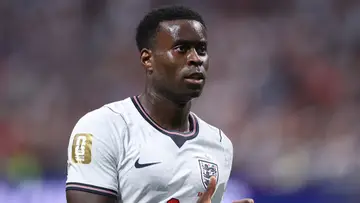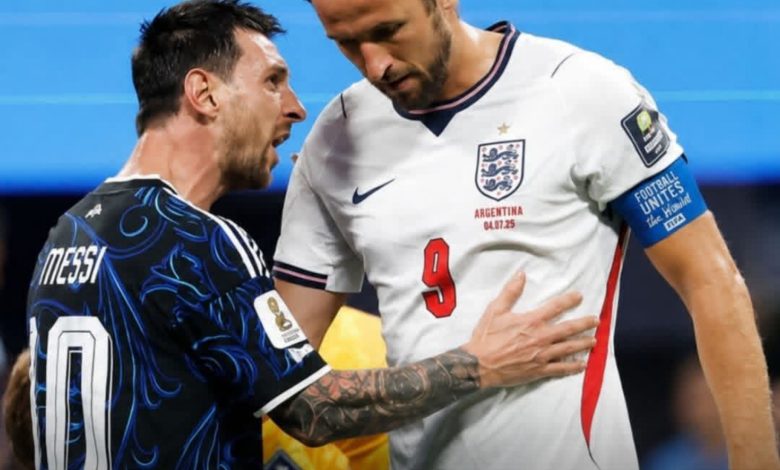
In the humid night air of Atlanta’s Mercedes-Benz Stadium on 15 July 2026, Argentina completed a dramatic late comeback against England to reach a second successive FIFA World Cup final. Trailing 1-0 after Anthony Gordon’s second-half strike, Lionel Messi’s side scored twice in the closing stages through Enzo Fernández and Lautaro Martínez, both assisted by the Argentine captain, to seal a 2-1 victory. The sporting achievement was immediate and historic. What followed the final whistle, however, transformed the narrative from pure football into a full-blown diplomatic and political controversy that reached the highest levels of the British government, prompted a formal FIFA investigation, and reopened old wounds from the 1982 Falklands War.
As Argentine players celebrated on the pitch, several of them unfurled and paraded a banner that read “Las Malvinas son Argentinas” — “The Malvinas are Argentine.” The banner, which appeared to have been passed onto the field by supporters in the stands, was held aloft by Giovani Lo Celso and Lisandro Martínez, with involvement from Nicolás Otamendi, Cristian Romero and others. Players grinned, waved to the crowd, and posed with the message in full view of the cameras and the remaining England players still on the field. The act was widely interpreted as a deliberate political statement in the immediate aftermath of a hard-fought victory over their historic rivals.
Historical Context of the Dispute
The Falkland Islands, known in Argentina as the Islas Malvinas, have been a source of bitter disagreement between Britain and Argentina for nearly two centuries. Argentina has long claimed the archipelago, arguing that it inherited sovereignty from Spain after independence in 1816 and that Britain’s formal control, established in 1833, constituted an illegal colonial seizure. Britain maintains that its claim dates to the 18th century and, crucially, that the islands’ permanent population — overwhelmingly of British descent — has repeatedly expressed its desire to remain a British Overseas Territory. In a 2013 referendum, 99.8 percent of voters chose to retain that status.
The dispute turned violent in 1982 when Argentina’s military junta invaded the islands. The ensuing 74-day war ended with a British military victory and the restoration of British administration. Official figures record 649 Argentine military deaths, 255 British combat deaths, and three civilian fatalities. The conflict left deep scars on both sides and has remained a potent symbol of national identity in Argentina. Football has frequently served as a stage for these feelings. Diego Maradona’s two goals against England in the 1986 World Cup quarter-final — the “Hand of God” and the “Goal of the Century” — were widely framed in Argentina as a form of sporting revenge for the war. Maradona himself later wrote that the victory felt like beating a country rather than a football team.
In the build-up to the 2026 semi-final, the historical rivalry received extensive media coverage. Argentine players had already been filmed singing a chant that referenced the Malvinas after their round-of-16 win over Egypt: “Por Malvinas, por el Diego, por la última de Leo” (“For the Malvinas, for Diego, for Leo’s last one”). Pre-match, Argentina coach Lionel Scaloni attempted to defuse the political atmosphere, insisting that the players had no personal responsibility for past events and that the match should be treated as a football contest. Stadium authorities in Atlanta had prohibited fans from bringing Falklands-related flags or banners into the ground, underlining the sensitivity of the occasion.
The Banner Display and Immediate Fallout
Despite those precautions, the players’ decision to display the banner after the final whistle created an immediate international incident. FIFA’s Stadium Code of Conduct explicitly prohibits “banners, flags, flyers, apparel and other paraphernalia that are of a political, offensive, and/or discriminatory nature” inside stadiums. The organisation’s Disciplinary Code further forbids the transmission of messages “that are not appropriate for a sports event,” particularly those of a political, ideological, religious or offensive nature. The players’ actions appeared to breach both sets of rules in clear view of global television audiences.
British officials reacted swiftly and forcefully. Business Secretary Peter Kyle described the display as “entirely inappropriate” and an “egregious violation” of the principle that politics must remain separate from football. “The World Cup has one of its central tenets that politics is separate from football,” Kyle said. “That is now a matter for FIFA. I expect FIFA to do its investigation thoroughly.” Prime Minister Keir Starmer’s office endorsed the call for an investigation. A Downing Street spokesperson stated: “The World Cup might not be ours, but the Falkland Islands definitely are. Our position is unchanged. Self-determination rests with the islanders, and our commitment to the Falklands will never waver.” The spokesperson added that politics should stay out of football while leaving any potential sanctions to FIFA.
Opposition politicians went further. Liberal Democrat leader Ed Davey called for the players involved to be suspended from the final, citing UEFA’s previous one-match bans for Spanish players who chanted about Gibraltar after the 2024 European Championship. The government of the Falkland Islands expressed disappointment that politics had been introduced into the sporting occasion and hoped FIFA would enforce its rules consistently. In Argentina, the reaction was largely supportive. Vice President Victoria Villarruel publicly praised the players, arguing that while physical flags might be banned from stadiums, the sentiment “is carried in our blood and our hearts.” The Argentine government had also lodged a formal diplomatic protest with the British embassy in Buenos Aires over the movements of a British naval vessel in the South Atlantic in the days preceding the match, illustrating the broader geopolitical tensions that formed the backdrop to the fixture.
FIFA confirmed that its independent disciplinary committee was reviewing match reports and the relevant circumstances under the FIFA Disciplinary Code. Possible sanctions ranged from fines against the Argentine Football Association to individual player bans. Early analysis suggested a financial penalty was the more likely immediate outcome, particularly given precedents involving similar political messaging. By late July, coach Lionel Scaloni indicated he had received no formal notification from FIFA regarding any decision.
Harry Kane’s Post-Match Remarks: Restraint and Respect
While the political controversy dominated headlines and diplomatic channels, England captain Harry Kane offered a markedly different tone in his public comments. Speaking in the mixed zone and in subsequent interviews, Kane focused exclusively on the footballing disappointment and the performance of his team and opponents.
“I’m just gutted,” Kane said immediately after the match. “Gutted for the boys, gutted for everyone. The England staff, the fans. We played a good game for the large majority of it. When we went 1-0 up, we seemed to just try and hold on which at this level isn’t enough. Just gutted because we have worked so hard to be here. The lads have given every last bit of running, sweat, blood, tears. To fall short like we did today is just gutting.”
Kane analysed the late collapse without seeking external excuses. “After the goal, whether that was them putting more players forward or us not being able to match them man for man, it was just wave after wave and we were trying to hold on. Lads were putting blocks in but in the end it wasn’t enough.” He acknowledged a recurring pattern in England’s recent major tournaments: strong performances undermined by an inability to manage the final stages when leading. “We had a lot of good moments in this tournament, a lot of good games, another semi-final. We talk about knocking on the door, we are close. We just need to find that missing piece in the final stage of the tournament. These tournaments take it out of you — so much effort, pressure and mentality — and we have shown a lot of that over the six or seven weeks we have been together, but we are just missing that final piece.”
On Lionel Messi, Kane was generous and specific. “For large parts of the game we dealt with him really well. But as always with the most dangerous players in the world, when they have the ball in the final third they can create something and he’s done that again today. He’s obviously one of the best players ever for a reason.” Later, when asked about his own future and the possibility of still playing at the 2030 World Cup, Kane pointed to Messi’s continued excellence at the age of 39 as evidence that age need not be a barrier. “It’s too early to talk about that. I’m a person who takes things year by year, according to how I feel. I love playing for the national team more than anything and it’s a pride to do so. Four years is a long time; I’m 33, but look at Messi — he’s still competing at the highest level. I’ll address each situation when it comes. Right now I’m processing the defeat.”
Kane’s pre-match comments had already signalled a deliberate desire to keep the focus on football rather than history. Asked about the surrounding political atmosphere and the Malvinas-related chanting by Argentine players earlier in the tournament, he replied: “I think it’s not something you want to focus too much on, the surrounding history, and yeah, that’s all part of it, and that’s what you guys will talk about. But from a player’s point of view, it’s us against a great team who are smart, who are tactical, who know how to buy fouls, know how to slow the game down… The game is against Argentina, not Leo Messi.”
In a subsequent social media message, Kane thanked the travelling supporters and those watching at home, acknowledged the depth of the disappointment, and insisted that the team would continue to learn and push for major trophies. His measured public posture stood in clear contrast to the political heat generated by the banner and the subsequent official reactions.
Broader Implications and Lasting Questions
The episode raised familiar but unresolved questions about the boundaries between sport and politics at global sporting events. FIFA has long insisted that politics should remain outside the stadium, yet enforcement has often appeared inconsistent. Critics on the British side accused the organisation of leniency toward Argentina, while Argentine voices framed the banner as a legitimate expression of national memory rather than an aggressive political provocation. The fact that stadium security had already banned similar symbols from the stands only heightened the sense that the players’ actions crossed a clear line.
For England, the defeat marked another near-miss in a major tournament under Thomas Tuchel. Kane’s insistence on collective responsibility and his refusal to engage the political narrative reinforced his reputation as a captain who prioritises the dressing-room and the pitch over external drama. For Argentina, the banner became part of the celebration of a hard-won place in the final against Spain, even as it complicated their relationship with FIFA and generated international criticism.
By late July 2026, the sporting calendar had moved on — England faced France in the third-place play-off and Argentina prepared for the final — yet the diplomatic and disciplinary processes continued. The semi-final between the two nations will be remembered for Messi’s late influence, England’s late collapse, and the political statement that followed. Harry Kane’s post-match remarks, by contrast, offered a reminder that, for at least one of the captains involved, the primary story remained the football itself: the effort, the near-miss, the respect for an opponent, and the determination to keep improving. Whether FIFA ultimately imposes meaningful sanctions, and how both nations process the episode, will form part of the longer legacy of a match that was never only about the scoreline.