FIFA Provides Explanation for Argentina’s Two Controversial ‘Offside Goals’ Against Cape Verde

The dramatic FIFA World Cup Round of 32 clash between Argentina and Cape Verde has quickly become one of the most talked-about matches of the tournament—not just because of the thrilling 3-2 extra-time result, but because of two controversial attacking situations involving Argentina that sparked a worldwide debate over the application of the offside law.
Within minutes of the final whistle, social media platforms were flooded with screenshots, slow-motion replays, and accusations that Argentina had benefited from questionable officiating. Supporters of Cape Verde argued that Argentina should have had two goals ruled out for offside, while others insisted that both decisions were correct under FIFA’s Laws of the Game.
The controversy became so widespread that discussions about the incident dominated football communities, with hashtags questioning the decisions trending in several countries.
As debate intensified, attention turned to FIFA and the match officials for clarification.
The Incident That Divided Football Fans
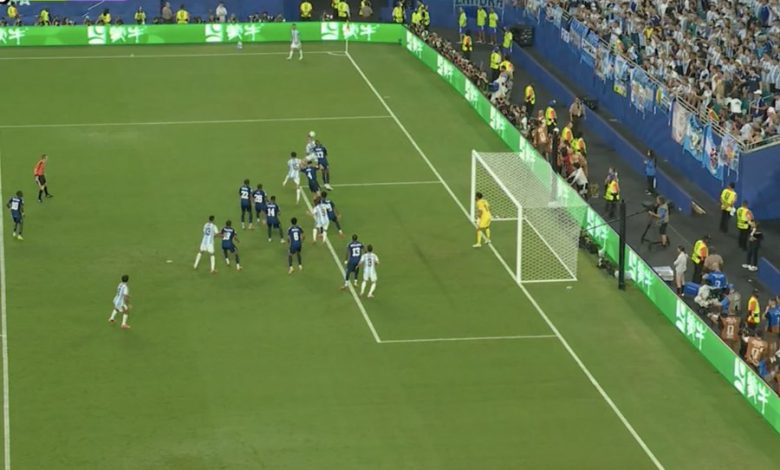
Late in the match, Argentina earned a corner kick.
When the ball was delivered into the penalty area, several Argentina players were positioned close to Cape Verde’s goal while defenders attempted to hold their line.
Video shared online appeared to show one Argentine player standing beyond the last defender, leading many fans to immediately conclude that the eventual goal should have been ruled out.
Images quickly spread across X, Facebook and Instagram with captions such as:
- “Clear offside!”
- “Cape Verde robbed!”
- “How did VAR allow this?”
- “Football corruption!”
Within hours, millions of users had viewed freeze-frame images taken before the ball reached the attacking players.
However, football’s offside law is considerably more complicated than judging a single screenshot.
Why Freeze Frames Can Be Misleading
One of the biggest misconceptions surrounding offside decisions is that a still image automatically proves whether a player was offside.
It does not.
The offside law depends on the exact moment the ball is played by a teammate, not a frame captured before or after.
Even a fraction of a second can completely change the outcome of an offside decision.
Professional VAR officials use calibrated technology to identify the precise kicking point before drawing the offside lines.
A screenshot circulating online rarely captures that exact instant.
FIFA’s Explanation
According to the explanation surrounding the decision, the officials determined that the attacking player who appeared closest to goal was not guilty of an offside offence because the player either:
- was level with the second-last defender when the ball was played,
- was kept onside by another Cape Verde defender positioned nearer to the goal line, or
- did not interfere with play in a manner punishable under the Laws of the Game.
The decision therefore stood after VAR completed its review.
No evidence has emerged that FIFA admitted the goals were incorrectly awarded. Instead, the decisions remained valid after the officials applied the offside protocol. Social media claims that FIFA acknowledged the goals were offside have not been substantiated by official statements.
Understanding the Offside Law
Many supporters assume that being closest to the goalkeeper automatically means offside.
That is incorrect.
A player is only penalised if:
- they are in an offside position,
- the ball is played by a teammate,
- and they become actively involved in play.
Simply standing beyond defenders does not automatically result in an offence.
Players can also avoid punishment if they:
- do not touch the ball,
- do not challenge an opponent,
- do not obstruct the goalkeeper,
- or receive the ball after a deliberate play by a defender.
These distinctions often explain why controversial goals are allowed despite appearing suspicious in still images.
Why Many Fans Believed It Was Offside
Cape Verde supporters understandably felt aggrieved.
The freeze-frame circulating online appeared convincing at first glance.
Many football pages shared the same image without including:
- the exact kicking point,
- VAR calibration,
- or the complete sequence.
As a result, millions formed opinions based on incomplete evidence.
This has become increasingly common in modern football, where screenshots often spread faster than the official explanation.
VAR’s Role
VAR reviews every goal automatically.
Officials examine:
- the exact moment of the pass,
- player positions,
- possible interference,
- goalkeeper obstruction,
- and any preceding infringements.
If clear evidence shows an offside offence, the goal is cancelled.
If not, the original decision remains.
In Argentina’s match against Cape Verde, VAR did not recommend overturning either decision, allowing play to continue and the goals to stand.
Why the Match Became So Emotional
The controversy was magnified because Cape Verde produced one of the performances of the tournament.
The tournament debutants twice fought back against the reigning world champions and pushed the match into extra time before eventually losing 3-2. Their spirited display earned widespread praise despite the defeat.
Many neutrals felt the underdogs deserved more from the game.
When controversial refereeing decisions occur in matches involving smaller nations against football giants, emotions naturally run high.
Social Media Reaction
Football communities exploded after the match.
Some fans argued:
“That is one of the clearest offsides you’ll ever see.”
Others responded:
“Watch the full replay—not just the screenshot.”
Many analysts reminded supporters that freeze-frame images cannot replace calibrated VAR technology.
The debate quickly became one of the tournament’s biggest talking points.
Gianni Infantino’s Comments
Separate from the offside debate, FIFA President Gianni Infantino was widely shared on social media after saying he “suffered” while watching Argentina’s match before clarifying that he meant the game was tense and that, as FIFA president, he remains neutral. Those remarks added fuel to online speculation but were unrelated to the officiating decisions themselves.
What Argentina’s Players Said
Argentina’s players focused on the difficulty of the contest rather than the refereeing.
Manager Lionel Scaloni praised Cape Verde’s resilience and admitted his side had been pushed to the limit, saying knockout football is never easy and that the match demanded everything from his players.
Cape Verde Leave With Pride
Although eliminated, Cape Verde won admiration across the football world.
Their disciplined defending, fearless attacking and determination against one of football’s traditional powers earned praise from supporters and pundits alike.
Coach Bubista said his players represented their country with bravery and dignity despite the heartbreaking result.
Final Verdict
The controversy surrounding Argentina’s two alleged offside goals against Cape Verde will likely remain a topic of debate long after the tournament ends.
However, based on the match officials’ review, both goals were allowed after VAR checked the incidents, and there is no confirmed official statement from FIFA saying the goals should have been ruled offside. Much of the online discussion has been driven by screenshots and fan interpretations rather than evidence that FIFA admitted an officiating error.
As is often the case with tight offside decisions, opinions remain divided. Some supporters believe Cape Verde were unfortunate, while others argue the officials correctly applied the Laws of the Game. What is beyond dispute is that the match delivered one of the most dramatic contests of the tournament and ensured that the debate over offside interpretation will continue well beyond the final whistle.