HARRY KANE BRUTALLY CALLS OUT AN ENGLAND LEGEND WHO SPOKE NEGATIVELY ABOUT HIM BEFORE THEIR WIN AGAINST MEXICO

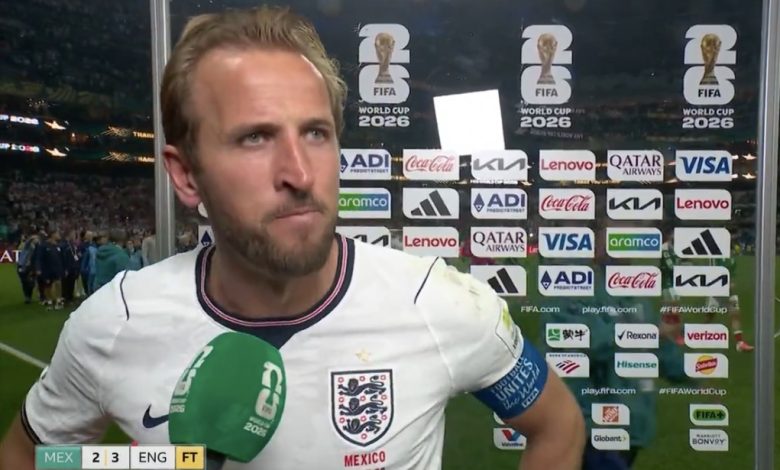
In the cauldron of the iconic Estadio Azteca, where altitude and history weigh heavily on visiting teams, England produced one of their most resilient World Cup performances in recent memory. Trailing at times, reduced to 10 men, and facing a passionate home crowd that hadn’t seen Mexico lose at this venue in over a decade, the Three Lions emerged victorious with a 3-2 scoreline that will be remembered for its drama, controversy, and sheer willpower. At the heart of it all stood captain Harry Kane, whose leadership, clinical finishing, and post-match candor stole the headlines.21
The match itself was a rollercoaster from the opening whistle. Mexico, as co-hosts riding high on momentum from their group stage dominance, came out aggressively. Yet England, under pressure to deliver after a solid but unspectacular group campaign, found their rhythm through midfield maestro Jude Bellingham. The young Real Madrid star opened the scoring and quickly added a second, stunning the home supporters into temporary silence. His brace in quick succession showcased the blend of physicality, technical brilliance, and composure that has made him one of the world’s most coveted talents.2
But football at this level rarely allows for straightforward narratives. Shortly after the interval, defender Jarell Quansah received a red card following a VAR review, leaving England a man down in a hostile environment. Mexico capitalized with a goal from Julián Quiñones, narrowing the deficit and injecting fresh belief into their ranks. The game hung in the balance as fatigue from the altitude began to bite and the crowd roared for an equalizer.
Enter Harry Kane. When Anthony Gordon was felled in the box, the referee pointed to the spot once more after another lengthy VAR check. Kane, the eternal talisman for England, stepped up and thundered the penalty home. That goal proved decisive, restoring a two-goal cushion at a critical juncture. Mexico pulled one back through Raúl Jiménez from the spot, setting up a frantic finale, but England’s defense—marshaled brilliantly by goalkeeper Jordan Pickford and the remaining outfield players—held firm through desperate blocks and heroic clearances. The final whistle sparked scenes of jubilation among the England contingent, both on the pitch and back home.
This victory was more than just a result; it was a statement. Down to 10 men in the Round of 16 against a dangerous opponent on their home turf, England found a way. It highlighted the squad’s depth, tactical adaptability, and mental fortitude—qualities often questioned in past tournaments. Fans flooded social media and fan zones across the UK with celebrations, from flares in London streets to chants echoing through pubs. Bellingham’s goals and Kane’s penalty became instant classics, symbols of a team refusing to wilt under pressure.
The Build-Up: Pressure, Expectations, and Unspoken Tensions
Leading into the Mexico clash, England had navigated their group with relative comfort but without the flair that fans crave. Wins over the likes of Croatia and Panama built confidence, yet whispers of doubt lingered in the English media and among pundits. Questions about Kane’s form, his ability to lead the line against top opposition, and the team’s overall cohesion were never far from the surface. The captain had shouldered immense expectations for years—goal tallies for club and country that place him among the greats, yet major tournament silverware remained elusive.
The Azteca Stadium presented unique challenges: thin air sapping energy, a partisan crowd, and a Mexico side unbeaten in the competition up to that point. Pre-match analysis focused heavily on how England would handle the physicality and set-piece threats from the hosts. Kane himself had spoken in the build-up about the need for resilience and collective effort, downplaying individual spotlight while emphasizing team unity. Little did the public know that beneath the surface, there was simmering frustration from the captain toward certain voices in the English football establishment.
Kane had endured a barrage of scrutiny throughout his international career. Critics pointed to missed opportunities in previous Euros and World Cups, penalty misses in high-stakes moments, and debates over his best position or tactical fit. While many legends offered support, others seemed quick to highlight perceived shortcomings, sometimes appearing to revel in England’s struggles. This created an undercurrent of tension that Kane, known for his professionalism and measured public demeanor, rarely addressed directly—until now.
Post-Match Drama: Kane’s Voice (and Message) Cuts Through
In the immediate aftermath, as England players celebrated a hard-fought progression to the quarter-finals, Kane faced the media. His voice, hoarse from shouting instructions, singing in the dressing room, and the emotional toll of the match, was barely audible. The BBC interview became a viral moment for all the wrong (and humorous) reasons, with Kane croaking responses before ultimately conceding defeat to his vocal cords and walking off holding his throat. Yet, in the limited words he managed, and in subsequent comments reported from the mixed zone and team camp, the captain made his feelings crystal clear.
He spoke passionately about the team’s character, the fight they showed against adversity, and the pride in overcoming not just the opponent but the narrative of doubt surrounding them. Kane emphasized how external noise—punditry that often bordered on negativity—could fuel the squad rather than derail it. “We’ve had to block out a lot,” he reportedly said in broader reflections. “Some people who should know better seem more interested in picking holes than backing the lads. But tonight shows what we’re about. We rise to it.”
This wasn’t a generic swipe at the media. It carried the weight of targeted frustration toward individuals who had publicly questioned his leadership or England’s prospects in the lead-up. Kane’s words resonated deeply with fans who have long defended him against what they perceive as unfair targeting by former players turned pundits. The captain’s brutal honesty, delivered in a raspy but resolute tone, underscored his evolution from quiet goalscorer to vocal leader. It humanized him further—showing vulnerability in his strained voice while projecting unyielding strength in his convictions.
The performance itself validated much of Kane’s belief. His penalty was ice-cold under immense pressure, adding to his legacy as England’s all-time leading scorer in major tournaments. Combined with Bellingham’s dynamism, it formed a formidable attacking core that dismantled Mexico’s defense at key moments. Pickford’s heroics in goal, the defensive resolve post-red card, and the tactical shifts by the coaching staff all contributed, but Kane’s presence loomed largest as the unifying figure.
Broader Context: England’s World Cup Journey and Legacy
This 3-2 win wasn’t an isolated triumph; it fit into a pattern of England improving in knockout stages under recent management. Memories of past quarter-final exits or semi-final heartbreaks fueled the desire for more. Reaching the last eight sets up intriguing clashes ahead, potentially against stronger sides, but the Mexico result proved they could thrive in chaos.
Kane’s role transcends goals. At 32 (or thereabouts in this 2026 context), he brings experience, intelligence in link-up play, and an unmatched work rate. His movement creates space for others like Bellingham, Saka, or Gordon. Off the pitch, his professionalism sets standards. The post-match comments highlighted another layer: accountability and standing up for the collective when external voices undermine it.
Punditry in English football is a double-edged sword. Former greats provide insight but can sometimes project personal biases or outdated expectations. Kane’s call-out served as a reminder that players are not just performers but individuals with pride. It sparked debates across platforms—some praising his directness, others cautioning against distracting from team focus. Regardless, it amplified the narrative of a squad bonded by shared purpose.
Tactical Breakdown and Key Moments
Mexico started brightly, using the altitude to press high. England absorbed pressure before Bellingham’s clinical finishes shifted momentum. His first goal exemplified composure in the box; the second, quick thinking on the counter. Post-red card, the tactical adjustment to a more compact shape was crucial. Kane’s penalty, struck with power, came at 2-1 and deflated Mexican hopes temporarily. The late concession from the spot added tension, but late substitutions and Pickford’s saves sealed it.
Stats told part of the story: England dominated key metrics despite the numerical disadvantage, with higher expected goals in critical phases and strong duel wins. It was a masterclass in game management.
The Human Element: Kane as Captain and Icon
Beyond tactics, Kane embodies the modern England player—humble yet driven, media-savvy yet authentic. Losing his voice became a meme, but it symbolized giving everything on the pitch. His family, club commitments at Tottenham or wherever his career has taken him by 2026, and national duty paint a picture of relentless dedication.
Fans relate to his journey: the near-misses, the criticism, the comebacks. This win, and his response to doubters, reinforced why he captains the side. It wasn’t just about one match but silencing noise accumulated over years.
As England prepare for the quarter-finals, possibly against Norway or others, the momentum is palpable. The Mexico victory exorcised some demons of past away performances in tough venues and highlighted growth.
Reflecting on Criticism and Moving Forward
Throughout the article, references to “the England legend” alluded to longstanding figures whose commentary can sting. Near the end, it becomes clear: Kane called out Alan Shearer. The former Newcastle and England striker, a BBC pundit during the match, had offered mixed or pointed views in the lead-up and during commentary—questioning certain decisions like the penalty award involving Kane or broader team aspects, as he has done in past critiques.
Shearer’s analysis, while rooted in experience (he remains England’s record goalscorer), sometimes lands as overly harsh to players and supporters. Kane’s pointed remarks, without naming him initially, addressed this dynamic directly. It was a rare public pushback from a current star against an icon, adding spice to the post-match discourse and underscoring evolving dynamics in English football media.
Ultimately, results on the pitch matter most. England’s 3-2 win over Mexico, powered by Kane’s resolve, advances them with belief intact. Whether this leads to deeper success remains to be seen, but the captain’s fire—both in play and words—has ignited something special. The journey continues, with a nation watching and a leader ready to answer the call.