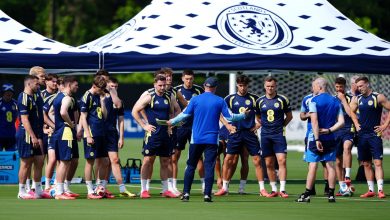
The drama surrounding Group C of the 2026 FIFA World Cup reached a remarkable conclusion as Scotland and Morocco found themselves at the centre of a major FIFA decision that could have a huge impact on qualification for the knockout stages. With Scotland preparing for a daunting final group match against Brazil and Morocco set to face Haiti, speculation had been growing over how the group would be decided if teams finished level on points.
In a development that immediately sparked debate among supporters, pundits and football officials, FIFA confirmed the final tie-breaking criteria that could leave Scotland in a favourable position even if they suffer defeat against Brazil.
The announcement has effectively brought weeks of uncertainty to an end and has created fresh hope among Scotland supporters who feared that their team’s World Cup dream could be over before the final whistle against one of the tournament favourites.
Scotland’s Difficult Position
Scotland entered the final round of Group C fixtures facing an enormous challenge.
After opening their campaign with a hard-fought victory over Haiti, Steve Clarke’s side suffered a disappointing defeat against Morocco. The loss left Scotland needing a positive result against Brazil or assistance from events elsewhere in the group.
Brazil, meanwhile, have looked one of the strongest teams in the competition. Packed with world-class talent and carrying expectations of lifting the World Cup trophy, the South Americans were widely expected to finish top of the group.
Many analysts believed Scotland’s chances of progressing depended not only on their own performance but also on Morocco’s result against Haiti.
That situation created a complex qualification picture that prompted FIFA to clarify exactly how the final standings would be determined if teams finished level.
FIFA Issues Clarification
The governing body’s statement focused on the official tie-breaking procedures used during the World Cup group stage.
While points remain the primary factor, FIFA reminded teams and supporters that goal difference, goals scored and head-to-head records all play crucial roles when teams are separated by the smallest of margins.
According to the clarification, Scotland’s earlier results could potentially work in their favour depending on the outcomes of the final matches.
The announcement immediately generated excitement among Scotland supporters because it suggested that qualification could remain possible even in the event of a defeat to Brazil.
That possibility transformed the mood around the national team camp.
What had appeared to be a near-impossible task suddenly became a realistic scenario, with Scotland’s destiny no longer entirely dependent on producing a shock victory against the five-time world champions.
Why Scotland Could Benefit
Several factors appear to favour Scotland under the qualification calculations.
Firstly, their victory over Haiti ensured they collected three valuable points early in the tournament.
Secondly, if Morocco fail to defeat Haiti or if the margin of victory is insufficient, Scotland’s overall standing could remain competitive even after losing to Brazil.
The exact mathematics depend on scorelines across both matches, but FIFA’s confirmation means Scotland have routes to qualification that many fans had not previously considered.
This has led to widespread discussion across social media platforms, where supporters have been calculating every possible scenario.
Some fans described the development as a “lifeline,” while others insisted Scotland must still focus solely on producing their best performance against Brazil.
Morocco’s Reaction
Unsurprisingly, Morocco’s supporters reacted very differently to the announcement.
Many Moroccan fans believe their team earned a significant advantage through their victory over Scotland and feel they should control their own destiny heading into the final matchday.
Some observers argued that FIFA’s clarification changes little because the rules have existed throughout the tournament.
Others suggested the timing of the announcement has increased pressure on Morocco, who now know that a simple victory may not be enough depending on the final goal difference calculations.
Morocco have impressed throughout the competition with disciplined defending and organised tactical displays.
Their victory against Scotland demonstrated their ability to frustrate opponents while remaining dangerous on the counter-attack.
As a result, many neutral observers still believe Morocco remain in a strong position to qualify.
Scotland’s Belief Returns
Within the Scotland camp, the FIFA clarification appears to have injected fresh belief.
Players have repeatedly stated that they will approach the Brazil match with confidence despite being considered underdogs.
Manager Steve Clarke has spent much of the tournament emphasising resilience and determination.
Those qualities were evident during Scotland’s victory over Haiti and will be required again against a Brazilian side featuring some of the world’s most gifted footballers.
The possibility that qualification remains achievable even in defeat does not mean Scotland can afford to relax.
Instead, it gives them additional motivation to keep the scoreline competitive and fight for every goal.
In tournaments of this magnitude, a single goal can often determine whether a nation advances or heads home.
The Brazil Challenge
Despite the renewed optimism, Brazil remain a formidable obstacle.
The South Americans possess extraordinary attacking talent and have consistently demonstrated why they are among the favourites to win the tournament.
Their blend of technical quality, experience and squad depth makes them one of the most feared teams in international football.
Scotland’s defensive organisation will therefore be tested to its limits.
Any lapses in concentration could prove costly against opponents capable of punishing mistakes within seconds.
Yet football history is filled with unexpected results.
World Cups have repeatedly shown that determination, discipline and tactical execution can sometimes overcome differences in reputation and star power.
Scotland will hope to produce one of those memorable performances when they take the field.
Fans Divided Over FIFA Decision
The reaction among football supporters worldwide has been mixed.
Scottish fans naturally welcomed the clarification, seeing it as confirmation that their team’s hopes remain alive.
Many supporters praised FIFA for explaining the qualification process clearly before the final group matches.
Others questioned why the issue became such a major talking point when the regulations have long been established.
Meanwhile, some Moroccan supporters expressed frustration at what they perceived as excessive focus on Scotland’s possible routes to qualification.
They argued that Morocco’s achievements deserve equal recognition after a strong campaign.
Regardless of opinion, the discussion has added another layer of intrigue to one of the tournament’s most fascinating groups.
What Happens Next?
Everything now comes down to the final 90 minutes.
Scotland face the enormous challenge of taking on Brazil, while Morocco meet Haiti knowing their own fate may depend on more than simply securing three points.
Every goal scored and every goal conceded could prove decisive.
The margins separating success and disappointment are incredibly small.
Players, coaches and supporters will be watching both matches closely as the qualification picture evolves in real time.
By the end of the evening, Group C will finally have its answer.
A Defining Night for Scotland
For Scotland, the significance of the occasion cannot be overstated.
Qualification for the knockout stages of a World Cup would represent one of the greatest achievements in the modern history of the national team.
The FIFA clarification has ensured that hope remains alive.
Even if Brazil ultimately prove too strong, Scotland may still have a pathway forward depending on events elsewhere.
That possibility has transformed a difficult situation into one filled with suspense and optimism.
Whether Scotland take advantage of the opportunity remains to be seen, but one thing is certain: the final chapter of the Scotland-Morocco qualification battle promises to deliver drama, tension and unforgettable moments.
As the decisive matches approach, fans across the football world will be watching closely to discover whether FIFA’s final decision becomes the lifeline that carries Scotland into the World Cup knockout rounds or merely a footnote in a story that ultimately belongs to Morocco.