THE REFEREE ADDRESSED THE REASON WHY SCOTLAND PENALTY WAS NOT AWARDED, WITH OFFICIALS FACING POSSIBLE SUSPENSION AFTER KEY DECISIONS DENIED SCOTLAND A CRUCIAL CHANCE

SCOTLAND HELD BY SLOVENIA AS PENALTY APPEAL SPARKS DEBATE AFTER REFEREE’S DECISION
Scotland began Sébastien Pocognoli’s reign with a goalless draw against Slovenia in Ljubljana on Saturday, but the result was accompanied by frustration over refereeing decisions and Scotland’s failure to turn promising moments into a winning goal.
The Nations League Group B1 opener finished 0-0 at the Stadion Stožice, with Scotland showing significant improvement after a difficult opening period but ultimately leaving Slovenia with one point.
For the new Scotland manager, the match represented the beginning of a new era.
Pocognoli had been appointed as Steve Clarke’s successor and selected a refreshed squad containing several players who had not been part of Scotland’s World Cup group. The Scottish FA confirmed before the match that more than half of the squad had not featured at the summer tournament.
That context makes the performance more complicated to assess.
Scotland did not produce a perfect performance, particularly during the first half, but their response after the interval provided encouragement.
The biggest frustration, however, was that Scotland could not convert their improved attacking performance into the goal that would have changed the match.
The penalty controversy has therefore become part of the post-match conversation.
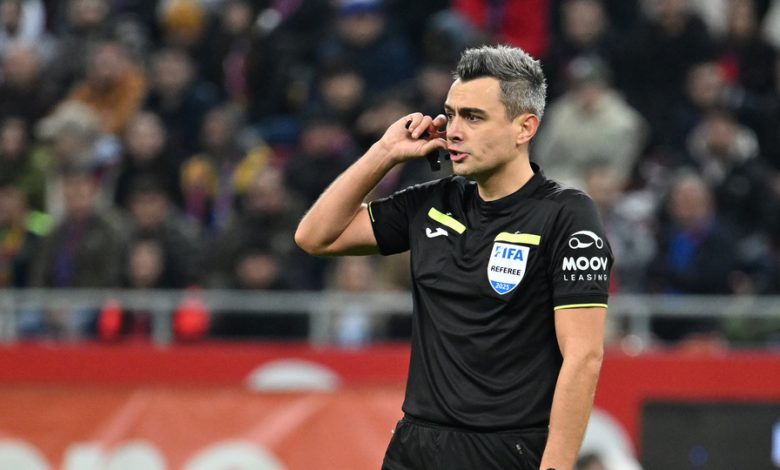
Supporters questioned several decisions by Romanian referee Horațiu Feșnic, who was appointed by UEFA for the fixture, with Cătălin Popa operating as VAR. UEFA’s official match information confirms the appointments.
There is an important distinction to make, though.
While criticism of refereeing decisions is understandable
The match itself contained evidence that Scotland had opportunities to take control.
Supporters discussing the game pointed to missed chances, including an opportunity for Lawrence Shankland, while the general reaction also recognised a much stronger Scottish performance after half-time.
That is perhaps the most important part of the story.
Scotland had a chance to make Pocognoli’s competitive debut memorable with three points, but the final product was not quite good enough.
The first half was difficult for Scotland.
Slovenia were able to make the game uncomfortable and created situations that forced Scotland to remain alert defensively.
Yet Scotland gradually found their rhythm.
The second half brought more pressure and greater attacking intent, with Scotland moving the ball more effectively and spending longer periods in dangerous areas.
That improvement is significant because Pocognoli has only recently taken charge.
The Scottish FA confirmed that the match was his first competitive fixture as national-team head coach.
A new manager normally needs time to establish tactical ideas, improve relationships between players and create consistency.
Scotland therefore had to balance the disappointment of dropping two points with the fact that there were positive signs in the performance.
The penalty discussion becomes particularly interesting because penalties can completely change the tactical picture of a match.
A successful spot-kick would have forced Slovenia to abandon some of their defensive caution.
Instead, the game remained level, allowing Slovenia to continue defending compactly.
Scotland consequently needed to find another way through.
That is where the responsibility ultimately returns to the players.
Even if Scotland believe a penalty should have been awarded, they still had enough time and opportunities to produce a decisive moment from open play.
The inability to do so is an important lesson for the new manager.
International football often provides very few clear opportunities.
When they arrive, they have to be converted.
The goalless draw also means Scotland begin the new Nations League campaign with a point rather than three.
The group schedule is demanding.
After Slovenia, Scotland are due to face Switzerland at Hampden before travelling to North Macedonia and then returning home to face Slovenia.
That makes the dropped points in Ljubljana particularly relevant.
Scotland cannot afford to spend the entire campaign looking back at one disputed decision.
The focus must quickly move towards Switzerland.
The supporters will understandably continue to debate the penalty appeal and other refereeing decisions, especially because the game was so tight.
But the more productive question for Scotland is whether the team can turn the encouraging elements of this performance into goals and victories.
The reaction from supporters already suggests that many saw reasons for optimism.
Some Scottish fans described the second-half performance as encouraging and felt the team should have won, while others were particularly critical of the referee’s handling of physical challenges and stoppages.
Those reactions demonstrate the two sides of the debate.
One side focuses on the officials.
The other recognises that Scotland had their own responsibility for failing to score.
Both issues can exist simultaneously.
A referee can make decisions that supporters disagree with while the team itself can still be responsible for missed chances.
That is why it would be premature to describe the draw as being entirely caused by officiating.
The official result remains Slovenia 0-0 Scotland.
There was no confirmed penalty awarded to Scotland, and there is currently no confirmed UEFA announcement that the referee or VAR officials have been suspended.
What can be established is that the officiating attracted criticism and that Scotland left Ljubljana disappointed after failing to turn their second-half improvement into a winning goal.
For Pocognoli, that provides both encouragement and a warning.
The encouragement is that Scotland demonstrated a better attacking rhythm after the break and showed the capacity to improve during the game.
The warning is that performances alone will not be enough.
Scotland need goals.
They need to take their chances.
And when matches are decided by fine margins, they need to make sure they create enough clear opportunities that one disputed refereeing decision cannot become the defining moment.
The Tartan Army will now turn their attention towards Hampden.
The next match against Switzerland offers Scotland an immediate opportunity to build on the positives from Ljubljana.
The penalty debate may continue, but the bigger story is the beginning of a new era.
Pocognoli has his first competitive result, Scotland have one point, and there is already evidence that the new manager can make changes to the team’s approach.
The challenge now is turning those promising signs into victories.