UEFA OFFICIAL STATEMENT ON NEW RULE AHEAD OF SPAIN CLASH KEPT EVERYONE TALKING AS ENGLAND MIGHT SUFFER THE MOST FROM IT

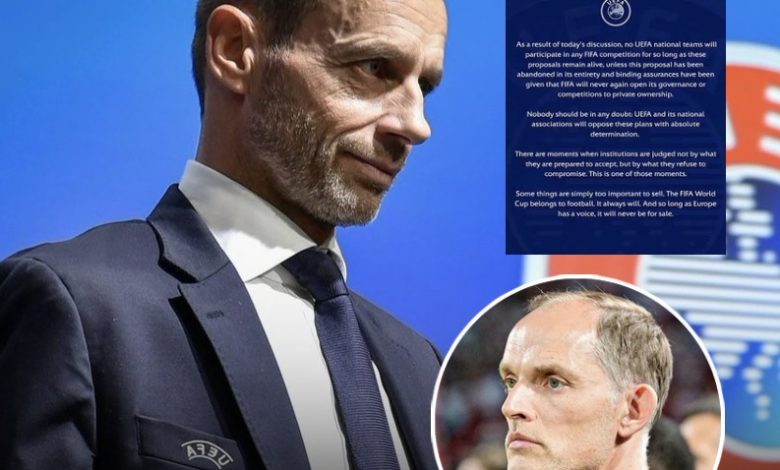
England are preparing for a major UEFA Nations League showdown against Spain at Wembley, but attention has increasingly turned towards a significant change in the Laws of the Game that could have an impact on how both teams manage the match.
UEFA has confirmed that the updated Laws of the Game for the 2026/27 season are being implemented across its competitions, with referees instructed to apply the new measures consistently. The changes are primarily designed to reduce time-wasting, increase the amount of effective playing time and prevent teams from deliberately slowing down restarts.
England will face Spain at Wembley on Saturday, September 26, in their opening UEFA Nations League Group A3 fixture. The match is particularly significant because Spain enter the new campaign as the reigning world champions, while England are beginning a new cycle under Thomas Tuchel following their World Cup campaign.
One of the biggest talking points surrounding the new regulations is the introduction of a five-second visual countdown for delayed throw-ins and goal kicks.
Under the updated Law 15, if the referee determines that a team is deliberately delaying a throw-in, a visible five-second countdown can be started. If the ball has still not been put back into play when the countdown ends, the throw-in is awarded to the opposition.
The consequences are even more dramatic for goal kicks. If a team deliberately delays a goal kick and fails to restart play within the countdown, the opposition is awarded a corner kick. The IFAB says the measure is intended to prevent deliberate delays and protect the tempo of matches.
That could make every restart more important during the England-Spain contest.
Goalkeepers, defenders and players taking throw-ins will have to be much more conscious of how quickly they restart play. A situation that might previously have resulted in nothing more than a referee’s warning could now potentially hand the opposition possession or, in the case of a delayed goal kick, a dangerous corner.
The changes do not stop there.
Players being substituted now have a ten-second limit to leave the field after the substitution board is shown or the referee signals for the change. If the player takes longer than the permitted period, they must still leave, but their replacement cannot enter until the first stoppage after one minute of playing time has elapsed following the restart.
There are also new provisions concerning injuries. An outfield player whose injury causes play to be stopped or who receives treatment or assessment on the pitch may be required to remain off the field for one minute after play resumes. The objective is again to reduce interruptions and discourage situations where stoppages become an opportunity to slow the game down.
UEFA’s refereeing department has made it clear that consistency is a major part of the implementation.
UEFA director of refereeing Roberto Rosetti has outlined how the updated laws are being interpreted in European competitions, following discussions with refereeing officials from all 55 UEFA member associations. UEFA says the purpose is to ensure that the laws are applied with greater clarity and consistency.
For England, the timing makes the development particularly interesting.
The Three Lions are entering a Nations League campaign in which every group-stage fixture carries significance. England are in League A, Group 3 alongside Spain, Croatia and Czechia, with the top two teams progressing to the quarter-finals.
Tuchel’s side will therefore need to adapt quickly to the way referees enforce the updated laws.
England’s players are not being singled out by UEFA, and there is no official suggestion that the new rules specifically disadvantage the Three Lions. The same regulations apply to Spain and every other team competing under the UEFA framework.
However, the rule could influence the tactical battle depending on how the teams approach possession and restarts.
Spain are renowned for their emphasis on possession and controlled build-up, while England can also use structured possession but have players capable of attacking quickly when the ball is recovered. In a closely contested match, the difference could come down to how efficiently either side restarts play after the ball goes out.
A delayed goal kick could be particularly costly because the punishment is not simply a change of possession. The opposition receives a corner, immediately creating an opportunity to put pressure on the defence.
There is also another important UEFA rule already in place involving goalkeepers. Since the 2025/26 season, UEFA competitions have used the eight-second goalkeeper time limit. If a goalkeeper controls the ball with their hands for more than eight seconds, the opposition is awarded a corner, with referees using a visible five-second countdown.
That means goalkeepers in UEFA competitions now face multiple mechanisms designed to prevent them from slowing the game down.
The England-Spain match will therefore provide an early high-profile test of how the updated approach works in practice. Both teams will know that seemingly minor delays could have immediate consequences, particularly around goal kicks, throw-ins and substitutions.
For supporters, it could also make the match feel noticeably different. Referees are being encouraged to act more decisively when they believe teams are deliberately wasting time, meaning players may have less freedom to take their time over routine restarts.
England’s meeting with Spain is already one of the most anticipated fixtures of the opening Nations League matchday. England Football has confirmed that the game at Wembley is scheduled for 7:45pm BST on Saturday, September 26, while Spain have completed their preparations ahead of the encounter.
The new rules are not designed specifically for this fixture, but their implementation could become one of the most talked-about aspects of the contest.
Ultimately, neither England nor Spain can afford to ignore them. The team that adapts quickest to the referee’s interpretation could avoid unnecessary setbacks, while a moment of hesitation at a throw-in or goal kick could potentially turn an ordinary restart into a dangerous situation.
With two of Europe’s biggest national teams meeting at Wembley, the spotlight will be firmly on the players and managers. But the officials will also have a major role to play as UEFA’s updated approach to time-wasting gets another high-profile examination.
And if the match is decided by a corner awarded because a team failed to restart within the required countdown, the new rule will certainly become an even bigger talking point after the final whistle.