CELTIC RESPOND AFTER FIFA’S POSITION ON FAN CONDUCT — CONTROVERSY ERUPTS OVER BOOING DURING REMEMBRANCE SILENCE
Celtic have found themselves at the centre of another major controversy after sections of their support booed during a Remembrance Sunday minute’s silence before the Scottish Premiership clash with Kilmarnock.
The incident at Celtic Park has triggered renewed debate over supporter conduct, the club’s responsibilities and the long-running sensitivity surrounding Remembrance events at Parkhead.
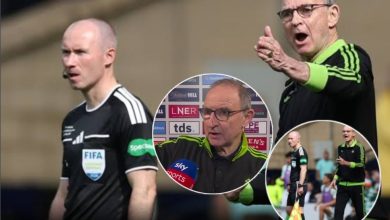
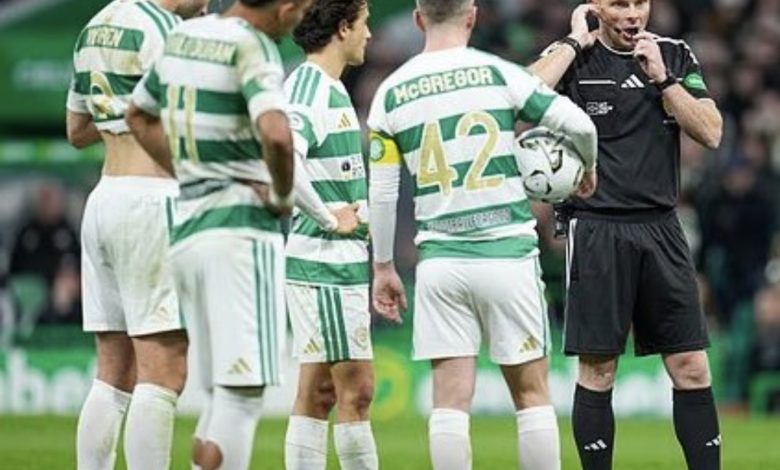
However, despite reports and social-media claims linking the incident to FIFA, there is currently no verified FIFA announcement confirming a specific new punishment against Celtic for the booing. The immediate action witnessed during the match came from referee John Beaton, who brought the planned minute-long silence to an end after only around 12–13 seconds because of the continued jeering from sections of the crowd.
THE INCIDENT THAT SPARKED THE CONTROVERSY
The controversy unfolded before Celtic’s league meeting with Kilmarnock on Sunday, November 8.
Players from both teams gathered around the centre circle as the stadium prepared for a period of silence to remember those who lost their lives in conflicts, with particular reference made to people connected with Celtic who died during wartime.
But the atmosphere quickly changed.
Booing and whistling could be heard from sections of the Celtic support before and during the silence. When the noise continued after the referee had signalled for the tribute to begin, Beaton eventually blew his whistle again and ended the silence after only a fraction of the scheduled minute. Reports put the duration at roughly 12 to 13 seconds.
The incident immediately attracted attention beyond Glasgow, with footage circulating widely online and supporters from different clubs expressing opposing views.
WHY IS THIS SUCH A SENSITIVE ISSUE AT CELTIC PARK?
The controversy cannot be separated from Celtic’s historical and cultural identity.
A section of the club’s support has long objected to Remembrance traditions, particularly when they are perceived as representing British military history rather than simply remembering victims of war.
Celtic have previously experienced similar incidents during Remembrance fixtures. The club’s Irish heritage and the history of British involvement in Ireland have contributed to a particularly complicated relationship with the poppy and Remembrance Day among some supporters.
That disagreement has existed for years.
It is also important, however, not to treat the entire Celtic support as being responsible for the behaviour.
Reports from Sunday’s match indicated that the Green Brigade section was largely empty during the silence, with supporters entering the stadium area after the tribute had finished. That meant some supporters who oppose the Remembrance ceremony avoided directly disrupting it, while other sections of the crowd continued to boo.
CELTIC’S OWN HISTORY MAKES THE ISSUE EVEN MORE COMPLICATED
One of the strongest arguments against portraying the incident as a rejection of remembrance itself is Celtic’s own history.
Celtic players and members of the wider club community have served during wartime, and several former Celtic players lost their lives during the First World War.
That history was explicitly referenced during the announcement before the Kilmarnock match.
Seven contracted or former Celtic players have been identified as having died during the First World War, including Archie McMillan, Bob Craig, Donald McLeod, John McLaughlin, Leigh Roose, Patrick Slavin and Peter Johnstone.
That creates a difficult distinction for the club and its supporters.
While some fans object to the political and historical associations surrounding Remembrance traditions, others may view the silence primarily as an opportunity to remember people connected to the club and those who lost their lives in war.
THE GREEN BRIGADE’S APPROACH
Interestingly, the behaviour of the Green Brigade during Sunday’s fixture has become part of the wider debate.
The supporter group has previously been strongly associated with protests surrounding Remembrance Day and the poppy. Yet reports indicated that much of the section remained outside the stadium bowl during the silence before entering afterwards.
Some Celtic supporters have argued that this was a more respectful way of expressing opposition: refusing to participate without actively preventing others from doing so.
That distinction has become an important part of the debate.
Critics of the booing argue that supporters who do not wish to participate should simply remain silent or step away rather than disrupting an event that other people consider meaningful.
Others maintain that supporters should not be forced to participate in a ceremony they fundamentally disagree with.
WHAT ABOUT THE CLAIM OF A FIFA PUNISHMENT?
This is where the story requires particular care.
FIFA does have disciplinary regulations covering supporter misconduct, discriminatory behaviour and other incidents, and FIFA has previously sanctioned national associations and clubs for fan-related offences.
But the available evidence does not currently establish that FIFA has announced a specific punishment against Celtic for Sunday’s Remembrance silence incident.
The Scottish FA remains the relevant domestic governing body for Scottish Premiership disciplinary matters, and its published disciplinary framework places responsibilities on clubs regarding supporter conduct.
That means claims that Celtic have already been punished by FIFA over the incident should not be presented as confirmed fact unless an official FIFA disciplinary decision is released.
CELTIC’S MATCH WAS NOT STOPPED
Despite the controversy before kick-off, the football itself went ahead.
Celtic defeated Kilmarnock 1–0, with Liam Scales scoring the decisive goal in the first half.
The result was significant because it restored Celtic’s four-point advantage at the top of the Scottish Premiership, giving Martin O’Neill’s side an important victory after a difficult run of league results.
That ensured the controversy surrounding the silence did not overshadow Celtic’s immediate competitive objective.
THE BIGGER QUESTION FOR CELTIC
The incident nevertheless leaves Celtic facing another difficult question about the behaviour of sections of their support.
Football clubs cannot control every individual action inside a stadium, but governing bodies can expect clubs to take reasonable steps to prevent unacceptable conduct.
The Scottish FA’s rules specifically place responsibilities on clubs to ensure, as far as reasonably practicable, that supporters do not engage in unacceptable conduct and that appropriate action is taken when incidents occur.
For Celtic, the challenge is therefore not simply about one minute’s silence.
It is about finding a way to balance the club’s distinctive identity, the political views of sections of its support, the right of supporters to protest and the expectation that other people should be allowed to observe a moment of remembrance without disruption.
For now, the confirmed story is that the silence at Celtic Park was cut short after around 12–13 seconds following booing from sections of the crowd.
The claim that FIFA has already issued a new punishment, however, remains unconfirmed by the sources currently available.
And that distinction could become crucial if Celtic are eventually asked to answer formally for what happened inside Parkhead.