VIRAL FOOTAGE SPARKS FRESH CONTROVERSY OVER SUNDERLAND’S PENALTY AGAINST CHELSEA
A controversial penalty awarded to Sunderland against Chelsea has sparked heated debate among football fans, with viral footage of the incident prompting questions about whether referee Jarred Gillett made the correct decision.
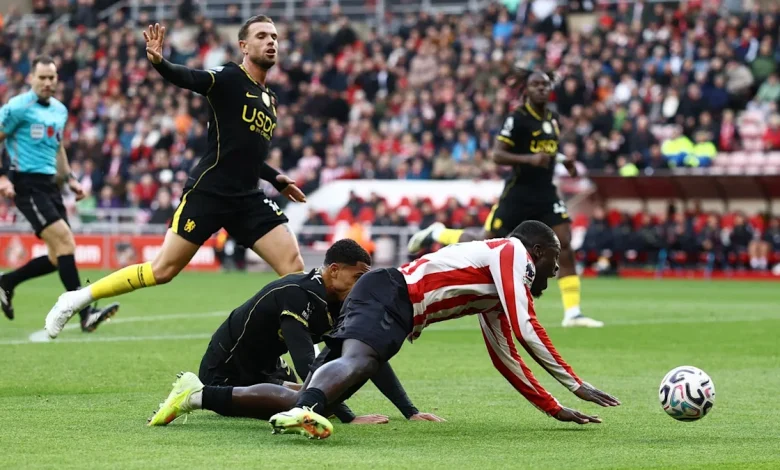
The incident, which occurred during Sunday’s Premier League encounter at the Stadium of Light, has attracted widespread attention after supporters closely examined the replay and questioned whether Chelsea defender Levi Colwill actually committed a foul on Sunderland striker Brian Brobbey.
While Sunderland supporters have defended the referee’s decision, several Chelsea fans have argued that Brobbey appeared to lose his balance and trip over his own feet during the challenge.
The footage has since fuelled arguments across social media, with many demanding a clearer explanation of why the referee pointed to the penalty spot.
The controversy came during a closely contested first half, with both sides searching for an important breakthrough. Brobbey, who had been a constant physical presence in Sunderland’s attack, attempted to get past Colwill as he drove towards the Chelsea penalty area.
The two players became involved in a physical tussle, with both appearing to make contact as they battled for position. As Brobbey attempted to turn away from the Chelsea defender, he suddenly went to ground, prompting referee Gillett to immediately award Sunderland a penalty.
Chelsea players were furious with the decision and surrounded the referee, insisting that their defender had not committed an offence worthy of a spot-kick.
Replays subsequently added another dimension to the controversy. Some viewers believed Brobbey’s right foot appeared to catch his left as he attempted to maintain his balance, raising questions about whether the striker had actually been brought down by Colwill or had simply stumbled during the struggle.
However, other observers argued that the contact between the two players was significant enough to justify the decision, particularly as the challenge appeared to continue into the penalty area.
WHY THE REFEREE AWARDED THE PENALTY
The important detail in the incident is the physical contact between Brobbey and Colwill.
Although the Chelsea defender appeared to be involved in a close contest for possession, the referee judged that his challenge constituted an infringement. Former referee analysis also pointed towards contact around the players’ lower legs as a possible reason for the decision.
The referee was well positioned to assess the incident and decided that Sunderland deserved a penalty. VAR reviewed the decision but did not recommend that it be overturned.
Enzo Le Fée subsequently stepped forward and confidently converted the spot-kick, giving Sunderland a crucial first-half advantage.
FANS QUESTION WHETHER BROBBEY TRIPPED HIMSELF
The biggest talking point, however, has been the alternative interpretation of the replay.
Several supporters have questioned whether Brobbey’s fall was caused primarily by his own movement rather than a deliberate or significant challenge from Colwill.
Chelsea supporters, in particular, have expressed frustration, arguing that the available footage does not conclusively demonstrate that the defender was responsible for bringing the Sunderland striker down.
Others have pointed out that football regulations do not require a defender to deliberately trip an opponent before a foul can be awarded. Accidental contact can still constitute an offence if it is careless, reckless or otherwise illegal under the Laws of the Game.
Consequently, the question is not simply whether Brobbey’s feet became tangled, but whether Colwill’s actions contributed to the loss of balance and whether the contact amounted to a punishable offence.
WHAT DID THE OFFICIALS ACTUALLY SAY?
There has also been confusion surrounding reports of an alleged FA statement explaining the controversial decision.
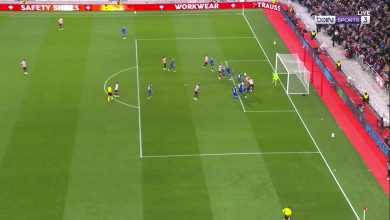
The Premier League’s official match coverage did publish an explanation concerning an earlier Chelsea penalty appeal involving Cole Palmer. VAR confirmed that any contact on Palmer occurred outside the penalty area, meaning the original decision to play on was upheld.
However, that statement concerned Chelsea’s unsuccessful appeal, not the penalty awarded to Sunderland. There is no verified evidence in the available reporting that the FA released a separate shocking statement admitting that the Sunderland penalty was incorrectly awarded.
This distinction is important because claims circulating online should not be mistaken for an official admission of refereeing error.
A DECISION THAT WILL CONTINUE TO DIVIDE OPINION
Despite the controversy, Sunderland benefited from the decision, with Le Fée’s penalty proving decisive in their 1-0 victory over Chelsea.
For Sunderland, it was an important result and a valuable three points. For Chelsea, it was another frustrating afternoon, made even more difficult by the belief that the officials had made a crucial decision against them.
Ultimately, the incident highlights the continuing debate surrounding VAR and the interpretation of physical challenges inside the penalty area.
Whether Brobbey was genuinely brought down by Colwill or whether his own movement played a greater role in his fall remains a subject of debate among supporters.
One thing is certain: the replay has provided plenty of material for discussion, and fans from both sides are unlikely to agree on the decision anytime soon.