FIFA trolls the entire world and names Slavko Vinčić for the World Cup final between Spain and Argentina.

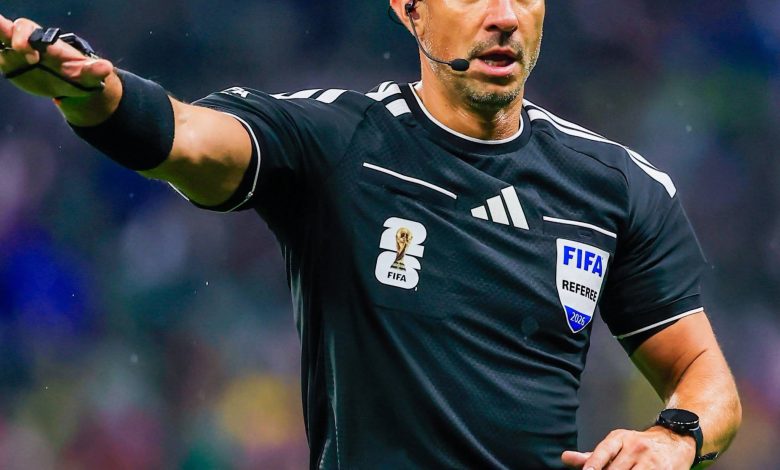
FIFA Trolls the Entire World? Slavko Vinčić Named Referee for the World Cup Final Between Spain and Argentina
The countdown to the 2026 FIFA World Cup final has reached its climax, with football fans across the globe eagerly awaiting what promises to be one of the biggest matches in the history of the tournament. Spain and Argentina have battled through an expanded World Cup featuring 48 nations, overcoming elite opposition to earn their places in the final at New York New Jersey Stadium. As excitement continues to build, FIFA has made one of the tournament’s most closely watched decisions by appointing Slovenian referee Slavko Vinčić to officiate the final. �
beIN SPORTS +1
The announcement immediately sparked widespread debate across social media. Supporters from both Spain and Argentina began examining Vinčić’s previous performances, searching for statistics involving their national teams and discussing whether he was the right official for the occasion. Within hours, dramatic headlines began circulating online, with one of the most widely shared claiming that “FIFA trolls the entire world” by selecting Vinčić for the biggest match in football.
It is a headline designed to provoke strong reactions. The word “trolls” suggests that FIFA intentionally made a controversial appointment to stir debate among football fans. While the phrase quickly gained traction on social media, it is important to separate opinion from fact. FIFA’s appointment process for World Cup referees is based on months—and often years—of assessment, performance reviews, fitness testing, and evaluations by the FIFA Referees Committee. The governing body selects officials whom it believes are capable of managing football’s biggest occasions under immense pressure. �
Olympics +1
For Vinčić himself, the appointment represents the greatest achievement of his refereeing career. Since becoming a FIFA-listed referee in 2010, he has steadily climbed through European football, taking charge of major UEFA Champions League, Europa League, European Championship, and international fixtures before finally receiving football’s ultimate refereeing honor: the FIFA World Cup Final. �
Olympics +1
A Career Built Through Europe’s Biggest Matches
Unlike many viral social media posts that reduce referees to a few controversial moments, Vinčić’s overall résumé tells a much broader story. Over the past decade he has consistently officiated high-profile European club matches featuring some of the world’s biggest stars.
His appointment to previous UEFA finals demonstrated the confidence European football authorities already had in his abilities. Refereeing finals requires more than simply applying the Laws of the Game—it demands emotional control, authority, communication skills, and the ability to remain composed while millions of viewers scrutinize every decision.
Every referee inevitably makes decisions that divide opinion. Football is an emotional sport, and supporters often judge officials through the lens of loyalty to their own clubs or countries. A yellow card considered fair by one fan may appear harsh to another, while penalty decisions are frequently debated long after the final whistle.
That reality explains why almost every referee appointed to a World Cup final receives criticism before the match has even begun.
Why Some Fans Questioned the Appointment
Much of the criticism surrounding Vinčić stems from several European club matches during the past season in which supporters believed he struggled to maintain control once games became increasingly physical and emotionally charged.
Those opinions spread rapidly online, especially among supporters whose clubs were involved in controversial fixtures. Clips highlighting disputed decisions circulated widely, leading some fans to argue that another referee should have been selected for football’s biggest stage.
However, it is equally important to remember that FIFA evaluates referees using far more information than isolated viral moments. Match observers review positioning, disciplinary consistency, communication with players, teamwork with assistant referees and VAR officials, accuracy of decisions, and overall match management across an entire season—not simply a handful of controversial incidents. �
Olympics +1
FIFA’s Confidence in Vinčić
Selecting the referee for a World Cup final is never a random decision.
The FIFA Referees Committee spends years monitoring elite officials across domestic leagues, UEFA competitions, FIFA tournaments, and international fixtures. Referees undergo rigorous physical fitness tests, theoretical examinations, video analysis sessions, and practical evaluations before being considered for major appointments.
By awarding Vinčić the World Cup final, FIFA effectively confirmed that he ranked among the world’s most trusted referees heading into the tournament.
The governing body also appointed an experienced officiating team to support him, including fellow Slovenians Tomaž Klančnik and Andraž Kovačič as assistant referees, while Jordan’s Adham Makhadmeh was selected as fourth official. �
beIN SPORTS +1
Spain and Argentina Prepare for Football’s Biggest Night
The referee appointment has added another fascinating storyline to an already extraordinary final.
Spain arrive with one of the tournament’s youngest and most technically gifted squads, combining possession football with relentless pressing and creative attacking play. Their journey to the final showcased tactical discipline, defensive organization, and confidence against some of the world’s strongest opponents.
Argentina, meanwhile, have once again demonstrated the resilience and competitive mentality that have defined their recent international success. Guided by experienced leaders and inspired by Lionel Messi, they overcame several difficult knockout matches to book another appearance on football’s biggest stage.
Both nations understand that every refereeing decision—from penalty appeals to yellow cards, offside calls, and added time—could influence the outcome of a match that may define careers and football history.
That reality explains why FIFA’s choice has become almost as heavily discussed as the players themselves.The Pressure of Officiating a World Cup Final
Every World Cup final represents the pinnacle of football. While players dream of lifting the famous FIFA World Cup trophy, referees dream of being trusted with the responsibility of overseeing the game’s biggest occasion. It is an honor that comes with immense pressure because every decision is examined by millions of supporters, television analysts, former players, coaches, and journalists from every corner of the globe.
Unlike club football, where controversial refereeing decisions may eventually be forgotten as another league fixture approaches, World Cup final decisions become part of football history forever. Every penalty appeal, every offside flag, every yellow or red card, and every VAR intervention can shape the narrative of an entire generation.
Slavko Vinčić therefore enters the Spain versus Argentina final knowing that even one controversial moment could dominate headlines for years to come. Yet that is precisely why FIFA selected him. The governing body believes he possesses the composure, experience, and authority required to remain calm under extraordinary pressure.
Social Media’s Influence on Football Narratives
The phrase “FIFA trolls the entire world” reflects the modern era of football discussion, where social media often shapes public perception before a ball has even been kicked.
In today’s digital world, a single controversial clip from a previous match can spread to millions of people within hours. Fans often create highlight compilations showing only disputed decisions, while ignoring the dozens of correct calls a referee may have made during the same game.
As a result, referees are frequently judged more by viral moments than by their complete body of work.
This phenomenon has intensified with the growth of platforms such as X, Facebook, Instagram, TikTok, and YouTube. Football debates now unfold instantly, with supporters from every country sharing opinions that quickly become global talking points.
The appointment of Vinčić was no exception. Within minutes of FIFA’s announcement, supporters began revisiting old Champions League matches, controversial penalty decisions, disputed red cards, and previous encounters involving Spain or Argentina.
Some fans welcomed the appointment, believing his calm style suits high-profile matches. Others questioned whether another official would have been a safer choice. Such divided opinions are almost inevitable whenever FIFA announces the referee for its biggest fixture.
VAR Will Also Play a Crucial Role
Modern football no longer relies solely on the referee standing in the middle of the pitch. The Video Assistant Referee (VAR) system has become an essential part of elite competitions, including the FIFA World Cup.
VAR exists to help correct clear and obvious errors involving goals, penalties, direct red cards, and cases of mistaken identity.
During the Spain versus Argentina final, Vinčić will maintain constant communication with the VAR team, who will review every significant incident from multiple camera angles.
This additional layer of technology provides an important safeguard, reducing the likelihood that major mistakes will determine the outcome of such a historic match.
Nevertheless, VAR has not eliminated controversy. Fans continue to debate subjective decisions involving handballs, physical challenges, and interpretations of the Laws of the Game. Consequently, even with technological assistance, Vinčić’s judgment and experience will remain central to how the final is remembered.
Spain’s Challenge
Spain enter the final after producing some of the tournament’s most attractive football.
Their ability to dominate possession, recycle the ball patiently, and create attacking opportunities through intelligent movement has impressed supporters throughout the World Cup.
The midfield has controlled games with remarkable composure, while the defense has limited opponents’ chances through disciplined positioning.
Against Argentina, however, Spain will face one of the most resilient teams in international football. They know they cannot afford unnecessary disciplinary problems or emotional reactions to refereeing decisions.
Maintaining focus will be just as important as executing their tactical game plan.
Argentina’s Mentality
Argentina have once again demonstrated why they remain one of world football’s greatest powers.
Their journey to another World Cup final has showcased determination, experience, and the ability to produce decisive moments under pressure.
Veteran leadership, combined with talented younger players, has enabled Argentina to overcome difficult knockout opponents while maintaining belief even during challenging moments.
The emotional intensity surrounding the team is enormous, particularly because this tournament represents another historic chapter in Argentine football.
Like Spain, Argentina will expect consistent officiating throughout the final. Players understand that allowing frustration with refereeing decisions to affect concentration could prove extremely costly.
A Referee Who Must Remain Invisible
Football supporters often say the best referee is the one nobody talks about after the final whistle.
That may sound unusual, but it reflects the ideal outcome. When a referee manages a game effectively, players—not officials—become the story.
Vinčić’s objective will not be to dominate proceedings but to allow Spain and Argentina to decide the championship through their football.
He will aim to establish authority early, communicate clearly with captains, manage player emotions, and apply the Laws of the Game consistently from the opening whistle until the trophy presentation.
If he succeeds, discussions after the match will focus on goals, tactics, celebrations, and history rather than controversial officiating.
However, should a major decision arise—such as a penalty, a red card, or an offside ruling—his performance will inevitably become one of the de fining talking points of the final.