FIFA Reveals Possible Punishment for Two Argentina Fan Favorites Just Hours Before the World Cup Final Over Alleged Anti-England Incident

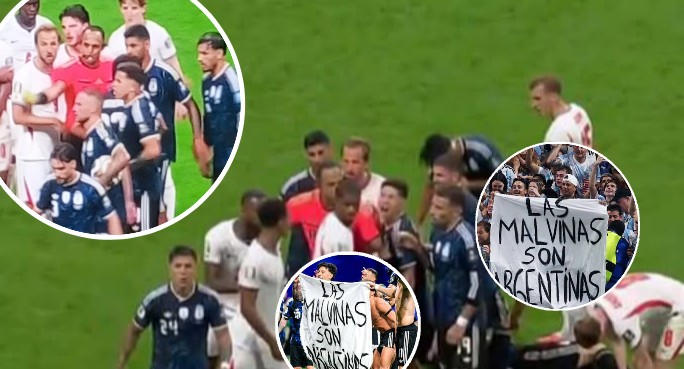
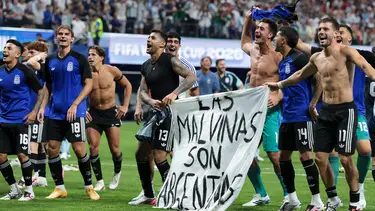
In a dramatic twist that has electrified the football world and reignited deep-seated historical rivalries, FIFA has confirmed it is actively assessing disciplinary action against Argentina players Giovani Lo Celso and Lisandro Martínez following their country’s pulsating 2-1 semi-final victory over England in the 2026 FIFA World Cup. The incident, involving a politically charged banner proclaiming “Las Malvinas son Argentinas” (The Falklands are Argentine), unfolded mere moments after the final whistle in Atlanta, thrusting the beautiful game into the murky waters of geopolitics just hours before Argentina’s showdown with Spain in the final.
The timing could not be more tense. With Lionel Messi’s Argentina seeking to defend their 2022 crown against a formidable Spain side in what promises to be a historic final at the New York-New Jersey Stadium, the governing body’s independent disciplinary committee is poring over match reports. This development has sent shockwaves through both camps, raising questions about potential fines, reprimands, or even more severe measures—though experts widely agree that any punishment is unlikely to derail Argentina’s participation in the decider.
The Semi-Final Drama: A Comeback for the Ages
To understand the context, one must revisit the semi-final itself, a match that encapsulated the passion, resilience, and tactical brilliance that define modern international football. Hosted at Atlanta Stadium, the encounter pitted the reigning world champions against a resurgent England side managed by Thomas Tuchel. England drew first blood in the 55th minute when Anthony Gordon capitalized on a swift counter, slotting home from close range after intricate build-up involving Declan Rice and Morgan Rogers.
For much of the second half, England looked poised to reach their first World Cup final since 1966. However, Argentina’s trademark late-game heroics—reminiscent of their Qatar 2022 run—kicked into overdrive. Enzo Fernández leveled the score in the 85th minute with a stunning strike from distance, assisted by the evergreen Messi. Then, in the 92nd minute, substitute Lautaro Martínez rose to head home the winner from a pinpoint Messi cross, sending the Argentine bench and fans into delirium.
The victory was hard-fought. Argentina dominated possession (around 63%) and generated significantly more expected goals, but England’s defensive organization and set-piece threats kept the game on a knife-edge. Yellow cards flew for players like Lisandro Martínez, Cristian Romero, and others, underscoring the physical intensity. Messi, at 39, once again proved why he remains the heartbeat of this team, providing both the equalizer assist and the winner setup in a performance that will be etched in World Cup lore.
The Banner Incident: Politics on the Pitch
As the players celebrated wildly with fans near the stands, Lo Celso and Martínez—two fan favorites known for their tenacity and connection with supporters—unfurled a large white banner with bold black lettering: “Las Malvinas son Argentinas.” The banner was reportedly passed from fans in the crowd. Other players, including Nicolás Otamendi, joined in the euphoric scenes.
For Argentines, the Malvinas (Falkland Islands) represent a profound national sentiment tied to sovereignty claims dating back centuries, intensified by the 1982 Falklands War—a 74-day conflict that claimed hundreds of lives on both sides (approximately 649 Argentine and 255 British military personnel, plus civilians). The islands remain a British Overseas Territory, with residents overwhelmingly favoring British sovereignty, but the issue remains a sensitive flashpoint in Argentine identity.
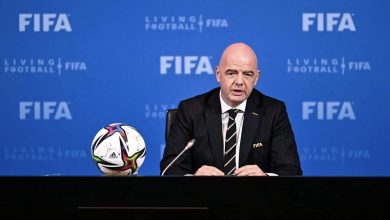
FIFA’s rules are unequivocal. The organization’s Disciplinary Code and Stadium Code of Conduct prohibit “banners, flags, flyers, apparel and other paraphernalia that are of a political, offensive, and/or discriminatory nature” inside stadiums. Political messaging is explicitly banned to preserve the sporting spirit and avoid inflaming tensions. A FIFA spokesperson stated: “As is standard procedure, FIFA’s independent disciplinary committee is currently assessing the match reports and considering the relevant circumstances before deciding on potential further steps based on the FIFA disciplinary code.”
This is not uncharted territory. In 2014, ahead of a friendly against Slovenia, Argentine players posed with an identical banner, resulting in a fine of approximately 30,000 Swiss francs (around £20,000 or $25,000 at the time) for the Argentine Football Association (AFA) on grounds of political action and team misconduct. Similar precedents exist for other nations.
Reactions Pour In: From Outrage to Defiance
The British government swiftly urged FIFA to investigate, with officials describing the banner as “entirely inappropriate” and emphasizing the Falkland Islanders’ right to self-determination. UK Business Secretary Peter Kyle and others called for accountability, while Liberal Democrat leader Ed Davey even suggested suspending the involved players for the final—an extreme measure with little precedent.
In Argentina, the response has been one of national pride mixed with defiance. President Javier Milei called the gesture “perfectly valid,” reflecting a sentiment shared by many citizens. Players like Leandro Paredes and Martínez himself defended it as an expression of Argentine identity: “We couldn’t let the Argentine people down.” Lionel Scaloni had hoped to keep politics out of the fixture, but emotions ran high after the dramatic win.
Football pundits and fans worldwide are divided. Some view it as a harmless celebration rooted in patriotism; others decry it as a violation that risks tarnishing the World Cup’s neutrality. Social media has exploded with debates, memes, and historical references to past Argentina-England clashes, including the 1966 “animals” comments by Alf Ramsey, the 1986 Hand of God, and David Beckham’s red card in 1998.
What Punishment Could FIFA Impose?
Possible outcomes range from a warning or modest fine (typically $5,000–$20,000+ for the AFA) to reprimands. Individual player sanctions, such as short suspensions, are theoretically possible but highly improbable given the post-match context and lack of on-field disruption. FIFA usually finalizes such cases post-tournament to avoid interfering with ongoing competitions. There is virtually no chance Argentina misses the final.
This incident highlights broader challenges for FIFA in balancing free expression with tournament integrity, especially in a global event hosted across North America where diverse diasporas converge. It also underscores the enduring Argentina-England rivalry, fueled by history, footballing brilliance, and unresolved territorial disputes.
Looking Ahead: The Final and Beyond
As Argentina prepares for Spain—featuring young stars like Lamine Yamal challenging Messi’s legacy—the focus remains on football. A win would make Argentina back-to-back champions, a feat last achieved by Brazil in 1958-1962. Messi could bow out as the ultimate champion.
For Lo Celso (Tottenham) and Martínez (Manchester United), both integral to Scaloni’s setup with their defensive solidity and midfield dynamism, this adds unnecessary pressure. They are beloved for their club form and international contributions—Lo Celso’s creativity and Martínez’s no-nonsense defending have been crucial.
England, meanwhile, faces France in the third-place playoff, hoping to salvage pride after a valiant run.
This saga reminds us that football is never just a game. It mirrors society, history, and human passion. Whether FIFA opts for a symbolic fine or closes the case quietly, the images of that banner will linger, adding another layer to the rich tapestry of World Cup folklore. As the final approaches, one thing is certain: the eyes of the world will be on the pitch, where sport should ultimately prevail over politics.
The football community now awaits FIFA’s verdict with bated breath. In the meantime, fans everywhere hope the beautiful game delivers one last unforgettable spectacle on Sunday. Argentina’s quest for immortality continues—banner controversy or not.