Argentina Boss Sends Blunt 9-Word Message to England Squad After Victory, Responding to Harry Kane’s Post and Petition Threat

In the high-stakes world of international football, few rivalries ignite passions like the one between Argentina and England. On July 15, 2026, at Atlanta Stadium, this storied clash reached a fever pitch during the FIFA World Cup 2026 semi-final. Argentina, the defending champions led by the ageless Lionel Messi, staged a dramatic 2-1 comeback victory over England. Anthony Gordon had given the Three Lions a second-half lead, but late strikes from Enzo Fernandez and Lautaro Martinez, both assisted by Messi, sent Argentina to the final against Spain.
The aftermath was electric, laced with controversy, national pride, and sharp words. Argentina manager Lionel Scaloni, known for his measured demeanor, delivered a pointed response that quickly went viral. In what many interpreted as a blunt, nine-word dismissal aimed squarely at the England camp—”It is a football game and that is all”—Scaloni addressed the pre-match hype, political undertones, and online campaigns that had threatened to overshadow the sport.
This message wasn’t just post-match bravado. It directly countered the intense build-up, including Harry Kane’s social media activity and a massive online petition calling for Argentina’s expulsion from the tournament. The victory wasn’t merely on the pitch; it was a statement amid decades of history, from the 1966 World Cup quarter-final and Maradona’s “Hand of God” in 1986, to the lingering shadow of the 1982 Falklands War (known as Islas Malvinas in Argentina).
The Match That Defined a Generation
The semi-final lived up to its billing as a classic. England, under Thomas Tuchel, started brightly and took the lead through Gordon in the 55th minute. For much of the game, the Three Lions looked solid, parking the bus in an attempt to hold onto the advantage. But Argentina’s resilience, fueled by Messi’s genius, proved decisive. Fernandez equalized in the 85th minute with a powerful strike from the edge of the box, and Martinez headed home the winner in added time from a Messi cross.
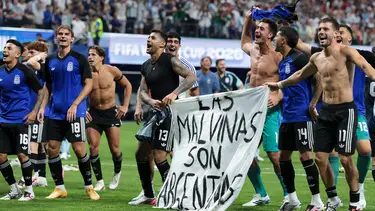
Post-match, emotions boiled over. Argentine players celebrated with fans, some holding a banner proclaiming “Las Malvinas son Argentinas” (“The Falkland Islands are Argentine”). This act drew swift condemnation from the UK government, which urged FIFA to investigate, calling it “entirely inappropriate” political messaging. Argentina’s Vice President Victoria Villarruel amplified the sentiment on social media, framing the win as more than just football.
Scaloni, however, sought to refocus. Before the match, he had repeatedly emphasized de-escalation: “The message is this is a football game. That is what I can say. We will be playing against a very tough opponent… it is a football game and that is all.” After the win, his post-match comments echoed this while praising his team’s grit. In press conferences and interviews, he highlighted the brotherhood within the squad, their never-say-die attitude, and Messi’s enduring brilliance at 39 years old.
The “blunt 9-word message” crystallized in reports and fan interpretations of Scaloni’s stance. It served as a direct rebuttal to the narrative of external pressures, referee bias allegations, and England’s frustrations. It was concise, dismissive of drama, and a reminder that, at its core, this was 22 players chasing a ball on grass.
Harry Kane’s Post and the Petition Backdrop
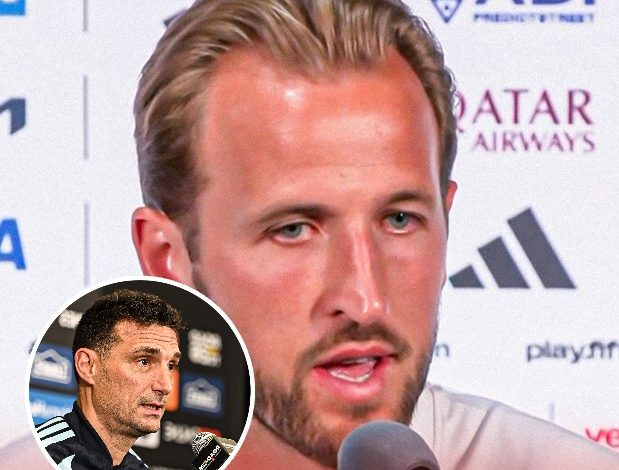
England captain Harry Kane, ever the professional, took to social media after the defeat. His post, featuring images of the squad and a simple message of unity—”In this together”—reflected the gut-wrenching nature of the loss. England had come so close, just minutes from a potential final appearance, their first since 1966. Kane, who has shouldered immense pressure as the face of the national team, expressed devastation but pride in the effort.
Kane’s words resonated with fans reeling from the collapse. “We tried to hold on… but it wasn’t enough,” he told reporters. The captain’s post-match demeanor—honest, emotional, and forward-looking—contrasted with the jubilant Argentines. Some interpreted his online activity as a subtle rallying cry or acknowledgment of the intense scrutiny surrounding the match.
Compounding the tension was a viral online petition demanding Argentina’s removal from the World Cup. Launched amid claims of referee favoritism toward Messi and his team (echoing earlier controversies against Egypt and others), it reportedly amassed millions of signatures. Organizers alleged systemic bias, calling for a “fair chance” for other nations. While FIFA dismissed such campaigns as having no bearing on official proceedings, the petition fueled pre-match animosity and online warfare.
Scaloni’s blunt response addressed this head-on. By stripping away the politics, petitions, and historical baggage, he redirected focus to the beautiful game. It was a message not just to England but to the global football community: let the results on the field speak.
Historical Context: A Rivalry Steeped in More Than Sport
The Argentina-England rivalry transcends football. The 1966 World Cup saw England triumph en route to their only title. In 1986, Maradona’s infamous handball goal and subsequent “Goal of the Century” helped Argentina exact revenge. The Falklands conflict added a layer of geopolitical tension that has never fully dissipated.
In 2026, with Messi potentially in his final World Cup, the stakes felt even higher. Pre-match, Scaloni downplayed politics, praising Tuchel and focusing on tactics. Tuchel, for his part, prepared his side meticulously, but England’s late-game conservatism proved costly. Critics pointed to defensive lapses and a failure to press higher after taking the lead.
Argentina’s path to the semi-final wasn’t smooth. They navigated tight games and faced bias accusations themselves. Yet, their comeback ability—hallmarked by squad depth, with contributions from bench players like Martinez—underscored Scaloni’s tactical acumen. The coach, who took over a struggling side post-2018, has transformed Argentina into a resilient unit blending flair with steel.
Scaloni: The Quiet Architect
Lionel Scaloni’s journey is remarkable. A former player with stints in England (including West Ham), he became Argentina’s coach almost by accident after the 2018 debacle. Under his guidance, they won Copa America 2021 and the 2022 World Cup. In 2026, reaching back-to-back finals would cement his legacy.
His leadership style—calm, player-centric, emphasizing mentality—shone through. After the England win, he spoke of tears, pride, and the players’ sacrifice. “These guys have moved me,” he said. His blunt message to England was consistent with his pre-match comments: no distractions, just football. It neutralized attempts to frame the game as anything else, including petition-driven narratives or Kane’s unifying post.
Messi, the eternal talisman, delivered two assists and orchestrated the late surge. At an age when most retire, his influence remains unparalleled. Teammates like Fernandez and Martinez rose to the occasion, proving the depth Scaloni has cultivated.
England’s Perspective: Heartbreak and Reflection
For England, the defeat stung deeply. Reaching the semi-final was an achievement, but the manner of loss—leading late only to crumble—sparked debates about Tuchel’s substitutions, tactics, and squad mentality. Kane, at 32, pondered his international future but reaffirmed his love for the shirt. “It’s too early to talk about that,” he said, drawing inspiration from Messi’s longevity.
The Three Lions showed fight throughout the tournament, with standout performances in group stages and knockouts. Fans sang anthems like “Wonderwall,” and the squad’s togetherness was evident. Yet, semi-final exits (this being the second in recent cycles) raise questions about closing out big games.
Kane’s post-match post was a class act—acknowledging effort without excuses. It humanized the defeat and rallied supporters, contrasting the more provocative Argentine celebrations.
Broader Implications for World Cup 2026
This semi-final highlighted football’s power to unite and divide. The Falklands banner controversy led to calls for FIFA sanctions, with fines possible for political displays. UK officials stressed self-determination for the islands, while Argentine leaders celebrated national sentiment.
The petition, though ultimately inconsequential, underscored fan frustrations with perceived inequalities in modern football—VAR, refereeing, and superstar influence. Scaloni’s response cut through the noise, reinforcing that results are earned on the pitch.
As Argentina prepares for the final, Scaloni’s philosophy will be tested again. England returns home to introspection, with Kane and others likely central to rebuilding. The rivalry endures, enriched by another chapter.
In the end, Scaloni’s blunt nine-word ethos captures football’s essence: strip away the noise, play the game. Argentina’s victory was hard-fought, Messi-magical, and a testament to resilience. For England, it’s fuel for the next cycle. The beautiful game marches on, with stories like this reminding us why we love it—drama, skill, heartbreak, and glory, all within 90-plus minutes.