ENGLAND VS NORWAY QUARTER-FINAL AT RISK OF POSTPONEMENT AS FIFA ISSUES FRESH UPDATE


The FIFA World Cup quarter-final between England and Norway has been placed under an unexpected cloud after FIFA confirmed it is closely monitoring extreme weather conditions that could disrupt one of the tournament’s most anticipated knockout fixtures.
Scheduled to take place at Miami Stadium on Saturday, the clash is expected to draw millions of viewers worldwide. However, soaring temperatures, oppressive humidity and the threat of thunderstorms have raised serious concerns about player welfare, forcing FIFA to activate its weather monitoring protocols ahead of kick-off.
Although the match remains scheduled to go ahead as planned, FIFA has made it clear that player and spectator safety will take precedence over scheduling should conditions deteriorate.
FIFA Closely Monitoring Miami Weather
Miami has already experienced challenging weather conditions throughout the World Cup, with several matches interrupted by thunderstorms and lightning warnings.
Forecasts ahead of England’s quarter-final suggest temperatures could reach around 33°C, while the combination of heat and humidity may create “feels like” temperatures approaching 44°C during the scheduled evening kick-off.
These figures have prompted renewed attention to FIFA’s extreme weather guidelines, particularly as concerns continue to grow over the impact of playing elite-level football in such demanding conditions.
Tournament organisers are expected to monitor weather data throughout the day before making any final decisions regarding the fixture.
What FIFA’s Rules Say
Contrary to speculation circulating on social media, FIFA has not announced that the England versus Norway match has been postponed.
Instead, officials have reiterated the competition’s existing safety regulations.
Under FIFA’s protocols:
* Hydration breaks become mandatory when temperatures exceed established thresholds.
* Wet Bulb Globe Temperature (WBGT) readings are taken before matches to assess heat stress.
* Play must be suspended immediately if lightning is detected within an eight-mile radius of the stadium.
* Every subsequent lightning strike resets the suspension period, potentially causing lengthy delays.
* If weather conditions present a significant safety risk, officials retain the authority to delay or postpone the fixture. (The Scottish Sun)
These procedures have already been used during previous matches in the tournament, highlighting FIFA’s willingness to prioritise safety over maintaining the original schedule.
Heat Becoming One of the Tournament’s Biggest Challenges
The expanded 2026 World Cup has showcased football across multiple North American cities, each presenting unique climate challenges.
While cooler venues have hosted matches without incident, cities such as Miami have exposed players to extreme heat and humidity.
Sports scientists have repeatedly warned that prolonged exertion under these conditions significantly increases the risk of dehydration, muscle fatigue and heat-related illnesses.
Several football stakeholders have questioned whether afternoon and early evening kick-offs in some host cities provide the safest environment for elite competition.
FIFA has defended its scheduling decisions but insists it continually reviews weather forecasts in consultation with medical experts.
England Already Experienced Weather Delays
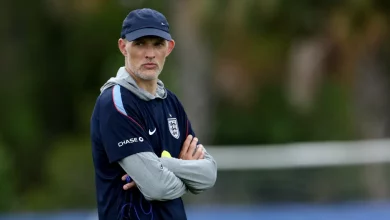
Thomas Tuchel’s England side are no strangers to weather disruption during this World Cup.
Their dramatic Round of 16 victory over Mexico was affected by severe weather interruptions before England eventually emerged 3-2 winners in one of the tournament’s most entertaining matches.
That experience has prepared the Three Lions for another potentially unpredictable evening.
England’s coaching staff are understood to be planning for multiple scenarios, including delayed kick-off times should lightning move into the Miami area before the match.
Norway Also Dealing with Off-Field Concerns
Weather is not the only issue surrounding the Norwegian camp.
Recent reports suggested illness had affected several members of Norway’s delegation, creating uncertainty over the team’s preparations.
However, Norway manager Ståle Solbakken and captain Martin Ødegaard have both moved quickly to calm fears.
The Norwegian captain confirmed there had been minor illnesses within the camp but insisted the situation was under control, while the team’s medical staff stated that all players are available and fit for selection. (The Sun)
That means Norway are expected to field a full-strength side against England despite the earlier concerns.
England Chasing Another Historic Achievement
England arrive in Miami full of confidence after navigating a difficult knockout path.
Victory over Mexico demonstrated resilience, with Jude Bellingham producing another influential display while Harry Kane continued his impressive scoring record.
Manager Thomas Tuchel has repeatedly praised his players’ mentality, insisting they have shown the character required to compete for the World Cup trophy.
However, England also face selection challenges.
Jarell Quansah is suspended, while several key players remain one yellow card away from suspension for a potential semi-final. Reece James is also racing against time to prove his fitness after recent injury concerns.
Those disciplinary concerns could influence how aggressively England approach certain phases of the game.
Norway Looking to Continue Fairytale Run
Norway have emerged as one of the tournament’s surprise packages.
After progressing through the knockout rounds with impressive victories, confidence within the Scandinavian camp has grown considerably.
Captain Martin Ødegaard remains the creative heartbeat of the side, while Erling Haaland continues to represent one of world football’s most feared attacking threats.
Norway eliminated Brazil in the Round of 16, proving they possess both defensive organisation and attacking quality capable of troubling any opponent.
The prospect of reaching the World Cup semi-finals for the first time in decades provides enormous motivation.
Why Lightning Could Be the Bigger Threat
Although headlines have focused primarily on the extreme temperatures, meteorologists believe thunderstorms could ultimately pose the greatest danger.
Florida’s summer climate regularly produces fast-developing storms capable of generating dangerous lightning with little warning.
FIFA’s policy is unequivocal.
If lightning is detected within eight miles of the venue, the referee must immediately suspend play and direct players and spectators to safety.
Only after 30 consecutive minutes without another lightning strike can the match resume.
Should repeated storms continue moving across the stadium, delays could extend for several hours.
Fans Await Final Decision
Supporters travelling from England and Norway are understandably monitoring developments closely.
Hotels throughout Miami have reported strong demand ahead of the quarter-final, while broadcasters are preparing contingency plans should kick-off times require adjustment.
For now, FIFA continues to stress that no postponement has been announced.
Officials will evaluate the latest meteorological information, including temperature, humidity, WBGT readings and lightning activity, before confirming that conditions are safe for the match to proceed.
Safety Remains FIFA’s Priority
The governing body has repeatedly emphasised that player welfare remains its foremost concern.
Recent criticism surrounding the scheduling of matches in extremely hot conditions has intensified scrutiny of FIFA’s tournament planning, especially with the World Cup expanding across a diverse range of climates.
Medical experts have consistently highlighted the dangers associated with prolonged physical exertion in high heat and humidity, particularly when combined with knockout-stage intensity.
FIFA believes its current safety framework—including hydration breaks, continuous weather monitoring and strict lightning protocols—provides officials with the flexibility needed to protect everyone involved.
The Match Is Still Expected to Go Ahead
Despite widespread speculation, the England versus Norway quarter-final has not been postponed.
Instead, FIFA has confirmed it is actively monitoring weather conditions and remains prepared to implement delays or, in extreme circumstances, postpone the fixture if safety concerns arise.
Unless conditions worsen significantly before kick-off, England and Norway are still expected to meet in Miami in what promises to be one of the standout matches of the World Cup quarter-finals.
For both nations, the prize is enormous: a place in the semi-finals and another step towards football’s ultimate achievement. Whether the decisive factor proves to be tactics, individual brilliance or simply overcoming the challenging Florida weather remains to be seen, but one thing is certain—the eyes of the football world will be firmly fixed on Miami as FIFA makes its final assessment.