🚨 THOMAS TUCHEL TO STAY! ENGLAND BOSS CONFIRMED TO REMAIN IN CHARGE UNTIL EURO 2028 DESPITE WORLD CUP HEARTBREAK

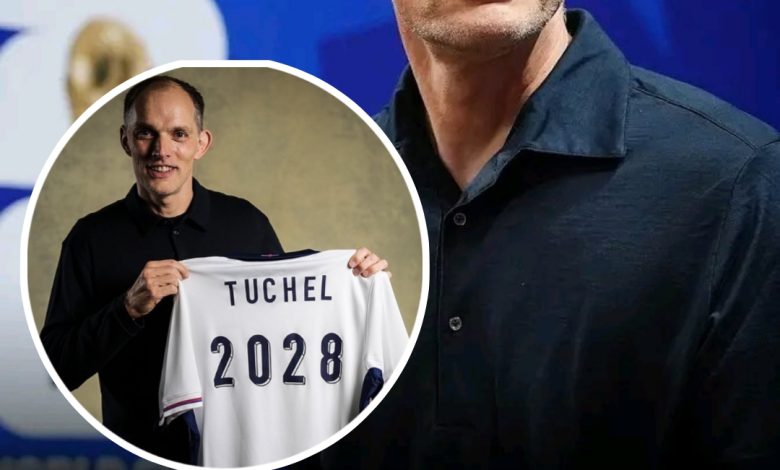
Few moments in international football are as emotionally draining as falling just one match short of a FIFA World Cup final. England’s 2-1 defeat to Argentina in the 2026 FIFA World Cup semi-final left players, coaches, and supporters devastated after what had been an inspiring campaign. The dream of lifting football’s greatest prize came to an end, but instead of reacting with panic or making sweeping changes, the Football Association has chosen a different path. It has placed its trust in Thomas Tuchel, confirming that the German tactician will remain England’s head coach through UEFA Euro 2028.
The decision represents far more than a contract extension. It is a clear statement that England’s long-term project remains on course despite the disappointment of missing out on the World Cup final. Rather than viewing the semi-final defeat as evidence of failure, the FA has chosen to see it as another important step in the evolution of one of the world’s most talented national teams.
For Tuchel, the confirmation is a significant vote of confidence. International football is often unforgiving, with managers facing enormous scrutiny after every major tournament. A single defeat can sometimes end years of work, regardless of the progress made beforehand. England’s football leaders, however, believe the team has grown under Tuchel’s guidance and that changing direction now would risk undoing that progress.
England entered the tournament carrying enormous expectations. The squad featured established stars alongside exciting young talents capable of competing with any nation. Supporters dreamed that this generation could finally end decades of hurt by bringing the World Cup back to England. Throughout the competition, there were encouraging signs that those dreams were realistic.
England displayed resilience during difficult moments, tactical discipline in knockout matches, and an ability to overcome high-quality opponents. Their journey to the semi-finals showcased a team that had matured both mentally and technically. They battled through challenging fixtures, remained composed under pressure, and demonstrated the confidence expected of genuine title contenders.
However, the semi-final against Argentina proved to be the ultimate test. Facing one of international football’s strongest sides required perfection in every department. England fought bravely but ultimately came up just short, ending their World Cup campaign with heartbreak rather than celebration.
For many football associations, such a result might have triggered immediate discussions about replacing the manager. Modern football is often driven by short-term thinking, with patience becoming increasingly rare. Yet England’s leadership has chosen stability over uncertainty.
That decision reflects the belief that tournament football is decided by incredibly fine margins. A single mistake, a moment of brilliance, or a slice of luck can determine whether a team reaches a final or heads home. The FA appears convinced that England’s defeat does not erase the impressive work completed throughout the tournament.
Thomas Tuchel has built a reputation throughout his coaching career for tactical intelligence, adaptability, and meticulous preparation. His success at club level earned him recognition as one of Europe’s elite coaches long before taking charge of England. Bringing those qualities to international football has been one of the FA’s biggest objectives.
Managing a national team presents unique challenges compared to club football. Coaches have limited time with players, fewer opportunities to implement detailed tactical systems, and must quickly adapt to injuries and changing circumstances. Tuchel has embraced those challenges by creating a structure that allows England to remain competitive against the world’s best teams.One of his greatest achievements has been establishing tactical flexibility. England has demonstrated the ability to adjust formations depending on the opposition, switching between defensive solidity and attacking aggression when required. This adaptability has made the team far less predictable than in previous years.
Another important aspect of Tuchel’s reign has been his willingness to trust young players. England possesses one of the deepest talent pools in world football, with emerging stars pushing established internationals for places. Rather than relying solely on experienced veterans, Tuchel has embraced competition throughout the squad.
Players such as Jude Bellingham continue to develop into world-class leaders, while younger talents have been given valuable opportunities on football’s biggest stage. Building experience now could prove invaluable by the time Euro 2028 arrives.
The manager has also fostered a strong team culture. Success at international tournaments often depends as much on unity as tactical quality. England’s players have consistently spoken about togetherness within the camp, with experienced professionals helping younger teammates settle into tournament football.
That atmosphere has translated into performances on the pitch. Even during difficult matches, England rarely appeared fractured or overwhelmed. The squad displayed determination, discipline, and belief—qualities that reflect strong leadership behind the scenes.
The FA’s decision also sends an important message to the players. It tells them that one defeat, even in a World Cup semi-final, does not define the project. Instead, England’s football authorities believe the current squad remains capable of achieving major success if given continuity.
Continuity has become one of the defining themes of successful international teams. Nations that consistently challenge for trophies often benefit from stable coaching structures, allowing players to fully understand tactical expectations over several years. Constant managerial changes can interrupt progress and delay development.
Keeping Tuchel until Euro 2028 allows England to continue refining its identity rather than beginning another rebuilding process. Training methods will remain familiar, tactical principles can continue evolving, and players will enter future tournaments with greater experience under the same coaching staff.
There is also the practical reality of international football’s calendar. The period leading to Euro 2028 includes qualification matches, Nations League fixtures, and international friendlies. Every camp provides valuable opportunities to strengthen relationships, improve tactical understanding, and integrate emerging talents.
Changing managers would have meant restarting much of that work from the beginning. By maintaining stability, England hopes to maximize every international window between now and the European Championship.
Supporters will naturally have mixed emotions. Some fans may still feel disappointed after missing another opportunity to win a major trophy. Others may question whether a different coach could finally deliver international success. Those debates are inevitable after every tournament.
Nevertheless, there is also widespread recognition that England has remained consistently competitive in recent years. Reaching the latter stages of major tournaments is no longer viewed as a surprise but as an expectation. That consistency provides a strong foundation upon which future success can be built.
Thomas Tuchel himself has acknowledged both the disappointment of the World Cup exit and the excitement surrounding England’s future. Rather than dwelling on what might have been, his focus has shifted toward ensuring that painful lessons become valuable experience.Every great international side has endured setbacks before achieving glory. Spain experienced years of frustration before dominating world football between 2008 and 2012. Argentina suffered heartbreaking defeats before eventually lifting both the Copa América and the World Cup. Even France endured disappointments before returning to the summit of international football.
England hopes its own journey follows a similar pattern.
The road to Euro 2028 begins immediately. Every decision made over the next two years—from squad selection to tactical experimentation—will shape England’s chances of finally ending its long wait for another major international title.
The confidence shown by the Football Association indicates that Thomas Tuchel remains central to that vision. Rather than viewing the World Cup semi-final defeat as the conclusion of an era, England sees it as the beginning of the next chapter.Part 2: England’s Road to Euro 2028 – Can Thomas Tuchel Deliver the Trophy?
With Thomas Tuchel now confirmed to remain in charge until UEFA Euro 2028, England’s focus immediately shifts from the disappointment of World Cup elimination to the opportunities that lie ahead. While the pain of losing a World Cup semi-final will not disappear overnight, elite football teams are judged not by how they react to success, but by how they respond to setbacks.
For England, this is a defining moment.
The decision to continue with Tuchel reflects a belief that the current project has not reached its peak. Instead, the Football Association believes the best football from this talented generation is still to come. The objective is no longer simply to compete with the world’s elite but to finally overcome them when it matters most.
One of Tuchel’s greatest strengths is his ability to learn from defeat. Throughout his managerial career, he has shown an impressive capacity to analyze mistakes, refine tactical approaches, and return stronger after setbacks. That quality could prove invaluable over the next two years.
England’s World Cup campaign exposed both strengths and weaknesses. Defensively, the team often looked organized and disciplined, limiting opponents to relatively few clear chances. Midfield control was another positive, with England capable of dominating possession against quality opposition.
However, the semi-final also highlighted areas requiring improvement. Against the very best teams, every missed opportunity becomes costly. Decision-making in the final third, maintaining concentration during key moments, and converting chances under pressure are all aspects Tuchel and his coaching staff will undoubtedly study in detail.
Fortunately for England, the squad is filled with players who are either entering or approaching the prime years of their careers.
Jude Bellingham continues to establish himself as one of football’s premier midfielders. His leadership qualities, technical ability, and maturity make him a natural candidate to become one of the faces of English football for years to come.
Bukayo Saka remains one of the most dangerous attacking players in international football, capable of changing games through pace, creativity, and composure. His consistency has made him indispensable for both club and country.
Cole Palmer has continued his remarkable rise, offering intelligence, vision, and goals from advanced positions. His versatility gives Tuchel numerous tactical options depending on the opponent.
Declan Rice remains the heartbeat of England’s midfield, providing balance between defence and attack. His experience and leadership will be crucial as younger players continue developing.
Harry Kane, if still involved by Euro 2028, brings invaluable tournament experience and leadership. Even as younger forwards emerge, his influence both on and off the pitch cannot be underestimated.
Behind these established names, England possesses one of the strongest youth development systems in Europe. Every season produces exciting new talents capable of challenging for senior international places.
That depth creates healthy competition within the squad.
No player can afford complacency because emerging stars are constantly pushing for opportunities. For Tuchel, this competition is a luxury that many international managers would envy.
The next phase of England’s journey will involve integrating those younger players without disrupting the chemistry already established within the squad. Striking that balance is one of international football’s greatest challenges.
Tactically, supporters can also expect continued evolution.
Tuchel has never been a manager who believes one system suits every opponent. Throughout his coaching career, he has demonstrated remarkable flexibility, adapting formations depending on the strengths and weaknesses of the opposition.England may continue experimenting with different defensive structures, midfield combinations, and attacking partnerships during qualification matches. Those experiments are unlikely to be random; each adjustment will provide valuable information before Euro 2028 begins.
The Nations League and European Championship qualifiers will therefore become more than simple qualification campaigns. They will serve as laboratories where Tuchel can fine-tune tactical ideas against a variety of opponents.
Maintaining squad harmony will be equally important.
Modern international football extends far beyond tactics. Managing personalities, expectations, and competition for places requires exceptional communication skills.
England’s dressing room contains world-class players accustomed to starting every week for their clubs. Ensuring everyone remains motivated—even when not selected—is one of the manager’s biggest responsibilities.
Tuchel has earned praise throughout his career for building strong relationships with players while maintaining demanding professional standards. That balance will remain essential over the coming years.
The pressure surrounding England, however, will only intensify.
By choosing continuity, the Football Association has effectively increased expectations.
Supporters will no longer judge Tuchel simply on performances or progress. They will expect trophies.
England has consistently reached the latter stages of major tournaments in recent years, demonstrating undeniable progress compared to previous decades. Yet football history rarely remembers semi-final appearances as vividly as championship victories.
That reality places enormous responsibility on both the coaching staff and the players.
Euro 2028 represents more than another tournament.
It represents the opportunity for an exceptionally talented generation to secure its place in English football history.
Winning a major international competition would transform the legacies of countless players currently wearing the Three Lions shirt. Those already admired as outstanding footballers would forever be remembered as champions.
The experience gained during the 2026 World Cup could become one of England’s greatest advantages.
Tournament football teaches lessons that cannot easily be replicated during qualification matches or friendlies. Coping with pressure, managing expectations, recovering between knockout fixtures, and handling emotionally charged occasions all contribute to long-term growth.
England’s younger players now possess invaluable experience that should make them stronger when future opportunities arise.
Another encouraging factor is the growing belief surrounding the national team.
For many years, England entered tournaments burdened by fear of failure. Recent generations have gradually replaced that mentality with confidence and ambition.
Players increasingly believe they belong among football’s elite.
That psychological shift is significant.
Winning major tournaments requires technical quality, tactical intelligence, physical preparation, and mental resilience. England appears to possess all four ingredients.
The final challenge is converting potential into silverware.
Thomas Tuchel understands exactly what that responsibility entails.
His reputation ensures every decision—from team selection to substitutions—will be intensely scrutinized by supporters, pundits, and former players alike.
Yet that scrutiny accompanies every elite international manager.
The most successful coaches embrace those expectations rather than fear them.
Looking ahead, England’s objectives are clear.
Qualify comfortably for Euro 2028.
Continue integrating promising young talent.
Refine tactical flexibility.
Maintain squad unity.
Learn from World Cup disappointment.
Arrive at the European Championship fully prepared to compete with the continent’s strongest nations.