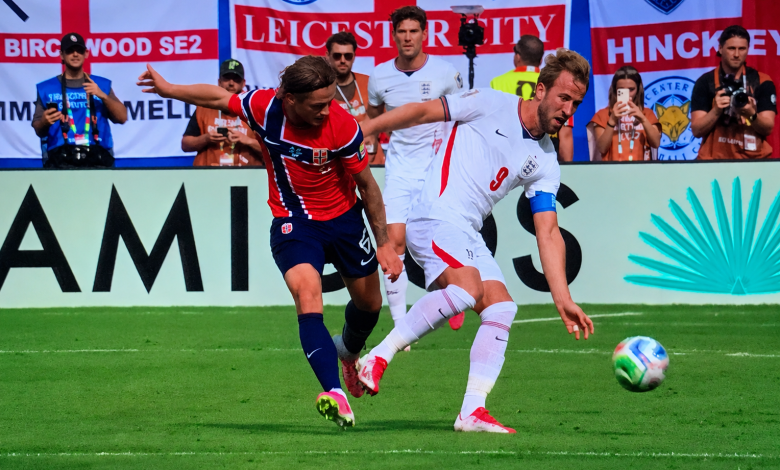
England’s World Cup quarter-final victory over Norway may have booked Thomas Tuchel’s side a place in the semi-finals, but it has done little to silence the huge controversy surrounding Norway’s opening goal.
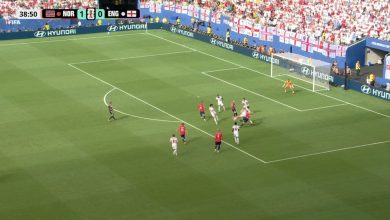
Within seconds of Andreas Schjelderup finding the back of the net, England players surrounded referee Clément Turpin, with Harry Kane insisting he had been fouled in the build-up. The incident immediately sparked outrage across social media, where thousands of supporters questioned why VAR had allowed the goal to stand.
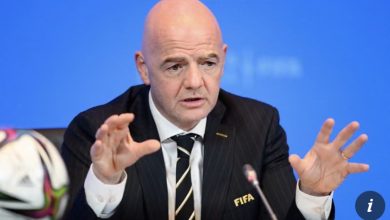
Now, FIFA has explained exactly why the goal was awarded – and the explanation has only fuelled even more debate.
Why VAR Allowed The Goal To Stand
Following a lengthy review, the Video Assistant Referee decided there was no clear and obvious error in Turpin’s original decision.
According to FIFA, the challenge on Harry Kane was judged to be a legal physical contest rather than a foul. Because the referee had a clear view of the incident and did not believe Kane had been illegally impeded, VAR concluded there was insufficient evidence to recommend an on-field review.
Under FIFA’s VAR protocol, officials can only intervene if they believe the referee has made a clear mistake. Since they considered the contact fair, Norway’s goal was allowed to stand.
Fans Immediately Pointed To Argentina vs Egypt
However, England supporters were quick to highlight what they believed was a glaring inconsistency.
Only days earlier, Argentina’s dramatic Round of 16 victory over Egypt was overshadowed by another controversial VAR decision.
Egypt thought they had scored a crucial goal, only for VAR to review the entire attacking phase and identify a foul by Marwan Attia on Lisandro Martínez at the start of the move. The goal was subsequently ruled out, with FIFA’s refereeing chief Pierluigi Collina later defending the decision by insisting that “a foul is a foul” and that VAR is entitled to review any attacking-phase offence that directly leads to a goal.
That explanation has now come back to haunt FIFA.
England fans immediately questioned why Egypt’s goal against Argentina could be disallowed because of a foul in the build-up, while Norway’s goal against England was allowed despite Kane appearing to be brought down moments before Schjelderup scored.
FIFA’s Explanation
According to FIFA, the two incidents were fundamentally different.
In the Argentina-Egypt match, VAR concluded that a clear foul had been committed before the goal, meaning the attacking phase had to be brought back and the goal cancelled.
Against Norway, however, VAR did not believe Patrick Berg’s challenge on Harry Kane amounted to a foul at all.
Since the officials judged the contact to be a fair challenge, there was no infringement to penalise and therefore no reason to overturn the goal.
In FIFA’s view, the consistency lies not in whether VAR reviews the build-up, but in whether the contact itself is considered a foul.
Social Media Explodes
That explanation has done little to satisfy England supporters.
Fans flooded X, Facebook and Reddit with side-by-side clips of both incidents, accusing FIFA of applying different standards depending on the teams involved.
Others defended the decision, arguing that football remains a contact sport and that Kane simply lost out in a physical duel rather than being fouled.
The incident quickly became one of the biggest refereeing talking points of the 2026 FIFA World Cup.
England Had The Last Laugh
Despite the controversy, England refused to let the decision derail their campaign.
Jude Bellingham produced another inspirational display by equalising before grabbing the winner in extra time to seal a dramatic 2-1 victory and send Thomas Tuchel’s side into the World Cup semi-finals.
But while England are still dreaming of lifting the trophy, the debate surrounding Norway’s opening goal is unlikely to disappear anytime soon.
For many fans, the comparison with Argentina vs Egypt has raised fresh questions over the consistency of VAR decisions at the tournament—and whether FIFA’s explanation will be enough to convince those who believe Harry Kane should have been awarded a foul long before Norway found the back of the net.