FIFA ISSUES EMERGENCY STATEMENT ON ACTIVE DOPING AND REGULATORY INVESTIGATION INVOLVING RANGERS PLAYER

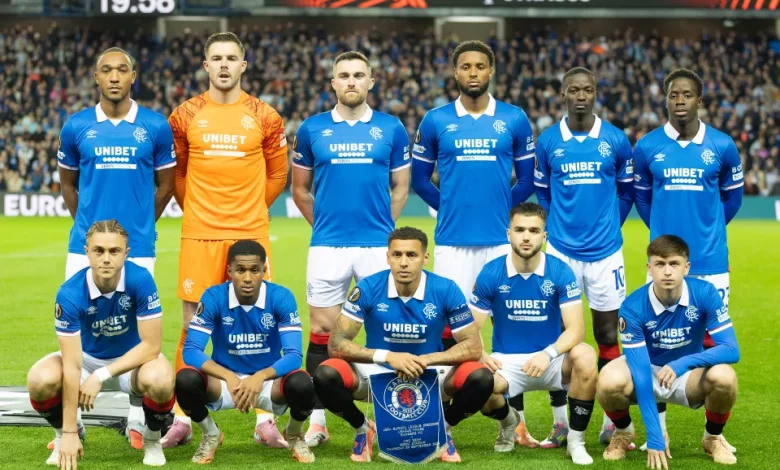
In a dramatic development that has sent shockwaves through Scottish football and beyond, FIFA has issued an emergency statement confirming an active doping investigation involving a player from Rangers Football Club. The announcement, released late on Saturday evening, underscores the global governing body’s commitment to upholding the integrity of the sport amid what it describes as “serious allegations requiring immediate regulatory attention.”
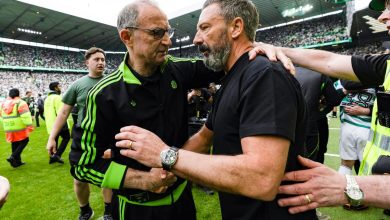
The statement marks a significant escalation, coming just weeks after Derek McInnes was appointed as Rangers’ new manager on a three-year deal. McInnes, a former Rangers midfielder who returned to Ibrox in mid-June 2026 following a successful spell at Hearts, was brought in to stabilize the club after Danny Röhl’s departure to Red Bull Salzburg. What should have been a period of renewed optimism and squad building has instead been overshadowed by this crisis, presenting the 54-year-old coach with an immediate and unwelcome test of his leadership.
Details of the Investigation
FIFA’s statement, which is unusually direct for an ongoing case, confirms that an unnamed Rangers player has returned an adverse analytical finding (AAF) in a test conducted under the organization’s anti-doping protocols. The substance in question has not been publicly specified, but sources close to the matter suggest it falls under prohibited categories monitored closely during both in-competition and out-of-competition periods. The investigation is described as “active,” with regulatory proceedings already underway.
Under FIFA’s Anti-Doping Regulations, the presence of a prohibited substance or its metabolites in a player’s sample constitutes a violation, regardless of intent in the initial finding. Players have the right to request analysis of the B-sample, and provisions exist for therapeutic use exemptions (TUEs) or explanations involving contaminated products. However, the emergency nature of FIFA’s statement indicates that preliminary reviews have raised sufficient concerns to warrant public notification and heightened scrutiny.
Rangers Football Club has yet to issue a full response, but a club spokesperson told reporters that they are “cooperating fully with all relevant authorities and take anti-doping matters extremely seriously.” The player involved is understood to be sidelined from training and team activities pending the outcome, in line with standard provisional suspension protocols that can be imposed in cases of certain substances.
This is not the first doping-related story in football recently, but the involvement of a high-profile club like Rangers in a FIFA-led probe elevates its significance. Scottish football has generally maintained a strong reputation for clean sport, though isolated cases have occurred across British football in the past. The timing, during the close season as Rangers prepare for pre-season friendlies and European qualification campaigns, could hardly be worse.
Impact on Derek McInnes and Rangers
For Derek McInnes, this represents a harsh baptism of fire. Appointed on June 17, 2026, McInnes returned to the club where he played between 1995 and 2000, bringing with him a wealth of experience from stints at Aberdeen, Kilmarnock, and most recently Hearts, where he nearly delivered a Scottish Premiership title. His appointment was hailed as a pragmatic choice — a man who understands the demands of Ibrox and the Old Firm intensity.
Now, instead of focusing on tactical implementation, squad recruitment, and fostering team spirit, McInnes must navigate a potential squad disruption. Even if only one player is directly implicated, the psychological toll on the dressing room cannot be underestimated. Teammates may feel distracted, fans could grow restless, and the media spotlight will intensify. McInnes’ reputation for straight-talking and man-management will be tested as never before.
“I came back to Rangers because I believe in the project and the potential of this squad,” McInnes said in his first press conference. Those words now carry added weight. Supporters will be watching closely to see how he handles adversity — whether he maintains squad unity or if the investigation leads to fractures.
Rangers’ ambitions for the 2026-27 season were already significant. With Celtic as perennial rivals and European competition on the horizon, the club invested in McInnes to deliver consistency and silverware. A prolonged absence or ban for a key player could force tactical adjustments, particularly if the individual was expected to play a central role in midfield, defense, or attack. Pre-season planning, already underway under the new regime, will require contingency measures.
Broader Context of FIFA’s Anti-Doping Stance
FIFA has strengthened its anti-doping framework in recent years, aligning closely with the World Anti-Doping Agency (WADA) Code. The organization’s regulations outline strict liability for players regarding prohibited substances, with sanctions typically ranging from two-year bans for first offenses involving non-specified substances, though reductions are possible for no-significant-fault scenarios or cooperation.
Recent high-profile cases, including concerns around contaminated meat in certain regions during the 2026 World Cup preparations, have kept doping in the headlines. FIFA has issued warnings to teams about risks in specific locations, emphasizing education and vigilance. The Rangers case, however, appears distinct and is being treated with the utmost seriousness at the highest levels.
Experts note that FIFA’s emergency statement is rare and signals a desire for transparency while investigations proceed. It may also serve as a deterrent, reinforcing that no club or player is above the rules. For Rangers, cooperation will be key to mitigating any team-level sanctions, which can include points deductions or disqualification from competitions in extreme cases of systemic issues — though nothing suggests that level of involvement here.
Reactions and Speculation
The football community has reacted with a mix of shock and calls for due process. Scottish FA officials have offered support to both the club and FIFA, while rival clubs have largely remained silent, respecting the ongoing process. Fans on social media platforms express divided opinions — some demanding swift action and transparency, others urging caution against trial by media.
Medical and legal experts highlight the complexities. Modern testing can detect trace amounts, and cases involving supplements, medications, or environmental factors require thorough investigation. The player has the right to present evidence, and outcomes can vary from full exoneration to lengthy bans.
For McInnes, the situation demands careful communication. Over the coming days and weeks, he will likely address the squad directly, emphasizing focus on what they can control. His experience managing through challenges at previous clubs will serve him well, but the scale at Rangers amplifies every decision.
Looking Ahead
As the investigation unfolds, Rangers must balance legal and regulatory obligations with competitive preparations. The transfer window remains open, offering opportunities to bolster the squad, but any signings will now be viewed through the lens of filling potential gaps.
This episode serves as a reminder of the pressures in modern football, where off-field issues can overshadow on-pitch endeavors. Derek McInnes’ tenure, which began with high hopes of revival at Ibrox, now faces its first major hurdle. How the club, coach, and player respond will define not only the immediate future but also the narrative around Rangers’ integrity and resilience.
FIFA has indicated that further updates will be provided “in due course as appropriate.” Until then, the football world watches closely. For a club with Rangers’ proud history and global fanbase, maintaining composure and professionalism amid uncertainty will be paramount.
The coming weeks promise to be defining. McInnes, known for his fighting spirit as a player, will need every ounce of that character as a manager navigating these troubled waters. Scottish football, and the wider game, awaits the resolution with bated breath.