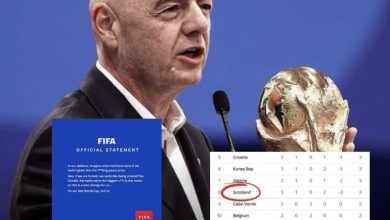
SCOTLAND SET TO REVIEW STEVE CLARKE EXIT TIMING AS CONTROVERSY OVER CONTRACT EXIT DEEPENS

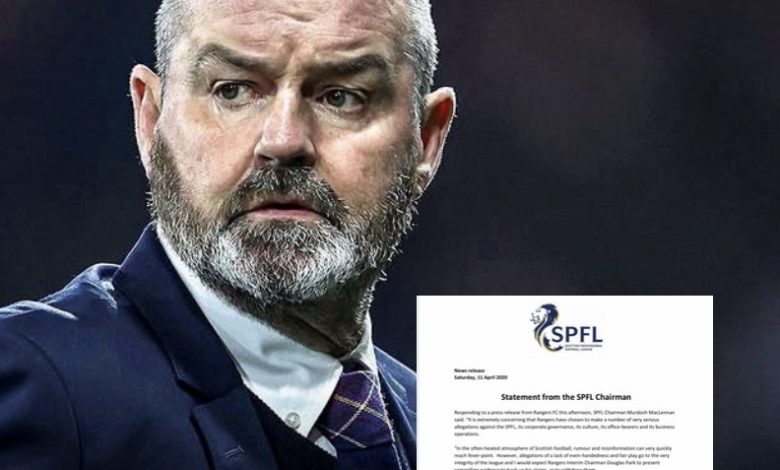
The fallout from Steve Clarke’s departure has taken a dramatic new turn, with reports suggesting that Scottish football authorities are now considering whether any formal action is necessary over the timing of his exit. According to emerging discussions within the game’s administrative circles, the issue is not necessarily Clarke’s decision to leave, but the manner in which it was handled—specifically, the fact that he did not see out the full duration of his contract.
While no official disciplinary charge has been confirmed, the situation has triggered internal reviews and sparked heated debate across Scottish football, with fans, pundits, and former players divided over whether the governing body is right to even consider such a move.
THE TIMELINE: HOW THE SITUATION UNFOLDED
Steve Clarke’s tenure had been widely viewed as one of the most stable periods in recent Scottish international football history. Under his leadership, Scotland qualified for major tournaments and built a reputation for tactical discipline and resilience.
However, things reportedly began to unravel following a disappointing competitive campaign that left qualification hopes in doubt. Sources close to the setup suggest that Clarke’s position became increasingly uncertain in the weeks leading up to his exit.
Key developments in the timeline include:
- Early speculation of tension: Reports of disagreements between Clarke and senior officials over squad direction and long-term planning.
- Performance concerns: A dip in results that intensified scrutiny from supporters and media.
- Contractual uncertainty: Clarke still had time remaining on his deal, but discussions around succession planning were said to be already underway behind the scenes.
- Sudden exit decision: Clarke’s departure announcement came before the natural expiration of his contract, triggering debate about whether protocol was fully followed.
It is this final point that has become the centre of attention, with some claiming the departure lacked proper procedural alignment with the governing body’s expectations.
WHAT DOES “CHARGING” MEAN IN THIS CONTEXT?
Despite sensational wording circulating on social media, the idea of “charging” Steve Clarke does not refer to criminal proceedings. Instead, it is understood to relate to an internal governance review or possible breach of professional conduct expectations.
Within football administration, such terminology often refers to:
- A formal review of contractual obligations
- Assessment of early termination clauses
- Evaluation of communication procedures during exit negotiations
- Determining whether any compensation or penalties are applicable
At this stage, there is no indication of legal wrongdoing. Rather, the focus is on whether established processes were fully respected before Clarke’s departure was finalised.
TACTICAL LEGACY AND THE WEIGHT OF EXPECTATION
From a tactical perspective, Clarke’s reign brought structure and identity to Scotland. His system, often built on a compact defensive shape and disciplined midfield organisation, allowed Scotland to compete more consistently against higher-ranked opposition.
Key tactical features under Clarke included:
- A structured back three or back five depending on opposition
- Heavy reliance on wide wing-backs for transitions
- Midfield emphasis on work rate and ball recovery
- Pragmatic attacking play prioritising efficiency over flair
While critics sometimes argued the approach lacked creativity, supporters pointed to Scotland’s improved competitive edge and qualification achievements as evidence of progress.
This duality—results versus style—has also shaped how his exit is being judged. For some, his departure represents the end of a successful era. For others, it signals an unfinished project disrupted at a sensitive moment.
FAN REACTIONS: DIVIDED OPINION ACROSS SCOTLAND AND BEYOND
Unsurprisingly, the situation has sparked strong reactions among supporters.
Scottish fan sentiment:
Many fans expressed frustration not necessarily at Clarke himself, but at the governing body’s handling of the situation. A section of supporters believe the focus should remain on rebuilding the squad rather than reviewing contractual technicalities.
Others, however, feel that professional standards must be upheld regardless of reputation or past success.
Typical reactions include:
- “We should be focused on the next manager, not paperwork disputes.”
- “No one is bigger than the contract—standards matter.”
- “Clarke gave us stability; let him go with respect.”
Nigerian football community reaction:
Interestingly, the story has also gained traction among African football followers, particularly in Nigeria, where Scottish football is closely followed due to Premier League connections and coaching comparisons.
Some Nigerian fans on social platforms have framed the situation as a cautionary tale about national team management structures, highlighting how governance issues can overshadow on-pitch progress.
BROADER IMPLICATIONS FOR SCOTTISH FOOTBALL
Beyond the immediate controversy, the situation raises wider questions about how national teams manage transitions.
Key implications include:
- Succession planning gaps: Whether Scotland had a clear transition strategy in place before Clarke’s exit.
- Contract management clarity: The importance of clearly defined exit clauses for national team managers.
- Public communication strategy: How information leaks and speculation can amplify administrative issues.
- Team stability concerns: The risk of disrupting squad momentum ahead of future international cycles.
Football analysts argue that even if no formal action is taken, the episode highlights the need for stronger structural clarity within the national setup.
WHAT HAPPENS NEXT?
At present, the expectation is that any internal review will focus on procedural evaluation rather than punitive action. Sources suggest that discussions are ongoing but remain confidential, with no timeline set for a formal outcome.
Meanwhile, attention is already shifting to Scotland’s next managerial appointment and how the team will move forward in preparation for upcoming international fixtures.
The governing body is under pressure to ensure that the next phase is handled decisively, with minimal disruption and maximum clarity.
CONCLUSION: A CONTROVERSY ROOTED IN PROCESS, NOT PUNISHMENT
While the headlines may suggest disciplinary action, the reality appears far more administrative than punitive. Steve Clarke’s departure has opened a procedural debate rather than a legal or sporting scandal.
Still, the situation underscores how modern football management extends far beyond the pitch. Contracts, communication, timing, and governance all play a role in shaping how even successful eras come to an end.
For Scotland, the focus will now be on restoring stability and ensuring that the next chapter is defined not by controversy, but by clarity and ambition.