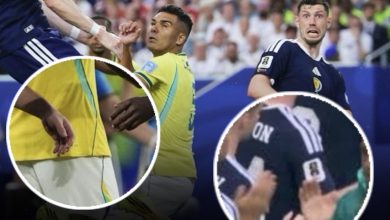
In the high-stakes environment of the FIFA World Cup 2026, where every decision can alter the trajectory of a nation’s campaign, refereeing accuracy remains one of football’s most enduring challenges. Scotland’s Group C encounter against Morocco on June 19, 2026, in Foxborough, Massachusetts, has become a focal point for debates over officiating standards, VAR intervention, and the integrity of the tournament. While sensational claims of direct financial “compensation” from FIFA to the Scottish Football Association (SFA) lack substantiation in official reports, the match underscored systemic issues in elite-level decision-making that FIFA has increasingly been forced to address through reviews, transparency initiatives, and support mechanisms for participating associations.
### The Match Context: A Tale of Early Setback and Growing Frustration
Scotland entered the tournament with renewed optimism after qualifying for their first World Cup in 28 years. Under manager Steve Clarke, the Tartan Army secured an opening win against Haiti, setting up a crucial clash with the formidable Atlas Lions of Morocco—2022 semi-finalists and recent African champions. Morocco struck early, with Ismael Saibari netting what was reported as one of the fastest goals in World Cup history, just minutes into the contest. Scotland battled back into the game, particularly in the second half, but fell to a 1-0 defeat.
The result left Scotland needing a strong performance against Brazil in their final group match to advance. However, post-match discourse centered less on tactical execution and more on two contentious penalty appeals in the second half involving John McGinn and Scott McTominay, both seemingly fouled by Morocco’s Neil El Aynaoui. Referee Ilgiz Tantashev of Uzbekistan, supported by VAR, waved away both claims, allowing play to continue. Scottish players and staff expressed visible frustration on the pitch, with Clarke later describing several decisions as ones he “wasn’t too sure about.”
Former referee Christina Unkel, analyzing for broadcasters, described the McTominay incident as “a very clear penalty,” citing contact on the knee and boot without sufficient ball contact from the defender. She criticized VAR for not recommending an on-field review. Pundits offered divided opinions: Harry Kewell found the calls baffling, while others like Roy Keane viewed the appeals as players going down too easily. Steve Clarke highlighted the McGinn challenge as potentially more deserving and questioned a first-half yellow card for Morocco’s Issa Diop on Che Adams, suggesting it could have warranted a red.
These moments encapsulated the fine margins in modern football, amplified by technology that promises objectivity but often delivers further contention.
### Refereeing at the 2026 World Cup: A Tournament Under Scrutiny
The Scotland-Morocco game was not an isolated incident. The 2026 edition, co-hosted by Canada, Mexico, and the United States with an expanded 48-team format, has tested refereeing resources like never before. FIFA selected 52 referees, 88 assistants, and 30 VAR officials, drawing from a global pool to manage increased fixtures. Yet, controversies have arisen across groups, prompting calls for greater accountability.
Scotland’s absence from the list of appointed officials—despite historical contributions to international refereeing—has been a point of domestic discussion. Analysts attribute this partly to domestic league challenges and performance metrics, though former SFA figures defend the overall standard. The tournament’s use of semi-automated offside technology and advanced VAR protocols aimed to minimize errors, but human interpretation in real-time contact situations remains subjective. In the Scotland match, the referee’s tolerance for physicality appeared higher than some expected, leading to perceptions of inconsistency.
FIFA has responded to broader refereeing pressures with initiatives like enhanced training, performance reviews, and post-tournament debriefs. While no public “compensation” package specifically for Scotland has been announced, FIFA provides substantial financial distributions to all participating member associations. Scotland was guaranteed significant preparation costs and group-stage payments—part of a record prize pot exceeding £400 million—regardless of results. These funds support development, player compensation, and infrastructure, indirectly addressing competitive disadvantages.
Critics argue such measures fall short of addressing perceived injustices on the field. Calls for independent referee oversight bodies or more transparent VAR audio releases have grown louder. FIFA President Gianni Infantino has emphasized the tournament’s financial contributions to global football while stressing the need for respect toward officials amid intense scrutiny.
### Historical Parallels and the Evolution of VAR
Refereeing disputes are as old as the World Cup itself. From the 1966 “Wembley goal” to Diego Maradona’s “Hand of God” in 1986, controversy has shaped narratives. The introduction of VAR in 2018 aimed to correct “clear and obvious errors,” but it has introduced new debates over thresholds for intervention, especially in penalty areas where contact is often marginal.
In Scotland’s case, the incidents highlighted VAR’s limitations: reviewers must determine not just contact, but intent, ball contact, and whether the foul warrants a spot-kick under the referee’s game-management style. Unkel’s analysis suggested a missed opportunity for intervention, while others noted Scotland’s need to convert chances independently of officials. Manager Clarke echoed this balanced view, urging focus on performance while acknowledging the decisions’ impact.
Broader lessons from 2026 include the physical and mental toll on players and coaches. Scotland’s campaign, already emotionally charged due to the long qualification wait, faced added pressure. Supporters, many traveling at significant personal cost, voiced strong opinions online and in media, reflecting football’s passionate global culture.
### Financial and Developmental Ramifications for Scotland
Though direct compensation tied to referee errors is not standard FIFA policy, the organization’s prize money structure offers tangible benefits. Scotland’s participation alone provides a financial boost to the SFA, funding grassroots initiatives, women’s football, and youth development—areas critical for sustaining long-term competitiveness. Reaching the knockout stages would yield further sums, potentially transforming the domestic game’s economics.
This aligns with FIFA’s stated goal of equitable distribution. Increased preparation fees for teams help offset travel, training camps, and logistical challenges in a vast North American tournament. For smaller or returning nations like Scotland, these resources are vital, potentially “compensating” systemic competitive gaps indirectly.
Domestically, the SFA faces questions on leveraging this exposure. Improved player pathways, better domestic referee training, and fan engagement strategies could emerge from the 2026 experience. The campaign, despite the Morocco setback, reignited national pride and highlighted Scotland’s place in global football.
### Looking Ahead: Reforms and Scotland’s Path
As the 2026 tournament progresses, FIFA is likely to refine protocols based on accumulated data. Potential reforms include expanded VAR teams, real-time transparent communication, standardized physicality thresholds, and greater diversity in official appointments. The 2030 co-hosting in Morocco, Portugal, and Spain offers another horizon for improvement.
For Scotland, the immediate focus remains qualification hopes against Brazil—a daunting but not impossible task given their resilience. Beyond the pitch, the episode reinforces the need for mental fortitude in elite sport. Players like McGinn and McTominay, central to the controversies, exemplify the blend of skill and character required at this level.
In conclusion, while the headline of FIFA “finally compensating” Scotland captures the raw emotion of fans feeling aggrieved, the reality reflects football’s complex interplay of human error, technology, and governance. The Scotland-Morocco match serves as a microcosm of the 2026 World Cup’s challenges and a catalyst for ongoing evolution. True progress lies not in isolated payouts but in systemic enhancements that uphold fairness, enhance spectator enjoyment, and allow talent—not officiating—to decide outcomes. As the Tartan Army continues its support, Scotland’s story at this World Cup underscores both the game’s enduring frustrations and its capacity for inspiration.