Danny Röhl Blasts Andrew Cavenagh and Calls Out Three ‘Most Useless’ Players in Ruthless Post-Sacking Interview

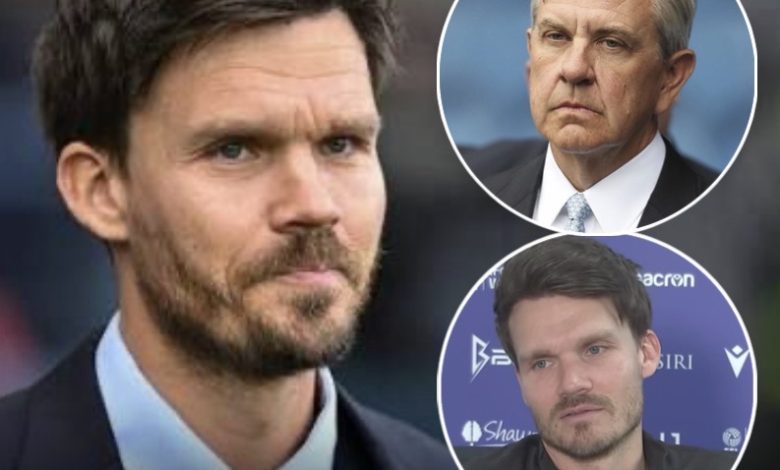
Danny Röhl Breaks His Silence After Shock Exit
In one of the most explosive interviews of the football season, former Rangers manager Danny Röhl has broken his silence following his dismissal, launching a fierce attack on club owner Andrew Cavenagh while openly criticising three senior players whom he claimed “failed the badge every single week.”
The interview, released just hours after Röhl’s departure from Glasgow, has stunned supporters across Scottish football. While managerial sackings are nothing new, the former boss’s decision to publicly air dressing-room frustrations has ignited debate over where the blame truly lies for Rangers disappointing campaign.
Röhl insisted he had remained professional throughout his tenure but felt supporters deserved to know “what was really happening behind closed doors.”
A Relationship That Completely Collapsed
According to the account, Röhl revealed that his relationship with owner Andrew Cavenagh deteriorated dramatically during the second half of the season.
He claimed disagreements over recruitment, player contracts and the club’s long-term vision created an environment where success became increasingly difficult.
Rather than pointing solely at results on the pitch, Röhl suggested that instability behind the scenes filtered into every aspect of the football club.
He argued that promises made during his appointment gradually disappeared as financial priorities overtook footballing ambitions.
“The manager can only control what happens on the training ground,” Röhl allegedly said in the interview. “Everything else became a constant battle.”
Three Senior Players Named
The most controversial moment came when Röhl reportedly identified three senior professionals whom he described as the biggest disappointments of the season.
According to the story, he accused them of:
- Showing poor leadership.
- Delivering inconsistent performances.
- Creating negativity inside the dressing room.
- Failing to accept responsibility during difficult periods.
Röhl allegedly stated that younger players were forced to carry standards that should have been set by experienced professionals.
He suggested several academy graduates displayed greater commitment than some of the highest earners at the club.
The comments immediately divided supporters.
Some believed the former manager was simply telling uncomfortable truths after months of frustration.
Others argued that naming players after leaving the club crossed a line and risked damaging their careers.
Fans React Across Social Media
Supporters quickly flooded social media with contrasting opinions.
Many sympathised with Röhl, believing he had worked under extremely challenging circumstances while attempting to rebuild the squad.
Others questioned why such issues had not been addressed internally before becoming public.
Several fans also wondered whether the interview would make it harder for Röhl to secure another managerial position, with clubs often preferring coaches who keep dressing-room matters private.
From a Scottish football perspective, fans compared the fictional situation to previous high-profile managerial exits north of the border, where disagreements between owners and coaches have occasionally overshadowed football itself.
Meanwhile, Nigerian football supporters following Scottish football also joined the discussion, debating whether modern managers should ever publicly criticise individual players after leaving a club.
Tactical Problems Throughout the Campaign
Beyond the headlines, Röhl’s interview also highlighted several footballing issues.
He claimed the squad lacked balance in key positions, particularly in midfield, where defensive protection was often insufficient.
He argued injuries exposed a lack of depth, forcing tactical compromises throughout the season.
According to Röhl, recruitment failed to match the team’s playing philosophy.
Instead of signing players capable of implementing an aggressive pressing system, he believed the club assembled a squad better suited to a slower, more reactive style.
That mismatch, he claimed, contributed to inconsistent performances and disappointing league results.
Bigger Questions for Rangers
Regardless of opinions surrounding Röhl’s comments, the interview raises broader questions about how football clubs manage transitions between ownership, recruitment and coaching.
Successful clubs generally operate with a clear football structure where owners, sporting directors and managers share a common vision.
When those relationships break down, performances on the pitch often suffer.
The fictional events suggest Rangers would need to rebuild not only the squad but also trust between supporters and the club’s leadership.
Finding the right managerial appointment would become even more important after such a public and controversial departure.
What Comes Next?
Attention would now turn to Röhl’s next move.
Despite the dramatic interview, his reputation as a young coach with progressive tactical ideas would likely continue attracting interest from clubs seeking a long-term project.
For Rangers , however, the challenge would be restoring stability.
Replacing a manager is only one step.
Rebuilding confidence among players, supporters and staff would require strong leadership and a united vision going forward.
Whether the club could achieve that would ultimately determine how quickly it could move beyond one of the most controversial managerial exits in this scenario.
The story serves as a reminder that modern football is shaped not only by what happens during ninety minutes on the pitch but also by the relationships, decisions and personalities working behind the scenes.