UEFA Loophole Means Connor Barron Could Yet Earn Scotland World Cup 2026 Call-Up After Injury Blow in Camp

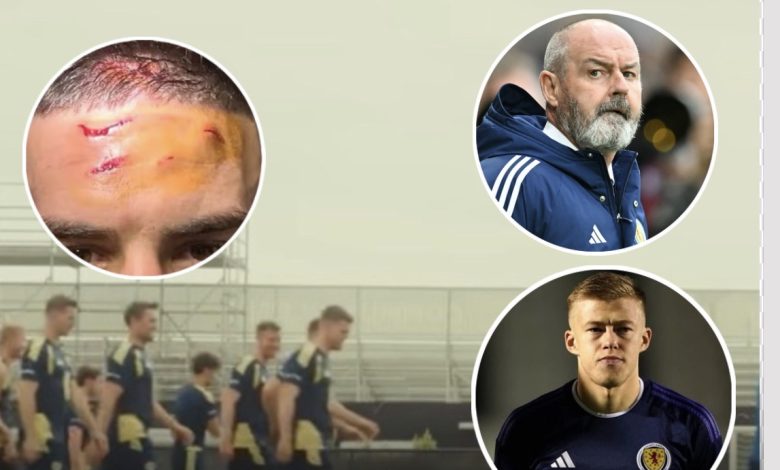
The road to a FIFA World Cup is rarely straightforward. Every qualification campaign produces surprise heroes, unexpected setbacks, and dramatic twists that nobody sees coming. As Scotland continue their preparations for the 2026 FIFA World Cup, one intriguing possibility has emerged following an injury setback involving a key player in the national team camp.
That possibility centres around Rangers midfielder Connor Barron.
What initially appeared to be a closed door for the talented midfielder may not be shut after all. Thanks to a little-discussed UEFA registration provision and Scotland’s need for midfield depth, Barron could suddenly find himself back in the international conversation at precisely the moment when Steve Clarke’s squad faces uncertainty.
While no official call-up has yet been confirmed, the circumstances surrounding Scotland’s midfield situation have led many supporters and pundits to ask the same question: could Barron become the latest beneficiary of football’s most unexpected loophole?
Scotland’s Injury Problem Creates New Questions
International football is often defined by timing.
Players can spend months producing outstanding performances at club level only to miss out on selection because competition for places is fierce. Conversely, injuries and suspensions can create opportunities that simply did not exist weeks earlier.
That appears to be the situation Scotland are currently facing.
An injury sustained by a key Celtic midfielder during international preparations has forced Scotland’s coaching staff to reassess their options ahead of crucial fixtures.
For manager Steve Clarke, the challenge is significant.
Scotland’s midfield has been one of the team’s greatest strengths during recent tournaments and qualification campaigns. The combination of experience, tactical discipline and technical quality has enabled the national side to compete with some of Europe’s strongest nations.
However, losing an established player creates a chain reaction.
Suddenly, squad depth becomes critical.
Suddenly, players who appeared to be on the outside looking in become realistic alternatives.
And suddenly, someone like Connor Barron enters the conversation.
Barron’s Rise Has Been Impossible to Ignore
When Barron arrived at Rangers, expectations were high but measured.
The midfielder had already shown considerable promise in Scottish football, earning praise for his composure, intelligence and ability to influence matches from central areas.
Yet few could have predicted just how quickly he would establish himself as an important figure.
Throughout the season, Barron demonstrated maturity beyond his years.
His ability to retain possession under pressure, dictate tempo and break up opposition attacks made him a valuable asset.
Perhaps more importantly, he showed consistency.
International managers value reliability above almost everything else.
A player capable of delivering seven-out-of-ten performances every week often becomes more attractive than one who alternates between brilliance and anonymity.
Barron’s performances have reflected exactly that consistency.
Week after week he has shown he can handle pressure.
Week after week he has demonstrated the attributes required at international level.
And week after week Scotland supporters have continued asking why he has not been given a greater opportunity.
Understanding the UEFA Loophole
The term “loophole” often creates dramatic headlines, but in reality these situations usually involve existing regulations that allow national associations flexibility in exceptional circumstances.
UEFA and FIFA both operate rules regarding squad registration, injury replacements and player eligibility.
In specific situations, players can be added to squads after initial announcements if medical evidence confirms an existing squad member is unable to participate.
This mechanism exists primarily to ensure nations are not unfairly disadvantaged by injuries occurring shortly before major fixtures.
What makes Barron’s situation particularly interesting is that he already sits firmly within Scotland’s wider player pool.
He is not an unknown prospect.
He is not an emergency selection from outside professional football.
Instead, he is a player whose credentials have been discussed extensively and who has already established himself as one of Scottish football’s most promising midfielders.
If Scotland’s coaching staff determine additional midfield cover is required, Barron becomes an obvious candidate.
Why Barron Fits Scotland’s System
One of the strongest arguments in Barron’s favour is tactical compatibility.
International football differs significantly from club football.
Managers have limited preparation time.
Training sessions are restricted.
As a result, players capable of quickly understanding tactical instructions become extremely valuable.
Barron’s style naturally aligns with Scotland’s current approach.
He possesses the discipline required to maintain defensive shape.
He is comfortable receiving possession in difficult areas.
He understands when to accelerate attacks and when to slow the game down.
Most importantly, he works hard without the ball.
That final attribute is particularly important under Steve Clarke.
Scotland’s recent success has been built on organisation, collective effort and tactical discipline.
Barron has consistently demonstrated all three characteristics.
For that reason alone, many observers believe he would adapt quickly to the demands of international football.
Rangers Fans Believe His Chance Has Arrived
Among Rangers supporters, there is growing confidence that Barron deserves recognition at international level.
Many fans point to his performances in high-pressure matches.
Others highlight his consistency across a long domestic campaign.
There is also a belief that Scotland’s midfield needs fresh energy.
International squads cannot remain static forever.
Eventually, younger players must emerge.
Eventually, new leaders must develop.
Eventually, managers must trust the next generation.
Barron represents exactly that next generation.
For Rangers fans, a Scotland call-up would simply confirm what they already believe: that he belongs among the country’s best midfielders.
The Competition Remains Fierce
Of course, earning a Scotland place is never straightforward.
The national team possesses considerable midfield talent.
Players competing for places have experience in major tournaments, European competitions and top domestic leagues.
Barron would therefore face significant competition even if Scotland decide to add another player.
That reality cannot be ignored.
International football rewards excellence rather than potential.
Managers select players capable of delivering immediately.
The challenge for Barron is convincing Scotland’s coaching staff that he can make an instant impact.
Fortunately for the Rangers midfielder, recent performances suggest he may be capable of doing exactly that.
What a Call-Up Would Mean for Barron’s Career
A senior Scotland call-up would represent a major milestone.
For any player, international recognition serves as validation.
It confirms that years of hard work have been noticed.
It demonstrates that performances at club level are being rewarded.
For Barron specifically, it could also accelerate his development.
Training alongside Scotland’s most experienced internationals would provide valuable learning opportunities.
Competing at international level would expose him to different tactical systems and higher levels of intensity.
Those experiences often help players reach new levels in their club careers as well.
Many of Scotland’s current stars took significant steps forward after establishing themselves internationally.
Barron would hope to follow a similar path.
Scotland’s World Cup Dream
The broader context is Scotland’s ambition to qualify for the 2026 FIFA World Cup.
The tournament represents a huge opportunity.
Qualification would further cement the progress made under Steve Clarke and reinforce Scotland’s status as a growing force in European football.
To achieve that goal, squad depth will be essential.
Qualification campaigns are long and demanding.
Injuries are inevitable.
Suspensions occur.
Form fluctuates.
Managers must therefore be prepared to rely on players beyond their strongest starting eleven.
That is precisely why emerging talents like Barron are so important.
The most successful international teams consistently integrate new players before they become absolutely necessary.
Doing so ensures continuity and competitiveness.
A Defining Summer Ahead
The coming weeks could prove pivotal for Barron.
If Scotland choose to activate their replacement options, his name is likely to feature prominently in discussions.
Even if a call-up does not arrive immediately, his performances have strengthened his position considerably.
International football often rewards persistence.
Many players receive opportunities only after several near misses.
Barron appears to be approaching that stage of his career.
He has built a compelling case.
He has impressed at club level.
He has demonstrated consistency.
And he has shown the mentality required to perform under pressure.
Whether that ultimately results in a Scotland call-up remains to be seen.
Conclusion
Football careers can change in an instant.
An injury to one player can create a life-changing opportunity for another.
That possibility now exists for Connor Barron.
Scotland’s injury concerns have reopened a conversation that many believed had already been settled. Thanks to UEFA regulations allowing squad adjustments under specific circumstances, the Rangers midfielder remains firmly in contention.
For Barron, the message is simple: stay ready.
For Scotland supporters, the prospect is intriguing.
And for Rangers fans, it represents another sign that one of their brightest talents is beginning to receive the recognition his performances deserve.
Whether the call eventually arrives or not, Connor Barron has positioned himself exactly where every ambitious footballer wants to be—on the brink of international football, waiting for the opportunity that could transform his career and potentially play a part in Scotland’s quest to reach the 2026 World Cup.