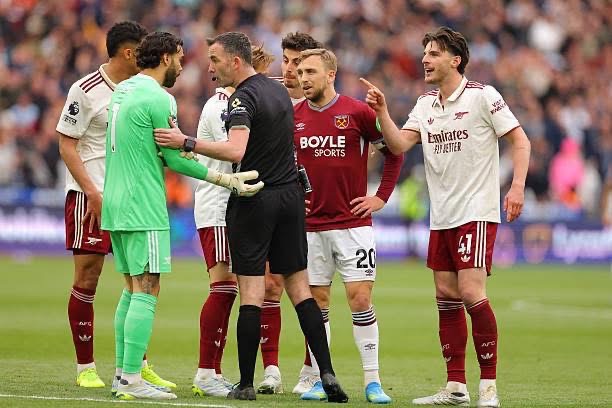
Premier League Referee Under Scrutiny After West Ham’s Disallowed Goal Against Arsenal
The fallout from Arsenal’s tense 1-0 victory away to West Ham United has continued to dominate football discussions, with supporters furious over a controversial late decision that many believe denied the Hammers a deserved equaliser.
Arsenal left East London with all three points after a disciplined display and a narrow winning margin, but the match has since become overshadowed by officiating controversy. Critics have now reignited debate over whether certain referees should be allowed to oversee matches involving specific Premier League clubs, especially after claims emerged that the official involved has effectively been “banned” from handling fixtures connected to two top-flight sides due to previous disputes and accusations of inconsistency.
The biggest talking point came during the closing stages when West Ham thought they had rescued a dramatic equaliser. Inside the stadium, celebrations erupted among the home crowd after the ball found the back of the net following a chaotic scramble inside Arsenal’s penalty area. However, after consultation with VAR, the goal was ruled out — a decision that immediately sparked outrage among players, pundits, and fans alike.
Many observers insist the goal should have stood.
The controversy has only intensified because of the nature of the match itself. Arsenal were under pressure throughout the second half as West Ham pushed aggressively for a leveller. Mikel Arteta’s side had taken the lead earlier through a well-worked attacking move, but they never truly looked comfortable protecting their advantage.
As the game wore on, West Ham grew stronger. The hosts forced several saves, dominated aerial battles, and pinned Arsenal deep into their own half. The Emirates hopefuls were hanging on desperately by the final ten minutes.
Then came the moment that changed everything.
A dangerous delivery into the Arsenal penalty area caused panic among the visitors’ defenders. The ball ricocheted between multiple players before eventually crossing the line. West Ham players instantly wheeled away in celebration, convinced they had secured a crucial point.
But celebrations quickly turned to confusion.
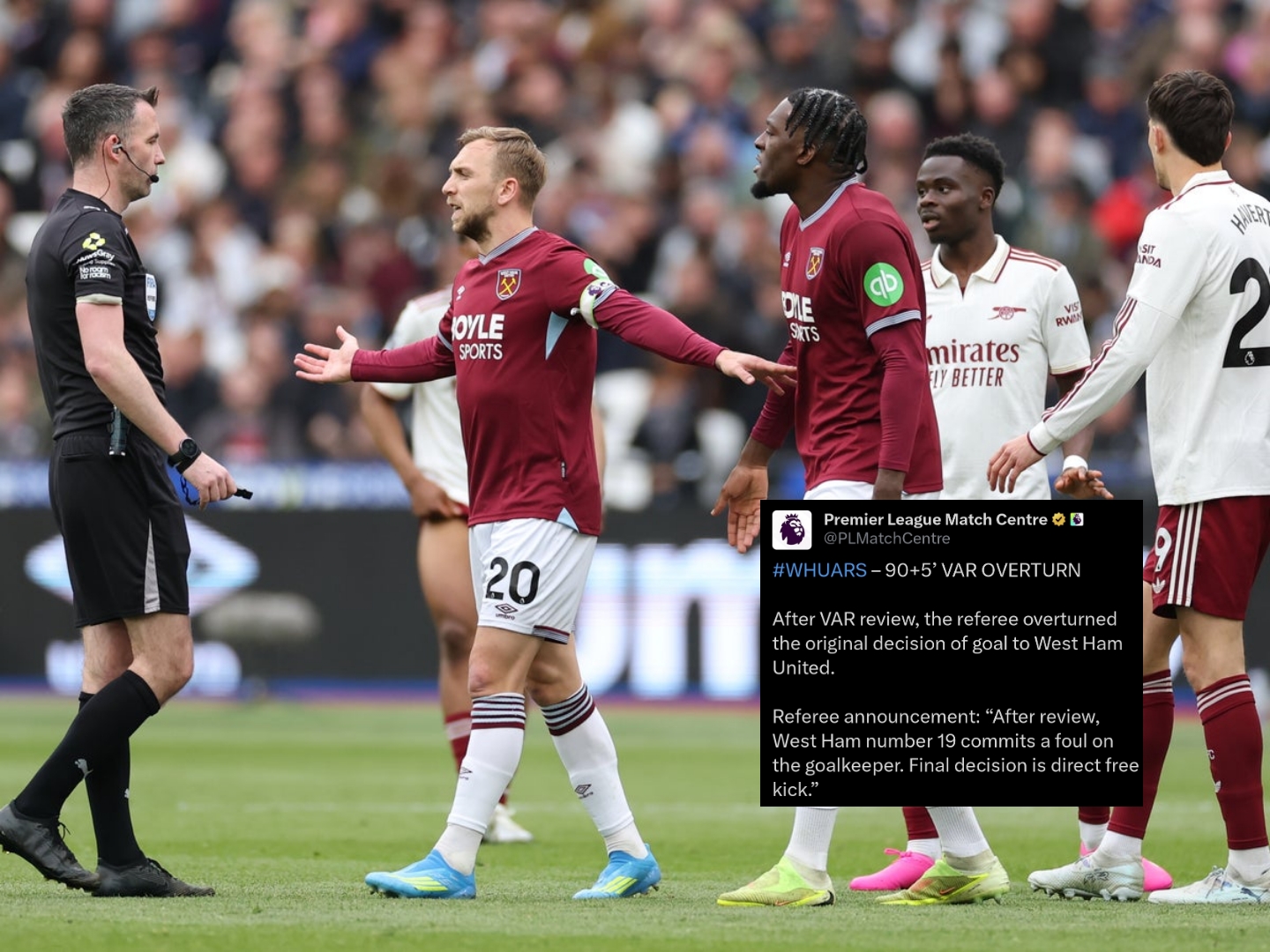
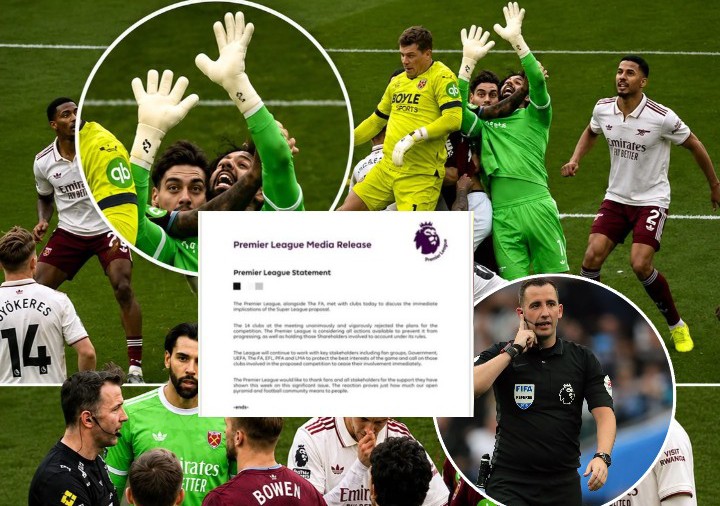
The referee paused proceedings while VAR reviewed the incident. Replays appeared inconclusive to many watching inside the stadium and at home. Questions centered around whether there had been a foul in the buildup, possible interference with the goalkeeper, and whether any attacking player had handled the ball.
After a lengthy review, the goal was disallowed.
The reaction was explosive.
West Ham manager, players, and supporters were left furious, arguing there was insufficient evidence to overturn the on-field outcome. Social media exploded within minutes, with fans accusing officials of inconsistency and demanding greater accountability from referees and VAR teams.
Several former players and pundits also questioned the decision during post-match analysis.
One recurring argument was simple: if the original on-field decision had been a goal, many believe VAR would not have found enough evidence to reverse it. That has fueled claims that officiating standards continue to fluctuate dramatically from one Premier League match to another.
The controversy has also reopened discussions surrounding the referee assigned to the fixture.
Reports and fan speculation have circulated suggesting that the official has previously been removed from, or avoided in, fixtures involving certain Premier League clubs after contentious performances. While the term “banned” may be exaggerated in some circles, there is growing scrutiny over how refereeing appointments are managed in England’s top division.
Supporters increasingly believe some officials carry historical baggage into particular fixtures.
That perception creates a dangerous atmosphere for the league.
In modern football, referees operate under enormous pressure. Every major decision is replayed instantly from multiple camera angles and dissected endlessly online. VAR was introduced to reduce controversy, yet many fans now argue it has simply created a different type of frustration.
Instead of clear resolutions, lengthy reviews often leave supporters even more confused.
That was certainly the case at the London Stadium.
West Ham fans pointed to several freeze-frame images circulating online that appeared to show no obvious infringement during the buildup to the disallowed goal. Others argued that Arsenal goalkeeper interference was minimal and nowhere near enough to justify overturning such a critical moment.
From Arsenal’s perspective, however, the visitors will feel they earned the right to survive.
Arteta’s side showed resilience under pressure and defended bravely during the closing stages. Championship-winning teams are often praised for grinding out ugly victories, especially away from home, and Arsenal supporters will argue this was exactly that type of performance.
Still, even some neutral viewers admitted the disallowed equaliser felt harsh.
The Premier League has spent years attempting to improve officiating consistency, but matches like this continue to undermine confidence in the system. Every controversial decision creates fresh accusations of bias, incompetence, or selective interpretation of the rules.
The problem is magnified when clubs are fighting for major objectives.
For Arsenal, every point matters in the title race. A draw at West Ham could prove hugely damaging in the closing weeks of the season. For West Ham, points are equally crucial in the battle for European qualification and league positioning.
That context explains why emotions boiled over so intensely after the final whistle.
Several West Ham players reportedly confronted the referee as they left the pitch, demanding explanations over the VAR intervention. Fans inside the stadium chanted angrily while television coverage repeatedly replayed the incident from multiple angles.
Even long after the match ended, debate continued dominating football broadcasts and online platforms.
Former referees were divided on the issue. Some defended the final decision by insisting officials applied the law correctly. Others admitted the threshold for overturning the goal may not have been met.
That distinction matters.
VAR was supposed to intervene only in cases of “clear and obvious” errors. Critics argue the phrase has gradually lost meaning because subjective interpretations continue to determine outcomes.
In this case, millions of viewers were left unconvinced that the evidence was definitive enough to deny West Ham their goal.
For Arsenal, though, the result itself could prove enormous.
Winning difficult away games has become a hallmark of serious title contenders. Even when performances are imperfect, elite teams find ways to secure victories. Arsenal did exactly that at West Ham, showing defensive discipline and composure during key moments.
Arteta praised his players afterward for their mentality and determination under pressure.
Yet inevitably, much of the post-match conversation focused not on Arsenal’s resilience but on the officiating.
That trend reflects a broader issue within English football. Referees have become central figures in too many matches. Instead of discussions revolving around tactics, goals, or player brilliance, debates increasingly center on VAR checks and controversial calls.
Fans from every club feel aggrieved at different moments during the season.
West Ham supporters now join that growing list.
Many believe they were denied a legitimate equaliser that could have changed the outcome entirely. Had the goal stood, Arsenal would have dropped valuable points, while West Ham would have earned a dramatic reward for their second-half pressure.
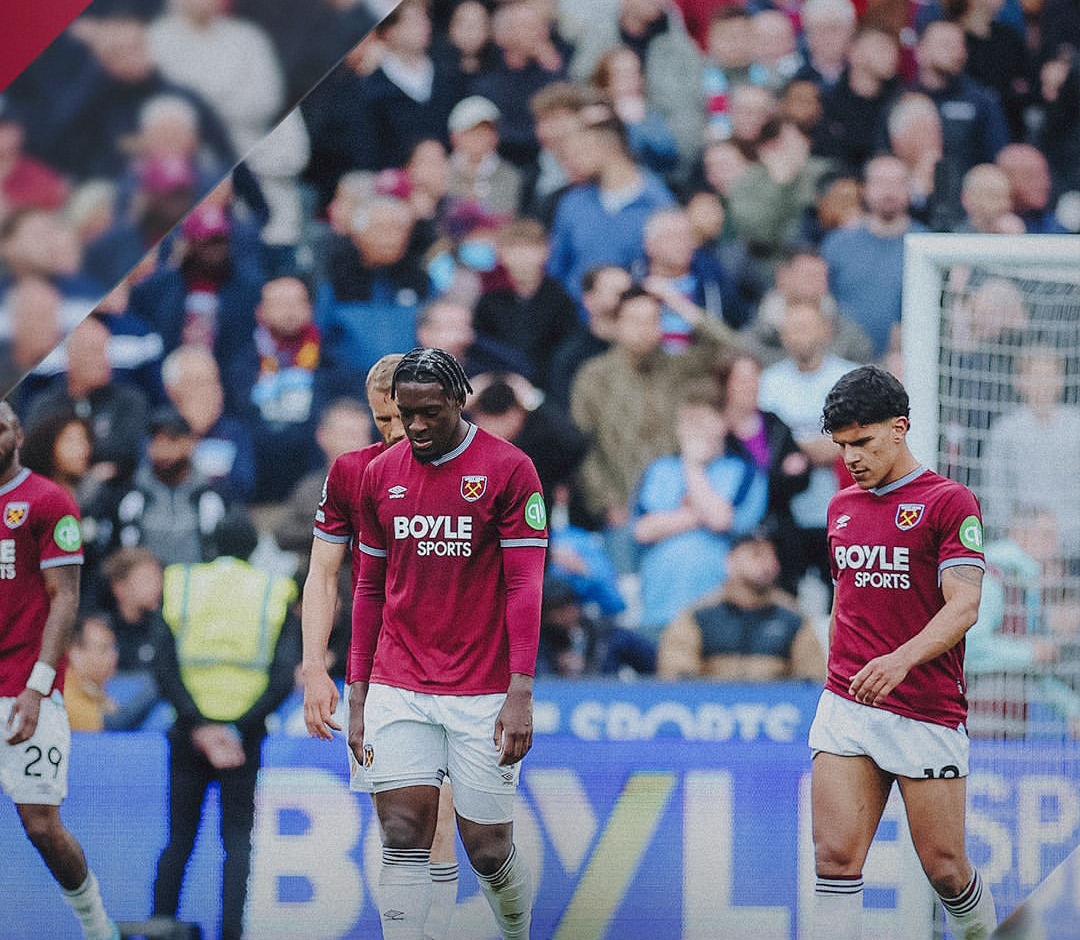
Instead, the visitors escaped with a narrow victory and the hosts were left furious.
The incident will almost certainly be reviewed internally by refereeing authorities, though that may offer little comfort to West Ham fans. In previous cases, officials have occasionally been stood down temporarily or reassigned away from particular fixtures following high-profile controversies.
Whether that happens here remains to be seen.
What is undeniable is that the debate surrounding refereeing standards in the Premier League has intensified once again.
Football thrives on passion, drama, and emotion. Controversy has always existed in the sport. But VAR was introduced specifically to eliminate major injustices. When contentious moments continue occurring despite extensive video review technology, supporters naturally begin questioning the effectiveness of the system itself.
For West Ham fans, this defeat will feel especially painful because many genuinely believe their team earned at least a point.
For Arsenal supporters, the result represents another potentially massive step in their campaign ambitions.
And for Premier League officials, the backlash from this match serves as yet another reminder that confidence in refereeing standards remains fragile.
One thing is certain: the debate over West Ham’s disallowed equaliser is not disappearing anytime soon.









Post Comment