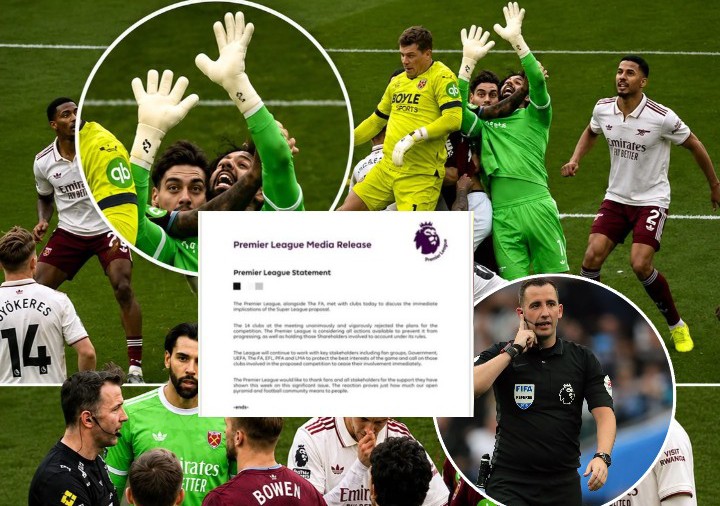
Premier League release official statement after controversial Chris Kavanagh VAR decision denies West Ham late equaliser against Arsenal
A fresh VAR controversy has once again placed Premier League officiating under intense scrutiny after Chris Kavanagh disallowed a dramatic late West Ham United equaliser against Arsenal — a decision that left supporters furious and prompted an official explanation from the Premier League shortly after the final whistle.
The incident occurred during the closing moments of a tense and emotionally charged Premier League encounter, with West Ham appearing to rescue a vital point before celebrations were abruptly cut short following a lengthy VAR review.
Within minutes, social media platforms exploded with debate. West Ham supporters accused officials of inconsistency, while Arsenal fans largely defended the final verdict but questioned the growing disruption VAR continues to bring to major matches.
The Premier League later issued clarification regarding the incident, explaining why the goal was overturned and confirming that VAR believed an infringement had occurred during the attacking phase.
Yet despite the statement, the controversy has only intensified wider concerns surrounding officiating consistency, communication, and the emotional impact VAR is having on the modern Premier League experience.
Late drama overshadows a fiercely contested London clash
The match itself had already carried enormous significance.
Arsenal entered the fixture under pressure to maintain momentum in a fiercely competitive title race, while West Ham were fighting to secure valuable points during a difficult run of form.
From the opening stages, the intensity reflected the stakes.
Arsenal controlled possession for long periods through their usual structured build-up play:
Full-backs stepping into midfield
High pressing after losing possession
Quick rotations between attacking midfielders
Sustained territorial pressure
West Ham, meanwhile, relied heavily on:
Compact defensive organisation
Direct attacking transitions
Physical midfield duels
Set-piece pressure
As the match progressed, Arsenal gradually established greater control of central areas, but West Ham remained dangerous whenever they could force chaotic moments around the penalty area.
That tension eventually produced the game’s defining controversy.
The incident that changed everything
Deep into the closing stages, West Ham increased attacking pressure significantly.
With Arsenal protecting a narrow lead:
Crosses arrived more frequently into the box
Midfielders pushed aggressively for second balls
Arsenal’s defensive line dropped deeper
The atmosphere inside the stadium intensified
The breakthrough appeared to arrive when West Ham forced the ball into the net during a crowded attacking sequence.
Players celebrated immediately.
Supporters erupted.
For several seconds, it looked like West Ham had earned a dramatic equaliser against one of the league’s title challengers.
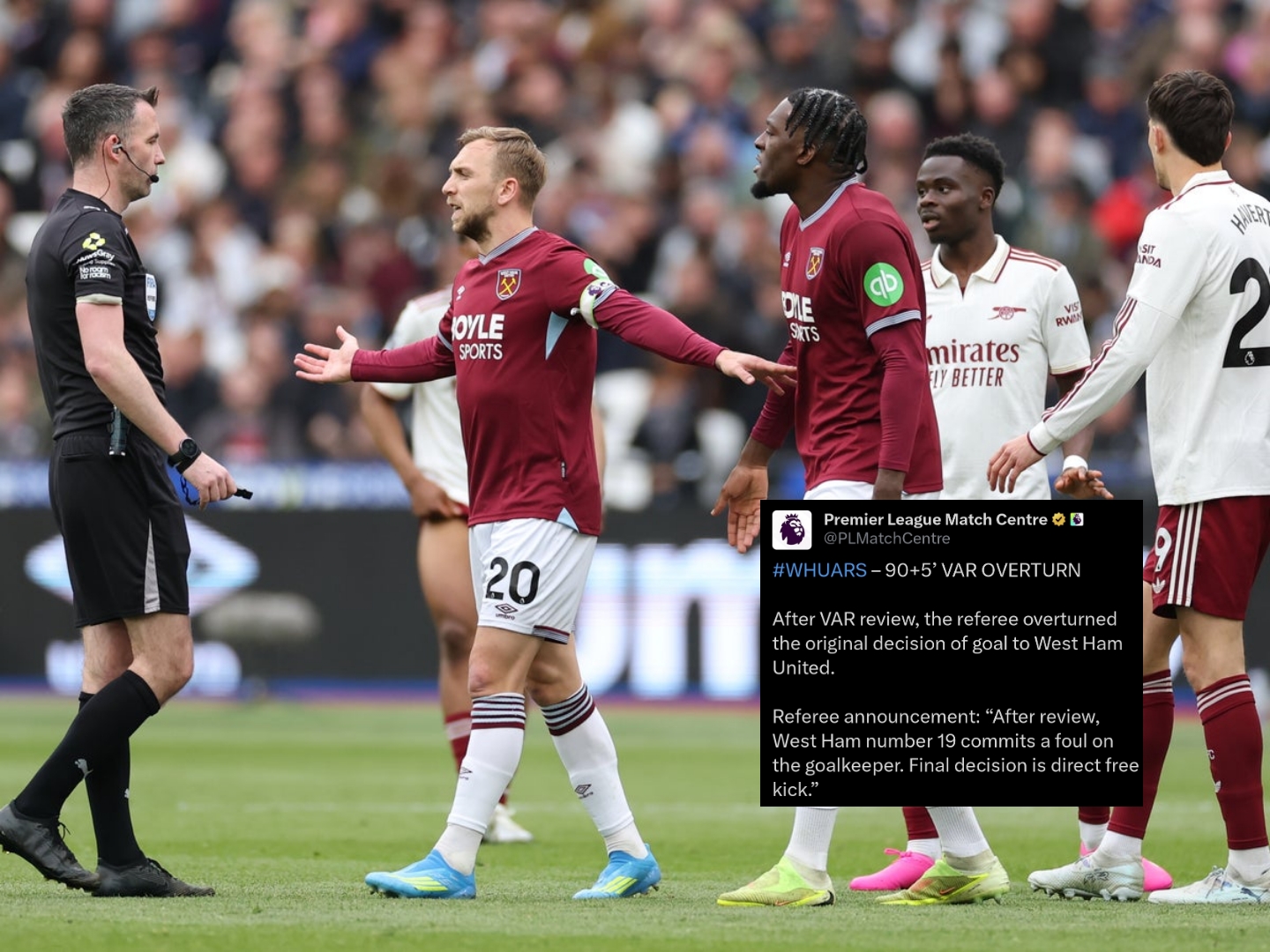
However, referee Chris Kavanagh delayed the restart after communication from the VAR team, triggering an extended review process that created immediate confusion inside the stadium.
The review focused on a possible infringement during the attacking phase leading to the goal.
After several minutes, the goal was disallowed.
The reaction was immediate.
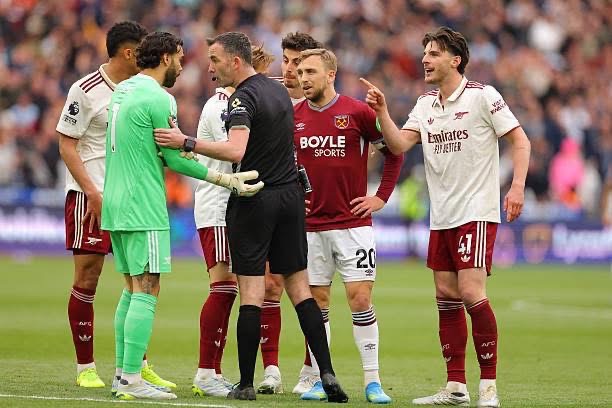
West Ham players surrounded officials seeking explanations, while sections of the crowd responded with loud frustration as replay angles continued circulating across television broadcasts and online platforms.
Premier League explain the VAR decision
Following growing backlash after the match, the Premier League released an official statement clarifying the reasoning behind the decision.
According to the league’s explanation, VAR identified an infringement significant enough to recommend overturning the on-field decision.
Officials concluded that the attacking phase involved contact or positioning that breached current interpretations under Premier League officiating guidelines.
While the statement aimed to provide transparency, many supporters remained unconvinced.
One major criticism centred on the lack of communication inside the stadium itself. Fans present during the match reportedly struggled to understand:
What specific incident was being reviewed
Why the review lasted so long
Which rule had been applied
That uncertainty has become one of the defining frustrations surrounding VAR implementation in English football.
Tactical pressure from West Ham nearly paid off
From a tactical perspective, the controversy emerged precisely because West Ham successfully changed the rhythm of the game late on.
For much of the contest, Arsenal attempted to maintain control through possession and territorial dominance. However, once West Ham increased physical pressure during the final stages, the game became increasingly chaotic.
Historically, West Ham have often thrived in those moments.
Their late attacking approach relied on:
Early deliveries into dangerous areas
Physical aerial battles
Midfield runners attacking second balls
Emotional momentum from supporters
Against possession-heavy teams like Arsenal, forcing repeated penalty-box situations often represents their most effective route back into matches.
The disallowed goal reflected exactly that strategy.
Even though the equaliser ultimately did not stand, West Ham’s aggressive late pressure unsettled Arsenal considerably and exposed vulnerabilities that title rivals will likely study closely.
Arsenal survive another difficult defensive examination
Although Arsenal benefited from the final outcome, the incident highlighted recurring defensive concerns during emotionally intense endings to matches.
Under Mikel Arteta, Arsenal have developed into one of the Premier League’s strongest tactical sides. Their pressing structure, midfield control, and positional rotations remain among the league’s best.
However, they occasionally appear vulnerable when:
Forced into deep defensive blocks
Defending repeated aerial deliveries
Managing chaotic second-ball situations
Protecting narrow leads late in games
West Ham exploited those moments effectively.
The final stages demonstrated how quickly Arsenal’s defensive comfort can disappear once opponents disrupt their preferred rhythm and force direct physical pressure into the box.
That issue may become increasingly important during the title run-in, where emotional control often proves as important as tactical quality.
Why VAR remains football’s biggest talking point
The controversy once again exposed the widening divide between football authorities and supporters regarding VAR.
When introduced, VAR was intended to eliminate clear officiating mistakes and improve fairness.
Instead, many fans now believe it has created:
Longer interruptions
Reduced spontaneity
Greater confusion
Inconsistent interpretations
Supporters increasingly accept that mistakes will always exist in football. What many struggle with is inconsistency and lack of clarity.
Across recent seasons, controversies involving:
Handball interpretations
Offside margins
Contact thresholds
Subjective fouls
have repeatedly generated confusion among players, managers, and supporters alike.
The West Ham-Arsenal incident immediately became another example cited by critics who believe the current VAR process remains too unclear and emotionally disruptive.
Fan reaction across the UK and Nigeria
Reaction after the match was intense across football communities both in the UK and internationally.
West Ham supporters overwhelmingly criticised the decision and questioned whether similar incidents elsewhere this season had been treated consistently.
One fan wrote online:
“Nobody in the stadium understood what was happening. That’s the biggest problem.”
Another added:
“VAR was supposed to reduce controversy, not create more every week.”
Arsenal supporters generally defended the outcome itself but also acknowledged frustration with the length of reviews and the growing impact delays are having on the atmosphere inside grounds.
From a Nigerian football perspective, the debate became especially heated due to the Premier League’s massive popularity across Africa.
Nigerian supporters are among the most passionate consumers of Premier League football globally, and refereeing controversies often dominate discussions across fan communities.
Interestingly, many Nigerian fans focused less on club rivalry and more on concerns regarding:
Transparency
Refereeing consistency
Emotional disruption caused by VAR
That reflects a broader issue now affecting football worldwide: supporters increasingly feel disconnected from officiating processes they cannot clearly follow in real time.
Referees under unprecedented scrutiny
The controversy also highlights the immense pressure modern referees operate under.
Officials like Chris Kavanagh must make split-second decisions knowing every major moment will immediately face:
Slow-motion replay analysis
Global social media reaction
Pundit criticism
Worldwide fan debate
That environment has transformed refereeing completely.
Before VAR, controversial moments often disappeared into football folklore relatively quickly. Now, every major decision becomes dissected frame by frame for days afterward.
Even experienced referees face growing distrust from supporters regardless of whether decisions are technically correct.
Bigger implications for the Premier League
For the Premier League itself, the wider concern is reputational.
The league remains the world’s most commercially successful football competition partly because of its emotional intensity and unpredictability. However, repeated VAR controversies risk overshadowing the football itself.
Authorities now face increasing calls for reforms such as:
Stadium audio explanations
Faster review procedures
Greater transparency around decision-making
Clearer interpretation guidelines
Other sports already use some of these systems effectively to improve communication with supporters.
English football, however, continues struggling to balance tradition with technological intervention.
Looking ahead
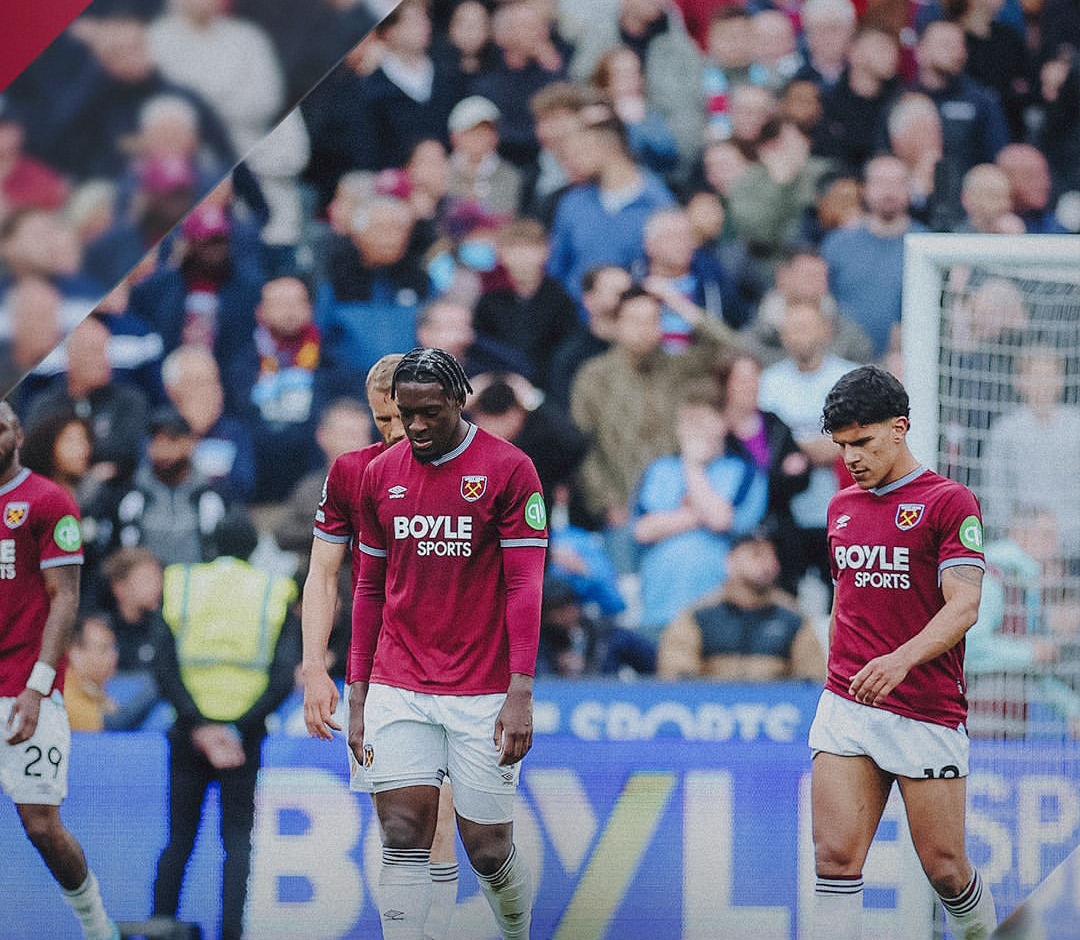
For West Ham, the challenge now is recovering emotionally from a result and controversy that supporters will feel deeply frustrated by.
For Arsenal, attention quickly turns back toward sustaining momentum in the title race.
Yet once again, the biggest post-match discussion centres not around tactics, technical quality, or individual brilliance — but officiating and VAR interpretation.
Until football authorities find a way to improve consistency and transparency, incidents like this will continue dominating Premier League conversations long after the final whistle.
And for many supporters, that remains the biggest problem of all.









Post Comment