Brentford 3–0 West Ham United: VAR penalty decision sparks debate after replay footage emerges
A second-half penalty awarded to Brentford has become the central talking point following their 3–0 victory over West Ham United, with fans and analysts questioning whether Video Assistant Referee (VAR) made a significant error in the build-up to the decision.
Match overview
The result itself appeared straightforward on paper. Brentford secured all three points with a convincing performance, aided by an early own goal, a controversial penalty, and a late third to seal the win.
- 15’ – Mavropanos (Own Goal)
- 54’ – Thiago (Penalty)
- 82’ – Damsgaard
However, beyond the scoreline, attention has shifted almost entirely to the 54th-minute incident that effectively changed the direction of the match.
The incident: what led to the penalty
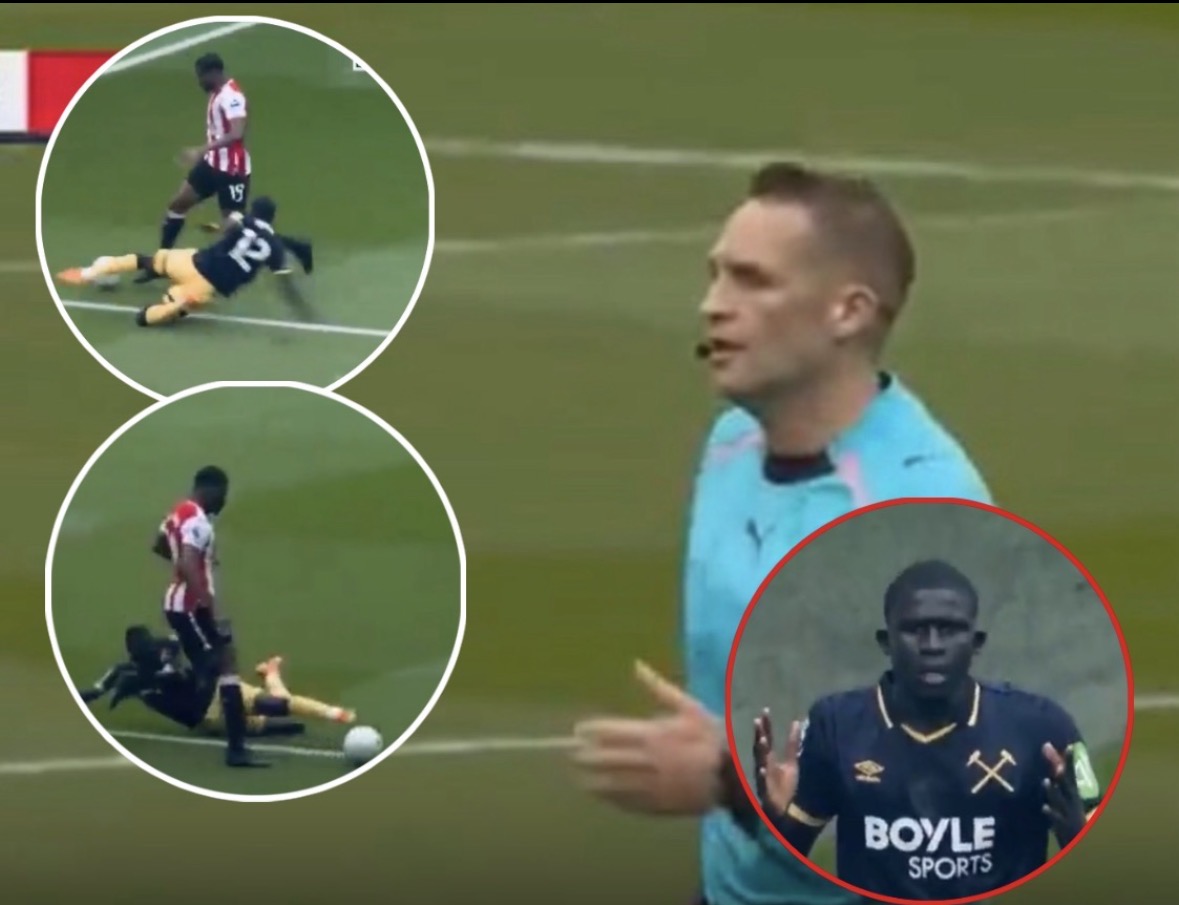
The key moment came when Brentford striker Igor Thiago drove into the penalty area under pressure from a West Ham defender identified as Diouf.
Initial live play suggested a strong but fair challenge, with the defender appearing to get a touch on the ball. The referee did not immediately award a penalty, allowing play to continue briefly.
Moments later, VAR intervened.
After reviewing the footage, the on-field referee overturned the original decision and pointed to the spot, ruling that the challenge constituted a foul inside the box. Thiago stepped up and converted, doubling Brentford’s lead.
Why VAR upheld the decision
Under current interpretations of the Laws of the Game, a defender making contact with the ball does not automatically exempt them from committing a foul.
VAR officials are instructed to assess:
- The nature of the tackle
- Whether the challenge was controlled
- The extent of contact made after touching the ball
In this case, the review appeared to focus on the follow-through of the challenge. While Diouf may have made initial contact with the ball, the subsequent contact with Thiago was deemed sufficient to bring the attacker down unfairly.
From an officiating standpoint, such decisions are often categorised as careless or reckless challenges, which remain punishable even if the ball is touched first.
The controversy: build-up under scrutiny
Despite the technical justification, the decision has sparked widespread criticism—primarily not for the tackle itself, but for what happened before it.
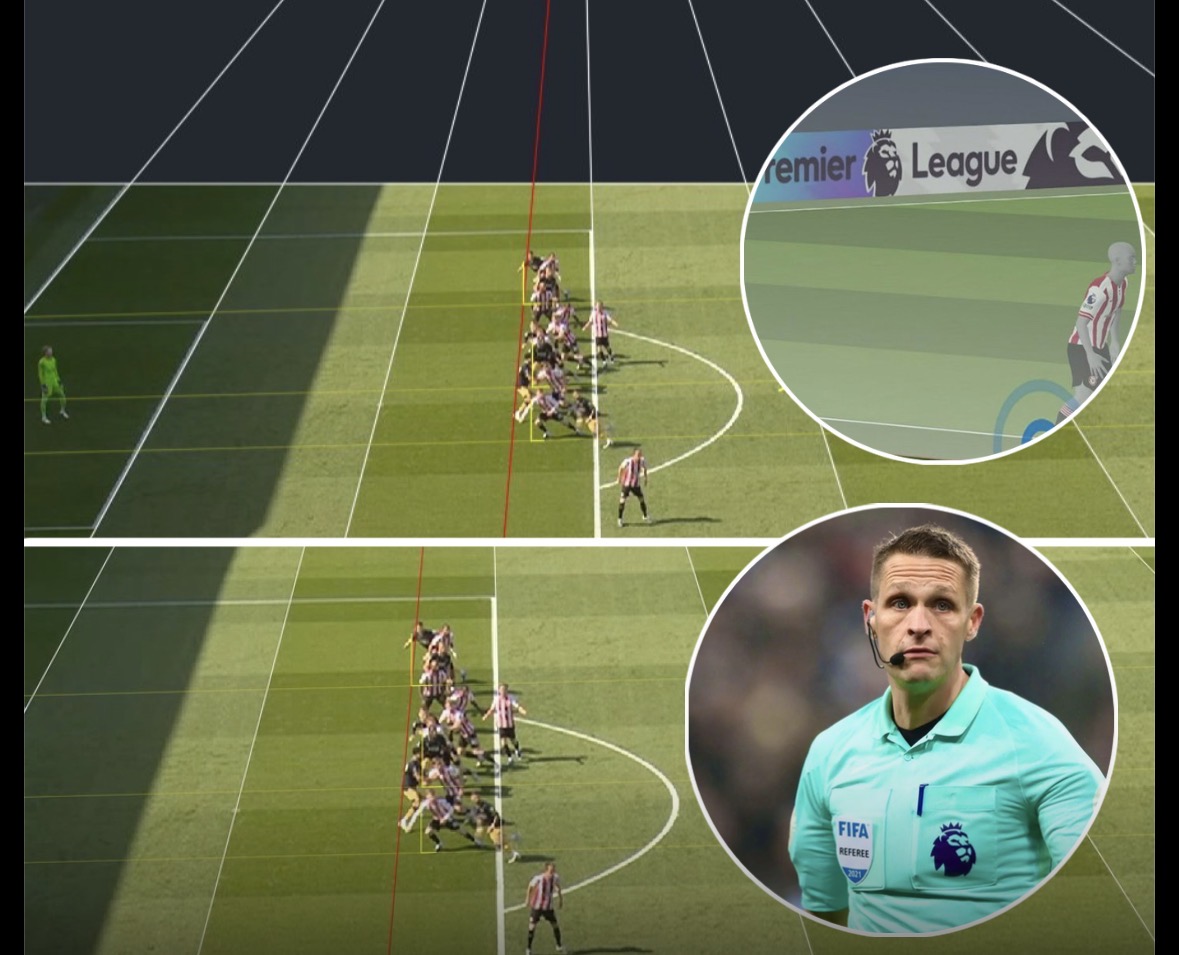
Replay footage circulating after the match has led fans to question whether Brentford should have retained possession in the attacking phase leading up to the penalty.
Critics argue that:
- A potential foul or infringement may have occurred earlier in the move
- VAR failed to review that phase thoroughly
- The entire attacking sequence should have been halted before the penalty incident developed
This has led to accusations that VAR made a “huge error in the build-up,” rather than solely in judging the tackle.
Understanding the Attacking Phase of Play (APP)
VAR protocols allow officials to review the Attacking Phase of Play (APP)—the sequence of actions leading directly to a goal or penalty.
In theory, if an infringement occurs in that phase, the final decision (in this case, the penalty) can be overturned.
However, the application of this rule is often subjective. Officials must determine:
- How far back to review
- Whether an earlier incident had a direct impact on the outcome
- If any missed infringement was “clear and obvious”
In this instance, VAR evidently judged that no prior incident met the threshold required to cancel the penalty.
Fan reaction and divided opinion
The incident has triggered strong reactions across social media and among supporters.
One side argues the decision was incorrect:
- The defender clearly touched the ball
- The contact was part of a natural follow-through
- The attacking move should have been stopped earlier
Others believe the officials reached the correct conclusion:
- The follow-through endangered the attacker
- The challenge disrupted Thiago’s control unfairly
- Modern rules prioritise player safety over intent
The divide highlights an ongoing issue in the game—the gap between fan expectations and the interpretation of the laws.
Tactical impact on the match
At 1–0, West Ham were still within reach of the game. The penalty, however, shifted momentum decisively.
After going 2–0 down:
- West Ham were forced to commit more players forward
- Brentford gained greater control in transition
- Spaces opened up defensively for the visitors
This ultimately led to the third goal in the 82nd minute, effectively ending the contest.
While the penalty did not solely determine the result, it played a crucial role in shaping the match’s outcome.
The bigger picture: VAR and consistency concerns
This incident adds to a growing list of controversial VAR decisions in English football.
Recurring concerns include:
- Inconsistency in interpreting similar challenges
- Lack of transparency in VAR reviews
- Ongoing confusion over what constitutes a foul
For many observers, the issue is no longer about individual decisions, but about confidence in the system as a whole.
Conclusion
Brentford’s victory over West Ham will be recorded as a comfortable 3–0 win, but the discussion surrounding the match tells a different story.
The penalty awarded in the 54th minute sits in a grey area—defensible under the rules, yet contentious in its application.
More significantly, the debate over the build-up phase underscores a persistent challenge for modern football: balancing technological assistance with clarity, consistency, and trust.
Until those issues are fully addressed, decisions like this will continue to dominate headlines long after the final whistle.









Post Comment