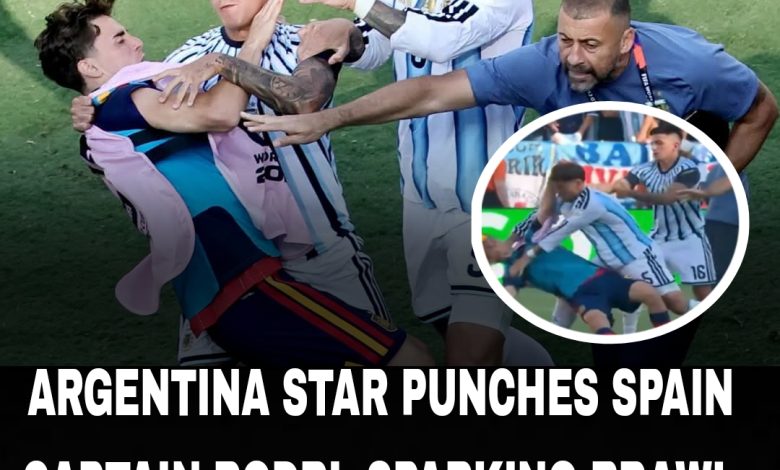
BREAKING: HEATED SCENES ERUPT AFTER WORLD CUP FINAL AS ARGENTINA AND SPAIN PLAYERS CLASH
The celebrations following Spain’s World Cup triumph were briefly overshadowed by chaotic scenes on the pitch as tensions boiled over between players from both teams after the final whistle. Emotions ran high following a fiercely contested final, with players from Argentina and Spain becoming involved in a heated confrontation that required teammates, coaching staff, and officials to intervene.
Images and videos circulating on social media captured several players pushing and shoving in the aftermath of the match. The confrontation quickly attracted worldwide attention, with fans speculating about what may have triggered the incident. However, while numerous claims have emerged online, the exact sequence of events and the actions of individual players have not been officially confirmed.
Moments after the final whistle, players from both sides initially exchanged handshakes before tensions appeared to escalate in one section of the field. Staff members rushed in to separate those involved, while match officials worked to restore order. The incident lasted only a short time before both teams were escorted away.
Such confrontations are not uncommon after major finals, where months of preparation, intense pressure, and the emotional weight of victory and defeat can lead to heated exchanges. Nevertheless, FIFA generally reviews any significant post-match incidents and may examine referee reports, video footage, and other evidence before deciding whether disciplinary action is warranted.
If misconduct is confirmed, sanctions can range from fines and warnings to suspensions, depending on the severity of the actions and the evidence available. Until any official findings are released, claims circulating on social media should be treated with caution.
The focus of the football world nevertheless remains on Spain’s World Cup victory and Argentina’s impressive tournament run. Despite the disappointing defeat, Argentina once again reached the final under Lionel Messi’s leadership, while Spain celebrated a historic achievement after an outstanding campaign.
As supporters await official statements from FIFA and the national football associations, the post-match confrontation has become one of the most discussed moments following the 2026 FIFA World Cup final. Any confirmed details are expected to emerge after the governing bodies complete their review of the incident.The Aftermath: Questions, Reactions, and What Could Happen Next
The emotional aftermath of a FIFA World Cup final often extends well beyond the final whistle. After ninety minutes—or in some cases, 120 minutes—of relentless competition, players are left dealing with overwhelming emotions. For the winners, there is uncontainable joy and relief. For the defeated, there is heartbreak, frustration, and the realization that years of preparation have ended without the ultimate reward.
Following the conclusion of the 2026 FIFA World Cup final between Spain and Argentina, attention quickly shifted from the celebrations to reports of a heated confrontation involving players from both teams. While videos and eyewitness accounts suggested that tempers flared in the moments after the match, the exact sequence of events remains the subject of ongoing discussion. As of now, any specific allegations about individual players should be treated as unconfirmed unless officially verified by FIFA or the relevant football associations.
The atmosphere on the pitch reportedly changed rapidly after the final whistle. What began as emotional celebrations by Spain and visible disappointment among Argentina’s players soon appeared to develop into a tense exchange involving several members of both squads. Match officials, coaching staff, and security personnel moved swiftly to separate those involved before the situation escalated further.
Scenes like these, although uncommon at football’s highest level, are not unprecedented. The World Cup final represents the pinnacle of international football, and the emotional investment from players can be immense. Years of sacrifice, pressure from supporters, and the significance of the occasion can sometimes lead to moments of confrontation when emotions overflow.
As videos circulated online, social media platforms were flooded with speculation. Fans from both nations offered differing interpretations of what had happened, while football pundits urged caution, reminding supporters that short video clips rarely capture the full context of an incident. Without official reports or disciplinary findings, it remains impossible to establish precisely how the confrontation began or who, if anyone, bears responsibility.
FIFA’s disciplinary procedures are designed to ensure fairness in situations like these. The governing body typically reviews the referee’s report, video footage from multiple angles, and any additional evidence before deciding whether disciplinary measures are necessary. If misconduct is confirmed, possible sanctions could include warnings, fines, suspensions, or other penalties depending on the severity of the incident and the applicable regulations.
Meanwhile, the football community has continued to reflect on the match itself. Spain’s victory marked a historic achievement, while Argentina’s run to another World Cup final further highlighted the strength and resilience of their squad. Despite the disappointment of defeat, Argentina once again demonstrated why they remain among the world’s elite football nations.
For Lionel Messi, the final represented another significant chapter in an extraordinary international career. Competing in a third World Cup final further cemented his place among football’s all-time greats, regardless of the result. His leadership throughout the tournament earned widespread praise, even as the final ended in heartbreak for Argentina.
Ultimately, the lasting legacy of the tournament should be defined by the quality of football on display rather than the controversy that followed. Until official investigations are completed and verified information is released, responsible reporting requires distinguishing confirmed facts from online speculation. The World Cup is remembered for its unforgettable moments on the pitch, and any assessment of the post-match events should be based on evidence rather than unverified claims.
As supporters await further updates from FIFA and the national football associations, the football world continues to celebrate another memorable World Cup—one that delivered drama, emotion, remarkable performances, and a final that will be discussed for years to come.Global Reaction and the Importance of Waiting for Official Findings
As news of the post-match confrontation spread across television broadcasts, sports websites, and social media, football supporters around the world reacted almost instantly. Within minutes, clips from the aftermath of the World Cup final had been viewed millions of times, sparking passionate debates among fans of both Argentina and Spain, as well as neutral observers.
Many supporters expressed disappointment that a spectacular World Cup final risked being overshadowed by controversy. Instead of focusing solely on Spain’s achievement in lifting the trophy or Argentina’s courageous run to the final, discussions quickly shifted toward the confrontation that followed the final whistle.
Former players and football analysts emphasized the importance of allowing the facts to emerge before reaching conclusions. In the modern era, short video clips often circulate online without showing the full sequence of events. A few seconds of footage can easily be interpreted in different ways, making it essential to wait for official investigations before assigning responsibility to any individual player.
FIFA’s disciplinary bodies are expected to review all available evidence, including the referee’s match report, reports from match delegates, and video footage captured from multiple broadcast angles. Such reviews are standard practice whenever incidents occur during or immediately after major international matches.
If the governing body determines that any player or official committed misconduct, disciplinary action may follow in accordance with FIFA’s regulations. However, until such findings are announced, allegations circulating on social media remain claims rather than established facts.
For Spain, the focus remains on celebrating a remarkable World Cup triumph achieved through consistent performances throughout the tournament. Their players demonstrated tactical discipline, technical quality, and composure under pressure, culminating in victory on football’s biggest stage.
For Argentina, despite the disappointment of defeat, the tournament showcased the resilience and determination that have defined the national team in recent years. Reaching another World Cup final is an achievement that few nations accomplish consistently, and their performances throughout the competition earned admiration from football fans worldwide.
Regardless of the outcome of any investigation, the 2026 FIFA World Cup will be remembered for its dramatic knockout matches, memorable individual performances, and the remarkable stories that unfolded from the opening game to the final. While post-match tensions may generate headlines, history often remembers tournaments for the football itself—the goals, the unforgettable moments, and the achievements that inspire future generations.
As the football world awaits any official statements regarding the reported confrontation, supporters are encouraged to rely on verified information rather than speculation. The integrity of the game depends not only on what happens on the pitch but also on ensuring that serious allegations are assessed fairly, impartially, and based on credible evidence rather than rumours or incomplete footage.