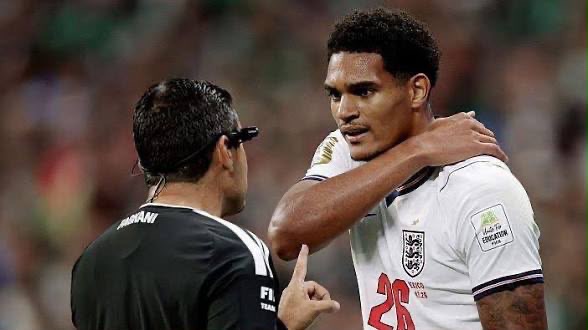
In the high-stakes environment of the FIFA World Cup 2026, where every decision can alter national destinies, the governing body has found itself at the center of a burgeoning controversy that threatens the integrity of the tournament. Following the explosive case involving United States forward Folarin Balogun, FIFA faced immediate pressure regarding England defender Jarell Quansah’s straight red card in England’s Round of 16 victory over Mexico. The expectation was a firm reaffirmation of standard disciplinary protocols. What emerged instead has sent shockwaves through the football world, exposing tensions between consistency, exceptional circumstances, and the growing influence of external factors.
The Balogun Catalyst: A Decision That Changed Everything
The saga began in the United States’ Round of 32 encounter against Bosnia and Herzegovina. Folarin Balogun, the Arsenal-trained striker representing the USMNT, was involved in a challenge with Bosnian defender Tarik Muharemovic. What appeared to many as an accidental collision—Balogun’s foot sliding along the opponent’s leg and making contact with the ankle—drew the intervention of VAR. Brazilian referee Raphael Claus, after reviewing the incident, issued a straight red card for serious foul play, endangering the safety of an opponent.
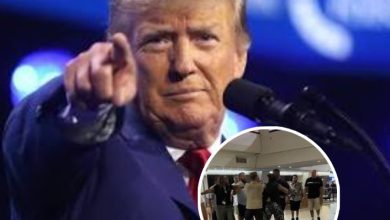
Under standard FIFA Disciplinary Code rules, a red card in a World Cup match carries an automatic one-game suspension. Balogun was slated to miss the crucial Round of 16 clash against Belgium. US coach Mauricio Pochettino publicly decried the decision as “never a red card,” and reports emerged of high-level intervention, including a phone call from US President Donald Trump to FIFA President Gianni Infantino.
On July 5, 2026, FIFA’s Disciplinary Committee invoked Article 27 of the FIFA Disciplinary Code, which allows the judicial body to “fully or partially suspend the implementation of a disciplinary measure.” They confirmed the red card and the offense but suspended the one-match ban for a one-year probationary period, imposing instead a $40,000 fine shared between the player and federation. Balogun was cleared to play against Belgium.
The reaction was swift and fierce. The Royal Belgian Football Association expressed astonishment, appealing the decision on short notice and decrying it as a breach of equal application of rules. UEFA issued a strongly worded statement, labeling the move “unprecedented, incomprehensible and unjustifiable,” arguing that the automatic suspension principle is not discretionary. European football leaders warned of a dangerous precedent that could erode trust in the competition’s fairness.
FIFA defended its position by emphasizing that the red card itself was not revoked—only the immediate enforcement of the ban was suspended under probation. They cited prior uses of Article 27 in qualifiers and stressed the committee’s independence. Nevertheless, the perception of political influence loomed large, with Trump publicly celebrating the outcome.
Quansah’s Red Card: A Clear-Cut Challenge Amid Growing Uncertainty
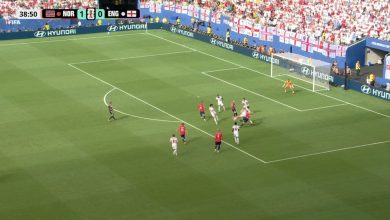
Just days later, in England’s dramatic 3-2 win over co-hosts Mexico at the iconic Estadio Azteca, another high-profile red card occurred. With England leading 2-1 early in the second half, defender Jarell Quansah—deployed at right-back due to injuries—launched into a sliding challenge on Mexico’s Jesús Gallardo. Replays showed Quansah making initial contact with the ball before his studs caught Gallardo’s leg in a follow-through that was deemed reckless and dangerous.
Australian-Iranian referee Alireza Faghani initially played advantage, but VAR prompted a review. After examining the footage, Faghani issued a straight red card for violent conduct. England played the remainder of the match with ten men, relying on resilience, a Harry Kane penalty, and defensive organization to advance to the quarter-finals against Norway. Quansah, a promising talent who had transitioned from Liverpool to Bayer Leverkusen, left the field visibly distraught.
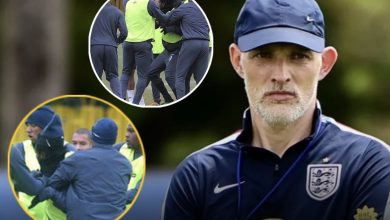
In normal circumstances, Quansah would face an automatic one-match ban, sidelining him for the Norway quarter-final. However, the Balogun precedent shattered those expectations. Questions immediately arose: Could England appeal? Would FIFA apply the same flexibility? Thomas Tuchel, England’s manager, voiced frustration in his post-match press conference, questioning where the line would be drawn. He jokingly referenced the possibility of involving high-level figures, echoing the US situation, while stressing the need for consistency.
### FIFA’s Statement: Balancing Precedent and Principle
Under intense scrutiny from media, national federations, and fans, FIFA was compelled to address the Quansah matter promptly. The organization released a statement reaffirming core principles while acknowledging the complexities introduced by recent events. Contrary to widespread assumptions that they would rigidly enforce the ban to counter accusations of favoritism, FIFA’s response struck a nuanced tone that few anticipated.
The statement confirmed that Quansah’s red card stood as a correct application of the Laws of the Game, supported by VAR evidence of endangerment. It emphasized that Article 27 remains an exceptional tool, not a routine appeal mechanism, and is not automatically available simply because it was used in one case. However, it stopped short of outright rejecting any potential submission from the English FA, noting that the Disciplinary Committee would review any formal request on its individual merits, considering factors such as the nature of the challenge, tournament context, and the need to maintain competitive balance.
This measured approach surprised many observers. Pundits and former players like Wayne Rooney suggested England had grounds to explore suspension of the ban, mirroring Balogun’s case. A Labour MP even wrote to Infantino urging equal treatment across nations. Yet FIFA’s wording underscored caution: while not closing the door entirely, it warned against turning every disciplinary decision into a negotiable outcome.
Broader Implications for the Tournament and the Sport
The dual controversies have ignited a fierce debate about fairness, VAR’s role, and the sanctity of on-field decisions. Critics argue that selective application risks turning the World Cup into an arena influenced by political leverage rather than sporting merit. Smaller nations worry about a two-tier system where powerful federations or host nations receive preferential treatment. Belgium’s appeal rejection only amplified these concerns.
Supporters of FIFA’s flexibility point to the human element in football. Red cards, especially those involving split-second interpretations of intent and force, are inherently subjective. Slow-motion VAR replays can sometimes distort the reality of live-speed incidents, as noted in both the Balogun and Quansah cases. Article 27, they contend, provides a necessary safety valve for genuine miscarriages of justice.
For England, the situation adds tactical and psychological pressure ahead of the Norway match. Even if Quansah’s availability remains in doubt, the episode highlights vulnerabilities in their squad depth at full-back. Tuchel must prepare contingencies while navigating the distraction. For the USMNT, Balogun’s presence boosts attacking options against a strong Belgian side, but the team now carries the weight of perceived external advantages.
The Integrity Question: Where Does FIFA Go From Here?
This episode underscores deeper challenges for FIFA as football’s global governing body. The 2026 World Cup, expanded and co-hosted, was intended to showcase unity and excellence. Instead, early knockouts have been overshadowed by disciplinary wrangling. Gianni Infantino has defended the organization’s independence, but calls for greater transparency in how Article 27 is applied are growing louder. UEFA and other confederations are pushing for clearer guidelines to prevent similar disputes in future competitions.
Analysts suggest potential reforms: stricter criteria for invoking suspensions of bans, time limits on appeals, or enhanced independent oversight of the Disciplinary Committee. There are also questions about VAR consistency—both incidents involved on-field referees initially viewing the challenges as non-cardable before video review escalated them. Improving training and protocols for VAR officials could mitigate such flashpoints.
From a broader perspective, these events reflect football’s entanglement with politics and power. The involvement of a sitting president in sporting disciplinary matters sets a precedent that could invite further interference. At the same time, it forces FIFA to confront its own governance structures in an era of heightened scrutiny and instant global communication.
A Defining Moment for the 2026 World Cup
As the quarter-finals approach, the footballing community watches anxiously. Will Quansah line up against Norway, or will traditional rules prevail? Regardless of the outcome, the Balogun-Quansah sequence has altered the narrative of the tournament. It has shifted focus from pure sporting drama to questions of equity and authority.
FIFA’s unexpected statement on Quansah—neither a blanket denial nor an immediate parallel suspension—reflects an attempt to thread a difficult needle. It buys time for case-by-case adjudication while signaling limits to exceptionalism. Whether this approach preserves or further erodes trust remains to be seen.
In the end, the beautiful game thrives on unpredictability on the pitch, not in the boardroom. For the 2026 World Cup to be remembered for its football rather than its footnotes, FIFA must demonstrate that rules apply equally, exceptions are truly rare, and the spirit of fair play endures above all. The coming days will test whether that ideal can withstand the pressures of modern international sport.