ENGLAND STAR HIT WITH WORLD CUP BAN AFTER DONALD TRUMP REACTS TO HOTEL CELEBRATION CONTROVERSY

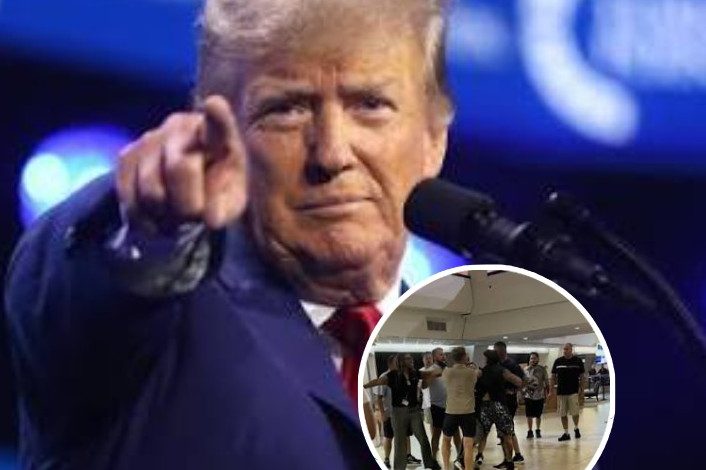
In a dramatic twist that has sent shockwaves through the football world during the 2026 FIFA World Cup, an England star has been slapped with a significant ban, intensifying debates over fairness, political influence, and off-pitch conduct. The controversy, which erupted following a heated match against Mexico and subsequent reactions from high-profile figures including U.S. President Donald Trump, has highlighted the intersection of sports, politics, and media frenzy.
The player at the center of this storm is defender Jarell Quansah, whose red card in England’s thrilling 3-2 Round of 16 victory over Mexico led to a two-match suspension by FIFA. This ban rules him out of key knockout stages, potentially derailing England’s campaign. What began as an on-pitch incident quickly escalated into a broader narrative involving hotel disturbances, team celebrations, and pointed commentary from Trump, who had earlier thrust himself into World Cup affairs by intervening in a similar disciplinary case for the U.S. team.
The On-Pitch Incident and Immediate Fallout
Quansah, a promising talent who has risen through the ranks at Liverpool before moving to Bayer Leverkusen, was sent off in the 53rd minute of England’s clash at the iconic Azteca Stadium in Mexico City. The challenge on Mexico’s Jesús Gallardo was reviewed by VAR and deemed a straight red for serious foul play. England, already under pressure in a hostile environment, managed to hold on for the win thanks to goals from Harry Kane and others, but the disciplinary hammer fell swiftly.
FIFA’s Disciplinary Committee upgraded the punishment, citing a breach of Article 14 of the FIFA Disciplinary Code. Quansah will miss the quarter-final against Norway and a potential semi-final. England manager Thomas Tuchel expressed frustration, noting that the team had received “no explanation” for the severity compared to other cases. This comes amid perceptions of inconsistency, especially after FIFA’s earlier decision to suspend a one-match ban for U.S. striker Folarin Balogun following direct intervention by President Trump.
Tuchel’s comments echoed widespread sentiment in the English camp. “If Donald Trump can do it for his player, why not here?” remarked pundit Harry Redknapp in a fiery interview, slamming the decision as “scandalous.” The double standard narrative gained traction, with fans and commentators questioning FIFA’s impartiality under President Gianni Infantino.
Trump’s Reaction and the Broader Political Backdrop
President Trump, no stranger to weighing in on global events, had previously contacted Infantino to review Balogun’s red card suspension after a challenge in the U.S. team’s match. FIFA’s subsequent reversal allowed Balogun to play against Belgium, sparking outrage across Europe and accusations of political interference. Trump celebrated the move on Truth Social, calling it the reversal of a “great injustice.”
In the wake of England’s victory and Quansah’s ban, Trump reportedly reacted to reports of post-match hotel celebrations and fan disturbances. Mexico supporters had gathered outside England’s hotel the night before the match, setting off fireworks, playing loud music, and chanting in an attempt to disrupt the team’s rest. England had even booked multiple hotels to throw off potential disruptions, but the tactic only partially worked.
While the “celebration controversy” appears tied more to post-win team gatherings and the chaotic atmosphere around the hotel, Trump’s comments—praising Kane’s performance while critiquing aspects of the officiating and broader tournament conduct—added fuel to the fire. Kane himself confirmed a past golf outing with Trump, describing it as a “surreal experience,” which only amplified media scrutiny. Some outlets framed Trump’s remarks as a direct response to perceived leniency or excess in England’s camp.
This political dimension has polarized opinions. European critics, already vocal after the Balogun case, accused FIFA of bending rules for powerful allies. Meanwhile, U.S. fans were divided, with some defending Trump’s patriotism and others lamenting the “stain” on the tournament’s integrity. Belgium’s celebrations after defeating the U.S. even included mocking Trump’s dance moves, further entangling sports with geopolitics.
Hotel Drama: Celebrations, Disruptions, and Media Storm
The hotel element of this saga has captured public imagination. Reports detailed how Mexican fans camped outside the England squad’s accommodation, creating a raucous all-night party atmosphere with drums, horns, and pyrotechnics. Riot police intervened to maintain order, but the incident underscored the intense hostility faced by the Three Lions on Mexican soil.
Post-match, whispers of England players unwinding—perhaps too exuberantly—in or near the hotel added another layer. While no formal charges or major scandals emerged, tabloids amplified the story, linking it to Quansah’s ban. Critics suggested the off-field noise contributed to perceptions of indiscipline, influencing FIFA’s harsh stance. England FA officials pushed back, emphasizing professional conduct and focusing on recovery amid the altitude challenges of Mexico City. Prime Minister Keir Starmer had even intervened earlier to stabilize the match schedule for player welfare.
This isn’t the first time hotel logistics have plagued the tournament. Norway reportedly switched hotels due to excessive noise and construction, while U.S. players learned of Balogun’s reinstatement en route from their own hotel. The 2026 World Cup, co-hosted by the U.S., Mexico, and Canada, has been a logistical and political minefield, with hotel bookings, fan travel, and security under constant scrutiny.
Reactions from Fans, Pundits, and Players
The ban has elicited strong responses. Bukayo Saka called it “very frustrating,” highlighting team unity. Fans on social media erupted, with hashtags like #FreeQuansah and #FIFADoubleStandards trending. Some drew parallels to historical FIFA controversies, questioning the governing body’s consistency since the 1962 Garrincha case.
Pundits like Gary Neville described related decisions as “stinking,” while Ian Wright and others debated the integrity of the competition. England’s path forward looks tougher without Quansah’s defensive solidity, testing depth against Norway and beyond.
Trump’s involvement, whether direct or perceived, has dominated discourse. His praise for Kane contrasted with the Quansah fallout, leading to accusations of favoritism. Kane’s golf connection with Trump added a personal touch, with the England captain navigating media questions diplomatically.
Historical Context and Implications for the Tournament
World Cups have always mixed sport and politics, but 2026 feels amplified. Trump’s presidency and FIFA’s decisions have invited comparisons to past interventions.
The Balogun reversal was the first such suspension lift since 1962, setting a precedent that England tried (unsuccessfully) to leverage.ced56b
For England, this ban tests resilience. Tuchel must reshuffle, perhaps elevating Djed Spence. The team has shown fight, overcoming Mexico despite the red card and hostile crowd. A deep run could silence critics, but the controversy risks overshadowing on-pitch achievements.
Broader implications include calls for FIFA reform. UEFA figures condemned the Balogun decision, and similar scrutiny now applies to Quansah. Fair play, disciplinary consistency, and insulation from political pressure are under the microscope. As the tournament progresses toward the final—potentially presented by Trump—questions of legitimacy persist.
Looking Ahead: England’s Campaign and Beyond
England remains a contender, with stars like Kane, Saka, and Bellingham in fine form. Bellingham’s leadership, including telling fans to “text your bosses,” captured the spirit after earlier wins. Yet the Quansah absence looms large.
The hotel celebration narrative, while perhaps exaggerated, reflects how every detail—from rest to recovery—is weaponized in modern football. Fans deserve transparency, and players merit consistent rules.
In conclusion, this saga encapsulates the 2026 World Cup’s chaos: thrilling matches, fervent supporters, and inescapable politics. Jarell Quansah’s ban, intertwined with Trump’s reactions and hotel-side drama, may prove a pivotal moment. Whether England overcomes it or succumbs to the distractions will define their legacy. Football, as ever, remains a beautiful yet bitterly contested game—on and off the pitch.