SFA RELEASES DRAMATIC STATEMENT FOLLOWING CELTIC’S RESPONSE TO FIFA OVER PUNISHMENT FOR BOOING DURING A MINUTE’S SILENCE
The controversy surrounding Celtic’s supporters and the disrupted Remembrance Sunday tribute has continued to attract attention across Scottish football, with the incident at Celtic Park generating intense debate among supporters, rival clubs and football observers.
What was supposed to be a moment of respect and reflection before Celtic’s Scottish Premiership meeting with Kilmarnock quickly became a major talking point after sections of the home crowd began booing during the scheduled minute’s silence.
The situation became so uncomfortable that referee John Beaton was forced to bring the tribute to an early end after approximately 13 seconds.
However, the incident has not disappeared following the final whistle.
Instead, it has reopened a long-running debate about Celtic supporters’ relationship with Remembrance Sunday, the club’s historical identity and the expectations placed on football clubs when organising commemorative events.
The controversy has also raised questions about whether football authorities should take disciplinary action against clubs when sections of their supporters disrupt official tributes.
WHAT REALLY HAPPENED AT CELTIC PARK?
The incident occurred on Sunday, November 8, 2026, before Celtic welcomed Kilmarnock to Celtic Park.
As part of the Remembrance Sunday commemorations, both teams gathered around the centre circle for a period of silence in memory of those who lost their lives during conflicts.
The stadium announcer explained the purpose of the tribute, which also included remembering former Celtic players who had lost their lives during wartime.
However, sections of the crowd began booing and whistling.
The noise continued after the referee signalled the beginning of the silence, making it difficult for the tribute to continue.
John Beaton eventually blew his whistle again, bringing the moment of reflection to an end after approximately 13 seconds.
The incident immediately attracted attention, with footage circulating across social media and supporters from different clubs expressing their opinions.
WHY THE INCIDENT HAS CREATED SUCH A BIG CONTROVERSY
This is not the first time Celtic have found themselves at the centre of a controversy involving Remembrance Sunday.
Some supporters have historically opposed aspects of the British remembrance tradition because of the club’s Irish roots and historical sensitivities surrounding the British Army’s role during the Troubles.
The issue is therefore particularly sensitive among sections of the Celtic support.
However, other supporters believe that remembering those who lost their lives in war should not be treated as a political statement.
The debate has created divisions even among football followers who otherwise support the same club.
Celtic’s opponents have also questioned why the tribute could not be observed without disruption.
CELTIC’S POSITION AND THE QUESTIONS SURROUNDING FIFA
The incident has generated discussion about whether Celtic should face consequences for the behaviour of some supporters.
There are also questions about the responsibilities of clubs when supporters disrupt commemorative events.
However, an important distinction must be made: there is currently no verified evidence that Celtic submitted a formal response to FIFA over a punishment arising from this particular incident.
Likewise, no confirmed FIFA disciplinary sanction relating to the November 8 incident has been established in the available reporting.
It would therefore be premature to suggest that FIFA has already punished Celtic or that the Scottish FA has issued a new statement in response to a formal Celtic appeal.
WHY THE SCOTTISH FA IS UNDER THE SPOTLIGHT
The Scottish Football Association is the governing body responsible for football administration and disciplinary matters in Scotland.
Its regulations provide mechanisms for addressing unacceptable conduct involving clubs and their supporters.
Indeed, Celtic have previously faced disciplinary proceedings over separate incidents.
In an earlier case involving events at Ibrox during the Scottish Cup, the Scottish FA imposed significant sanctions under Disciplinary Rule 37. Celtic appealed, and the decision was partially upheld, although the requirement for a future home Scottish Cup match to be played behind closed doors remained.
That previous case demonstrates that the governing body has disciplinary powers when the relevant regulations have been breached.
However, it should not be confused with the separate Remembrance Sunday incident at Celtic Park.
THE GREEN BRIGADE AND THE CONTROVERSY
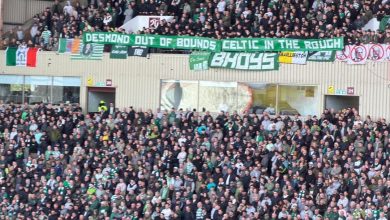
The Green Brigade has also featured in discussions surrounding the incident.
The group’s usual standing section was notably empty before the Kilmarnock match, with reports linking the situation to ongoing tensions between the supporters and the Celtic board.
Some reports noted that the group remained outside during the period of remembrance.
However, the boos heard inside the stadium were not evidence that every Celtic supporter opposed the tribute.
Indeed, reports from inside Celtic Park indicated that some supporters wanted to observe the silence respectfully.
This distinction is important because the actions of sections of a crowd should not automatically be attributed to every supporter.
CELTIC STILL MANAGED TO SECURE VICTORY
Despite the controversy before kick-off, Celtic eventually secured all three points against Kilmarnock.
Liam Scales scored the decisive goal in a 1-0 victory, allowing Celtic to maintain their position at the top end of the Scottish Premiership table.
However, the result was overshadowed by the discussion surrounding the interrupted tribute.
For many observers, the incident was another reminder that football clubs sometimes face difficult questions beyond what happens on the pitch.
WHAT HAPPENS NEXT?
The biggest question is whether the Scottish FA will investigate the incident and whether any formal disciplinary proceedings will follow.
Celtic supporters will also want clarity about the club’s position and whether any official complaint or appeal has actually been submitted.
For now, the confirmed facts are that the tribute was interrupted, the referee ended it early and the incident has generated widespread criticism and debate.
There is no verified announcement confirming a FIFA punishment or a new SFA statement responding to Celtic over this specific incident.
DO YOU THINK CELTIC SHOULD FACE DISCIPLINARY ACTION FOR THE INCIDENT AT CELTIC PARK, OR SHOULD THE CLUB BE HELD RESPONSIBLE ONLY IF IT IS PROVEN TO HAVE BREACHED THE SFA’S REGULATIONS?
This controversy is unlikely to disappear from Scottish football discussions anytime soon.