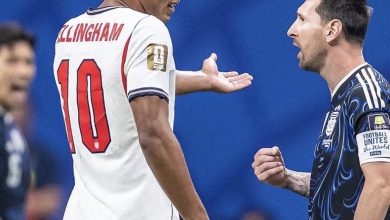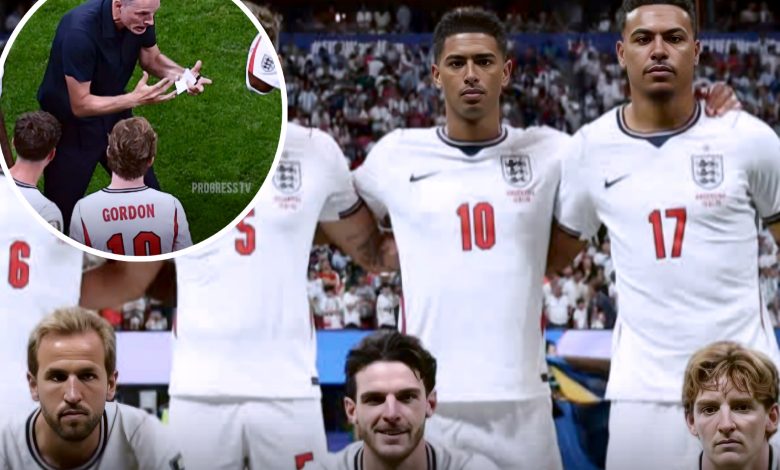
In the humid Atlanta night of 15 July 2026, England’s World Cup dream died a familiar death. Leading 1-0 through Anthony Gordon’s second-half strike, the Three Lions collapsed under a late Argentine onslaught, conceding twice in the final stages to exit the tournament 2-1 in the semi-finals. What followed was a storm of criticism directed squarely at head coach Thomas Tuchel for a series of defensive substitutions that appeared to invite pressure rather than extinguish it. Yet in the aftermath, the German manager struck a defiant tone. He insisted his side had been competitive, defended his decisions, pointed to deeper structural issues in English football, and delivered a clear message about the future: the World Cup chapter is closed, the focus now shifts entirely to Euro 2028, and he remains fully committed to delivering the big prize on home soil.
The match itself had been a tense, high-stakes affair between two sides with history and quality. England, under Tuchel’s stewardship since the start of 2025, had navigated a demanding path through the expanded 48-team tournament. They topped a tricky group featuring Croatia, Ghana and Panama, survived a man disadvantage against Mexico in the altitude of the Azteca in the round of 16, and edged Norway in the quarter-finals. By the time they reached Atlanta’s Mercedes-Benz Stadium, expectations had risen sharply. A first World Cup final since 1966 felt within reach. Argentina, the defending champions led by the still-magical Lionel Messi, arrived as favourites but were far from invincible.
For long stretches, England matched them. Gordon’s 55th-minute goal, finished from a well-worked move, put the Three Lions ahead and briefly silenced the large Argentine contingent. England had controlled periods, limited Messi’s influence, and shown the organisation Tuchel had drilled into them. Then the momentum swung. Argentina pushed higher. England dropped deeper. Possession evaporated. Crosses and second-line runners began to proliferate. Tuchel responded by changing shape. In the 72nd minute he withdrew goalscorer Gordon for centre-back Ezri Konsa, shifting to a back five. Ten minutes later he removed Declan Rice and Reece James for Dan Burn and Nico O’Reilly. England ended the contest with a heavily defensive profile. Argentina equalised through Enzo Fernández’s powerful strike in the 85th minute and won it via Lautaro Martínez’s header from a Messi cross in stoppage time.
The optics were damning. Critics lined up. Wayne Rooney called the approach too passive and said top managers go forward, not deeper, against world champions. Pundits labelled the changes cowardly or a tactical self-destruction. Social media and newspaper columns accused Tuchel of parking the bus without wheels. Some argued the manager, hired for his tactical sophistication after Gareth Southgate’s long tenure, had bottled the biggest moment of his England career. The FA’s chief executive Mark Bullingham offered measured support, praising the effort of players and staff, but the public mood was raw. England had been so close, only to surrender the initiative in the most public way possible.
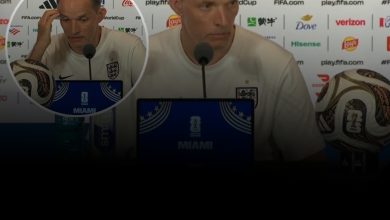
Tuchel’s response was characteristically direct and unapologetic. In his post-match press conference and subsequent comments, he refused to disown the substitutions. “The team gave everything and we were very, very close,” he said. “The team was top, we couldn’t bring it over the line… at the moment no regrets.” He argued the passivity had begun immediately after Gordon’s goal, before any changes, and that the structure itself was not the root problem. “We got too passive within our structure… We encouraged everyone to step out and to be more active within the structure, but we just struggle.” The German pointed to a deeper cultural and technical shortcoming: “I think ball possession plays a crucial role; it’s maybe not in our DNA like it is in our Spanish DNA or in our Argentinian-Brazilian DNA, to take the ball and control the game with the ball.”
That DNA remark ignited further debate. Gary Neville and others pushed back, noting that Tuchel had left technically gifted players such as Phil Foden out of the squad and given Kobbie Mainoo almost no minutes despite the midfielder’s ability to retain possession under pressure. The FA’s own long-standing “England DNA” project, launched years earlier to promote possession-based, intelligent football from youth levels upward, was invoked as evidence that the issue was not immutable national character but selection and coaching choices. Tuchel maintained that no formation could have rescued a team that stopped winning duels, failed to stop runners, and could not regain the ball once the momentum shifted. He also referenced the physical toll of the tournament: extreme heat, altitude in Mexico City, a red-card disadvantage earlier in the knockout stages, and more air miles than any other side.
While Tuchel did not explicitly claim England were the superior team across the full 90-plus minutes, his insistence that they had produced one of their better performances in the circumstances, that they had been “very close,” and that the late collapse was not purely tactical invited the more explosive framing that circulated widely. Earlier in the tournament he had criticised refereeing standards as erratic and not good enough. Combined with the familiar sense of injustice that accompanies major tournament exits, the narrative of a side hard done by—whether by officials, fatigue, or their own structural limitations—took hold in some quarters. The reality on the pitch was more nuanced: Argentina’s quality, Scaloni’s bold substitutions (including the introduction of Martínez), and England’s inability to manage the game once ahead all contributed. Messi’s decisive assists in the dying moments underlined the difference in big-game experience and clinical edge.
Yet the most significant part of Tuchel’s message concerned the future. Asked about his position, he was unequivocal. “One hundred per cent… there’s still enough to improve, still enough to improve and I’m more than happy to do that.” He had extended his contract through to Euro 2028 before the World Cup began, a deal that aligns with the home tournament co-hosted by England, Scotland, Wales and the Republic of Ireland. “We keep on going with the contract until the home Euros. I’m looking forward to that even though right now it’s difficult to look that far ahead.” The FA has shown no public inclination to change course. Bullingham and the organisation view the semi-final appearance—England’s best World Cup finish since 1966—as progress amid a tough draw and logistical challenges, even if the manner of exit was painful.
The third-place play-off against France offered a measure of redemption. England produced a wild, high-scoring victory to claim bronze, a result that Tuchel framed as evidence the squad retained character and belief. He spoke of the scar left by the Argentina defeat but also of the foundation built across the campaign. “I still think we can impose ourselves more on the ball… I still feel there is an extra level that we need to conquer and we need to step up on the next level and then to get the big prize.” That extra level is the central challenge of the next two years.
Euro 2028 presents a unique opportunity. As co-hosts, England will enjoy home advantage, reduced travel, and the psychological lift of playing in familiar stadiums—Wembley, the new Everton ground, Villa Park, St James’ Park and others across the four nations. The tournament runs from early June to early July 2028. Qualification is not required for the hosts in the traditional sense under the co-hosting arrangement, allowing Tuchel to focus on development, friendlies, and Nations League fixtures without the same pressure of a qualifying campaign. The squad will evolve. Harry Kane remains the talisman and record-chasing captain. Jude Bellingham, Bukayo Saka, Declan Rice and the emerging talents who featured or waited in the wings in 2026 will form the core. Questions around midfield control, the balance between defensive solidity and attacking fluidity, and the willingness to trust creative players in high-stakes moments will dominate the intervening period.
Tuchel’s club pedigree—titles with Borussia Dortmund, PSG and Chelsea, plus a Champions League final—suggested he possessed the tools to solve England’s perennial near-miss problem. The World Cup exposed both strengths and limitations. The side was organised, resilient in adversity, and capable of matching elite opposition for periods. It was also prone to passivity when protecting a lead and short of the possession security that characterises the very best international teams. Changing “DNA” is a long-term project that involves youth development, club-national team alignment, and consistent selection messages. Tuchel has two years to accelerate that process.
Critics will continue to scrutinise every friendly and Nations League result. Calls for a more expansive style will grow louder if performances remain cautious. Supporters, still scarred by decades of tournament disappointment, will demand evidence that the lessons of Atlanta have been absorbed. Tuchel’s public stance leaves little room for ambiguity. He accepts responsibility for decisions, rejects the idea that the structure was fatally flawed, identifies a cultural-technical gap, and commits fully to the Euro 2028 project. In his view, the World Cup is finished business. The next major appointment is the one that matters most.
The Argentina defeat will linger in the memory as a sliding-doors moment. Gordon’s goal offered a pathway to history. The subsequent collapse, whether caused by tactical choices, physical fatigue, mental shift, or opponent excellence, closed that pathway. For Tuchel, the response is not resignation or deflection but a doubling-down on the long-term vision. English football’s DNA may or may not be the precise diagnosis, but the prescription is clear: more control of the ball, greater activity within structures, higher levels of physical and technical intensity, and the courage to impose rather than merely react.
As the dust settles on the 2026 World Cup, England’s bronze medal provides a tangible reward for a campaign that exceeded some pre-tournament expectations while falling short of ultimate ambition. Tuchel’s message to the players, the FA, and the public is consistent: the work continues. The home European Championship offers a platform few England managers have enjoyed. Whether he can convert the promise shown in North America into a first major trophy since 1966 will define his tenure. For now, the German is unbowed. The referees, the late goals, the criticism, and the heartbreak of Atlanta belong to the past. Euro 2028 is the horizon, and Tuchel intends to be the man who leads England there with the explicit aim of claiming the prize that has so long eluded the nation.
In the weeks and months ahead, the focus will shift to recovery, analysis, and planning. Squad members will return to their clubs. Tuchel and his staff will review data, video, and the broader developmental pathway. The FA will assess progress against its own strategic goals. Fans will debate endlessly what might have been if different substitutes had been made, if possession had been retained, if the game management after the opening goal had been more assertive. Those debates are the inevitable consequence of coming so close. Tuchel’s public response suggests he has already processed the disappointment and redirected energy toward the next target.
The road to Euro 2028 will not be straightforward. International football offers limited preparation time. Club demands remain intense. Emerging talents must be integrated without disrupting chemistry. The balance between youth and experience, flair and discipline, attack and control must be refined. Yet the opportunity is genuine. A home tournament, a manager with a clear mandate and contract security, a core of high-quality players, and the hard lessons of a World Cup semi-final create conditions for potential success. Whether that potential is realised depends on the ability to address the very issues Tuchel identified in Atlanta: the capacity to control games under pressure, to remain active rather than passive, and to step up to the level required when the biggest prizes are on the line.
For all the sensational framing that surrounded his post-match comments, Tuchel’s core position is pragmatic and forward-looking. England were competitive against the world champions. The final stages of the semi-final exposed limitations that cannot be ignored. The World Cup is over. Euro 2028 is the next, and perhaps the greatest, opportunity. The manager who stood in the Atlanta press room and declared his full commitment is the same man charged with turning near-misses into silverware. English football will be watching closely to see if the extra level he speaks of can finally be reached.