WHY SCOTLAND HAVEN’T BEEN ELIMINATED FROM THE FIFA WORLD CUP DESPITE Not BEING IN THE THE TOP 8 Third-Place TEAMS

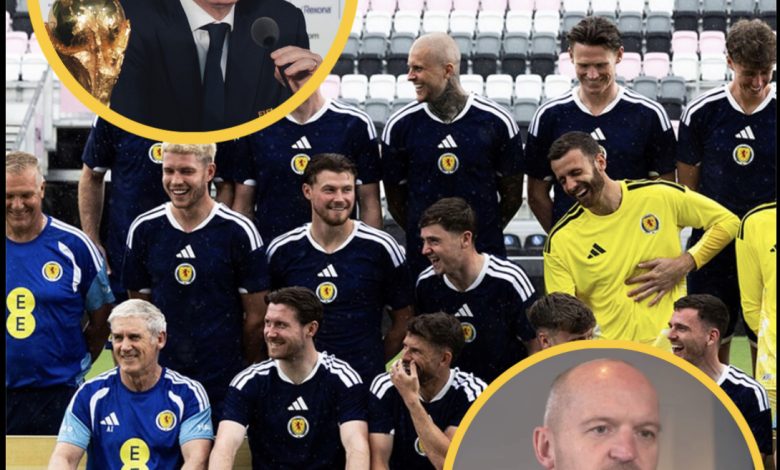
# Why Scotland Haven’t Been Eliminated From the FIFA World Cup Despite Not Being in the Top 8 Third-Place Teams
The situation surrounding Scotland’s standing in the FIFA World Cup group phase has left many fans confused, especially those checking the live “best third-placed teams” table and noticing that the national team is currently outside the top eight. On the surface, it might look like elimination is inevitable. However, in reality, Scotland has not been eliminated yet because of how the tournament structure of the FIFA World Cup is designed.
Understanding why Scotland are still technically alive in the competition requires a clear explanation of how qualification works, how group rankings are calculated, and why final elimination only happens once all group-stage matches are completed across the tournament.
—
## The Expanded World Cup Format Explained
The modern FIFA World Cup format (particularly the expanded version) includes **48 teams**, divided into **12 groups of 4 teams each**.
At the end of the group stage, qualification works as follows:
* The **top 2 teams in each group** automatically qualify for the Round of 32
→ This accounts for **24 teams**
* The **8 best third-placed teams across all groups** also qualify
→ This completes the remaining **8 spots**
This system creates a Round of 32 knockout stage, making the tournament longer and more inclusive than previous formats.
However, the key detail that many fans misunderstand is this:
> Third-place qualification is not determined within a single group, but across all 12 groups combined.
That single rule is the reason Scotland are still not officially eliminated.
—
## Why Being Outside the Top 8 Doesn’t Mean Immediate Elimination
At any given moment during the group stage, the “best third-placed teams” table is constantly changing. Some groups may have finished all their matches, while others may still have games left to play.
Even if Scotland currently sit outside the top 8 third-place positions, they are not eliminated because:
### 1. Not All Groups Have Finished
The ranking of third-placed teams is only meaningful when every group has completed all of its matches.
If Scotland have finished their group matches early, their position becomes “frozen,” while other teams in later groups are still accumulating points.
This means teams currently below Scotland in the table can still:
* Win their final match
* Improve goal difference
* Score more goals
* Jump ahead of Scotland
Until every group is completed, no third-placed team’s fate is final.
—
### 2. The Table Is a Live Projection, Not a Final Ranking
What fans often see online is a **live standings projection**, not an official elimination list.
That table is essentially asking:
> “If the tournament ended right now, which third-placed teams would qualify?”
But the tournament has not ended.
So even if Scotland are ranked 9th, 10th, or lower among third-placed teams at a specific moment, that ranking is not final because remaining matches can still completely reshape the table.
—
### 3. Other Teams Can Still Drop Below Scotland
Even if Scotland are currently outside the top 8, several scenarios can still help them:
* A third-placed team above them loses heavily in their final match
* A team currently ahead draws or loses and finishes with fewer points
* Goal difference swings due to unexpected scorelines
* A team in another group finishes with the same points but worse fair play stats
Because of this, Scotland’s position is still mathematically alive until all results are finalized.
—
### 4. Tiebreakers Make Everything More Complicated
If teams finish level on points, FIFA applies a strict set of tiebreakers:
1. Goal difference
2. Goals scored
3. Head-to-head results (in some contexts)
4. Fair play points
5. Drawing of lots (rare)
This means Scotland could still qualify even if they are tied on points with another third-placed team, depending on how those teams finish their matches.
So even being “outside the top 8” doesn’t automatically eliminate them, because rankings can shift based on small statistical differences.
—
## The Mathematics of Qualification Still Works in Scotland’s Favor
Even when a team appears to be in a weak position, qualification probabilities remain open until all combinations are resolved.
For example, imagine:
* Scotland finish with 3 points and a goal difference of -1
* Several other third-placed teams still have matches remaining
* Some of those teams currently above Scotland could end with:
* 3 points and worse goal difference
* 1–2 points after losing their final games
In that case, Scotland could still move up into the top 8 without playing another match.
This is why analysts often say:
> “You are not eliminated until it is mathematically impossible to qualify.”
And in Scotland’s case, that mathematical impossibility has not yet been reached.
—
## Why Fans Get Confused During Live Tables
One of the biggest reasons for confusion is how live sports graphics present data.
When viewers see a table showing Scotland outside the top 8 third-placed teams, it feels final. But it is not.
These tables:
* Update in real time
* Assume possible outcomes from ongoing matches
* Do not reflect final tournament completion
So fans often assume elimination has already happened when in fact:
> The competition is still actively deciding who qualifies.
—
## The Psychological Impact on Fans
For supporters of Scotland, the situation can feel stressful. Watching other groups continue to play while your team sits on the edge of qualification creates uncertainty.
Every goal scored in another match can change the standings dramatically. A single late winner in a different group might:
* Push Scotland into the top 8
* Or push them further down the table
This “live elimination tension” is part of what makes the expanded World Cup format so dramatic.
—
## Why FIFA Uses This System
The reason FIFA designed the system this way in the FIFA World Cup is to:
* Keep more teams competitive for longer
* Maintain interest across all groups
* Allow balanced qualification across different group strengths
Without the best third-placed system, some groups would be far more forgiving than others, leading to unfair advantages.
Instead, the system ensures:
* Every match matters
* Goal difference matters
* Even third place can be meaningful
But it also creates confusion for fans who are not familiar with how cross-group ranking works.
—
## What Scotland Need to Happen Next
Although Scotland are not currently in the top 8 third-placed positions, their qualification hopes depend on several possible outcomes:
* Teams above them dropping points
* Goal difference swings in their favour
* Low-scoring or drawn matches in other groups
* No late surges from teams currently below them
The key point is simple:
> Scotland do not control their fate anymore, but their fate is still undecided.
—
## When Elimination Actually Becomes Official
A team is only officially eliminated when:
* All group matches are completed, AND
* It is mathematically impossible for them to reach the top 8 third-placed positions
Until that moment arrives, no matter how unfavorable the standings look, the team remains in the competition.
So even if Scotland appear outside the qualifying zone today, they are still technically alive in the tournament.
—
## Conclusion
The confusion surrounding Scotland’s status highlights how modern tournament formats can be difficult to interpret in real time. While the live table may show them outside the top 8 third-placed teams, that does not equal elimination.
Because not all groups have finished, and because rankings can still change based on remaining results, Scotland remain mathematically in contention for qualification.
In the context of the FIFA World Cup, elimination is never based on temporary standings—it is based on final outcomes.
For fans of Scotland, the message is simple:
They are still in the fight, even if the current table does not look promising.
Until the last group match is played and the final rankings are confirmed, Scotland’s World Cup journey is not over.