Tensions surrounding the Scotland national team have intensified after a Rangers star publicly questioned Steve Clarke’s tactical approach, triggering an immediate response from the Scotland manager and igniting widespread debate among supporters and pundits alike.
What initially appeared to be an honest post-match assessment has quickly developed into one of the biggest talking points in Scottish football. With emotions running high following Scotland’s disappointing performances, the exchange has exposed growing frustrations within the camp and raised fresh questions about Clarke’s methods heading into a crucial period.
Rangers Star Doesn’t Hold Back
The controversy erupted when the Rangers player openly criticized Scotland’s style of play, suggesting the team had become too cautious and predictable. Rather than focusing on attacking strengths, the comments implied that Scotland were limiting themselves with an overly defensive approach.
The remarks immediately attracted attention across social media, with many fans praising the player’s honesty while others questioned whether such criticism should have been made publicly.
For supporters frustrated by recent performances, the comments echoed concerns that have been building for months. Scotland have often been accused of sitting too deep against quality opposition and failing to maximize the attacking talent available in the squad.
However, others argued that internal disagreements should remain behind closed doors, especially when the national team is attempting to rebuild confidence.
Steve Clarke Responds Swiftly
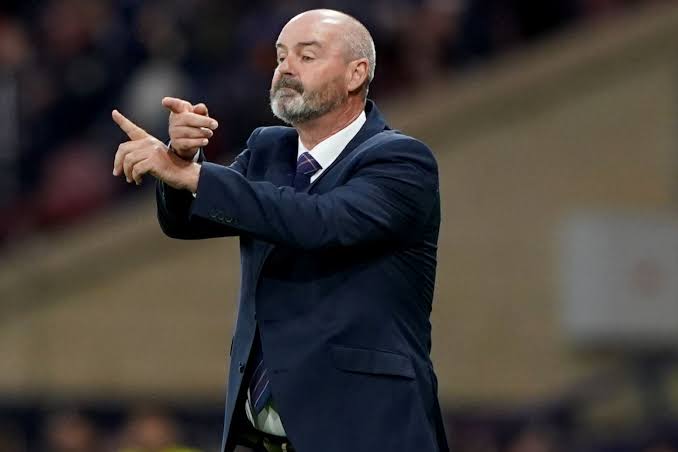
Steve Clarke wasted little time addressing the criticism.
Speaking after the comments emerged, the Scotland boss defended both his tactical philosophy and the decisions made throughout his tenure.
Clarke insisted that every tactical setup is designed with one objective—giving Scotland the best possible chance of winning football matches.
While refusing to become involved in a prolonged public dispute, the Scotland manager made it clear that players are free to express opinions internally but ultimately must respect the collective decisions made by the coaching staff.
His response was measured but firm, sending a clear message that public criticism would not influence his approach.
Rather than acknowledging tactical shortcomings, Clarke pointed to Scotland’s achievements under his leadership, including qualification for major tournaments and victories over higher-ranked opponents.
The manager emphasized that results—not outside opinions—remain the ultimate measure of success.
A Divided Fanbase
The exchange has divided opinion across Scotland.
One section of supporters believes the Rangers player simply voiced what many fans have been saying for some time.
Critics argue Scotland possess enough attacking quality to play more expansive football, especially against teams of similar or lower ranking.
Players operating weekly at clubs like Rangers and Celtic often feature in aggressive, possession-based systems, making Scotland’s conservative approach appear increasingly restrictive.
Others, however, believe Clarke deserves greater respect.
Since taking charge, he has transformed Scotland from a struggling international side into one capable of consistently competing for qualification.
Ending the nation’s long wait to return to major tournaments remains one of the most significant achievements in recent Scottish football history.
Many fans therefore view criticism of Clarke as unfair, particularly given the limitations Scotland still face compared to Europe’s elite nations.
Dressing Room Questions
Perhaps the biggest concern is what the public disagreement reveals about the atmosphere behind the scenes.
National team camps rely heavily on unity, especially during qualification campaigns where preparation time is limited.
Any suggestion of players disagreeing with coaching methods inevitably sparks speculation regarding dressing-room harmony.
Although there is no concrete evidence of widespread unrest, the fact that criticism emerged publicly has fueled suggestions that not everyone is convinced by Clarke’s tactical blueprint.
Football history shows that disagreements between players and managers are common.
The difference is that most remain private.
Once comments enter the public domain, they often become significantly harder to manage.
Clarke’s Record Still Commands Respect
Despite renewed scrutiny, Clarke’s achievements cannot easily be dismissed.
When he inherited the Scotland job, expectations were modest following years of disappointment.
Under his leadership, Scotland became significantly more organized, difficult to beat, and capable of producing memorable victories against strong opposition.
Qualification for major international tournaments restored belief among supporters and helped rebuild Scotland’s reputation on the European stage.
While criticism of tactics may continue, Clarke’s record provides strong evidence that his methods have delivered tangible results.
Managers are ultimately judged by outcomes, and few Scotland managers in recent decades can point to comparable achievements.
Modern Football’s Public Debate
The incident also highlights the increasingly blurred line between honesty and controversy in modern football.
Players today are encouraged to communicate openly with media and supporters.
However, public criticism of tactical decisions almost always generates headlines.
Social media has only amplified these moments.
Within minutes of the Rangers player’s comments emerging, clips circulated widely online, with supporters dissecting every word and debating whether Clarke’s response was justified.
The rapid spread of opinion ensures disagreements rarely remain isolated incidents.
Instead, they evolve into national talking points capable of dominating football discussion for days.
Pressure Growing Ahead of Key Fixtures
The timing of the controversy could hardly be worse.
Scotland face important fixtures where focus, unity and confidence will be essential.
Instead, attention has shifted toward internal dynamics and tactical disagreements.
Every future team selection involving the Rangers player will now attract additional scrutiny.
Should he start, observers will wonder whether relations have been repaired.
If he is left out, questions about whether the omission was football-related or influenced by recent comments will inevitably surface.
Clarke will therefore face renewed pressure not only to produce positive results but also to demonstrate that the dressing room remains united.
Supporters Want One Thing
Despite differing opinions over tactics, most Scotland supporters share the same priority.
They simply want the national team to continue progressing.
Whether that means maintaining Clarke’s pragmatic philosophy or adopting a more adventurous approach remains open for debate.
Winning football matches has a habit of ending tactical arguments remarkably quickly.
If Scotland produce convincing performances in upcoming internationals, much of the current controversy may fade into the background.
However, another disappointing result would almost certainly reignite questions about Clarke’s methods and whether calls for tactical evolution are becoming impossible to ignore.
What Happens Next?
For now, both player and manager appear determined to move forward.
Clarke has made his position clear, while the Rangers star has already succeeded in sparking a national conversation about Scotland’s identity on the pitch.
Whether this episode proves to be a minor disagreement or the beginning of a deeper divide will become clearer over the coming months.
Much will depend on Scotland’s performances, results, and whether those inside the camp can ensure private disagreements remain exactly that.
Football teams inevitably experience differences of opinion.
Successful ones usually resolve them internally.
The coming fixtures will reveal whether Scotland can do precisely that—or whether this latest controversy marks the beginning of an increasingly difficult period for Steve Clarke and his squad.
For now, the spotlight remains firmly fixed on Scotland’s manager, his tactical philosophy, and a dressing room that suddenly finds itself under more scrutiny than ever before.