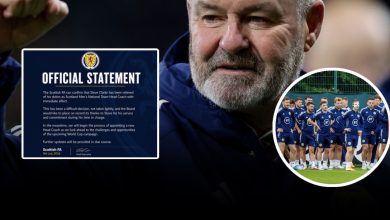
Steve Clarke Faces Uncertain Future After Scotland’s World Cup Exit as SFA Chief Mike Mulraney Weighs Major Decision

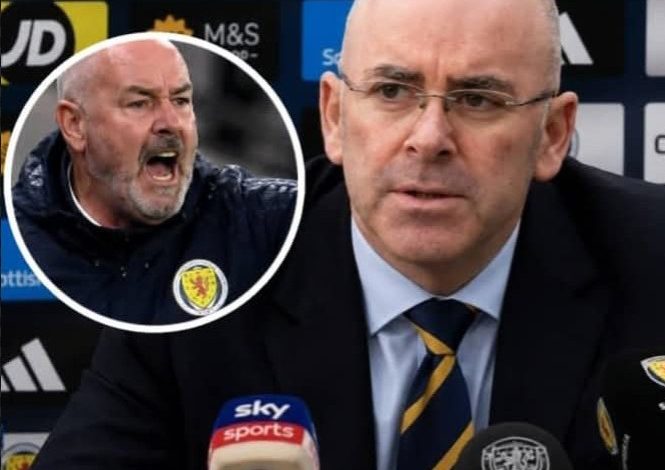
Scotland’s 2026 FIFA World Cup campaign came to a painful end, and attention has now shifted from events on the pitch to the future of manager Steve Clarke. Following Scotland’s exit from the tournament, questions are being asked about whether the man who guided the national team to some of its most memorable moments in recent history will remain in charge.
With disappointment spreading among supporters and pressure mounting from sections of the media, Scottish Football Association president Mike Mulraney is reportedly facing one of the biggest decisions of his tenure. Should Scotland stay the course with Clarke, or is it time for a new voice to lead the national team into the next chapter?
The debate has intensified in the aftermath of Scotland’s elimination, with fans, former players and pundits divided over what should happen next.
A Tournament That Promised Much
Scotland entered the World Cup carrying significant expectations. The team had shown steady progress under Clarke in recent years and arrived at the tournament believing they could make an impact on the world stage.
The squad featured a blend of experienced internationals and emerging talent. Many supporters hoped Scotland could build upon previous qualification successes and finally establish themselves as a competitive force in major tournaments.
The campaign started with optimism. Scotland showed moments of resilience and organisation, qualities that have become trademarks of Clarke’s tenure. However, as the tournament progressed, familiar problems emerged.
A lack of goals, difficulties breaking down technically superior opponents and occasional defensive lapses proved costly.
The decisive blow came in Scotland’s final group-stage encounter, where defeat confirmed their elimination. The result left players devastated and supporters wondering where the national team goes from here.
Steve Clarke’s Scotland Legacy
Any discussion regarding Clarke’s future must begin with an assessment of what he has achieved.
When he took charge of Scotland in 2019, the national team was struggling for consistency and confidence. Qualification for major tournaments had become increasingly difficult, and many fans feared Scotland had fallen behind other European nations.
Clarke changed that perception.
Among his major achievements are:
Guiding Scotland to UEFA Euro 2020, their first major tournament appearance in over two decades.
Leading the team to UEFA Euro 2024 qualification.
Establishing Scotland as a competitive side capable of troubling elite nations.
Improving FIFA rankings and overall consistency.
Creating a strong team culture and identity.
His ability to organise the team defensively and foster unity within the squad earned widespread praise.
Many supporters still regard him as one of the most successful Scotland managers of the modern era.
That reputation, however, does not completely shield him from criticism.
Why Questions Are Being Asked
International football is often judged by results at major tournaments.
While qualification achievements are celebrated, supporters ultimately want to see progress when the biggest competitions arrive.
Critics argue that Scotland’s performances at major tournaments have not matched expectations.
Several concerns have been raised:
Tactical Limitations
Some observers believe Scotland’s approach has become predictable.
Opponents often appear prepared for Clarke’s preferred system, limiting Scotland’s attacking effectiveness.
Questions have also been asked about whether the team is too cautious against stronger opposition.
Lack of Goals
Scotland’s inability to consistently score against top-level opponents remains a recurring issue.
Despite possessing talented players across Europe, the national side has sometimes struggled to convert possession and opportunities into goals.
Stagnation Concerns
There is also a growing argument that Scotland may have reached a plateau.
While Clarke successfully rebuilt the national team, some believe fresh ideas could help take Scotland to another level.
These concerns have fuelled speculation regarding a potential managerial change.
Mike Mulraney’s Dilemma
As president of the Scottish Football Association, Mike Mulraney now faces a difficult balancing act.
On one hand, dismissing a manager who has delivered historic achievements carries significant risk.
On the other, national football associations must constantly evaluate whether their current leadership remains the best option for future success.
Mulraney is expected to consult extensively before any decision is reached.
Several factors are likely to influence the SFA’s thinking:
Clarke’s Contract Situation
The details of Clarke’s contract will naturally play a role.
If the SFA wishes to make a change, financial implications must be considered alongside footballing concerns.
Player Support
One of Clarke’s greatest strengths has been his relationship with players.
The views of senior squad members could carry considerable weight during internal discussions.
Long-Term Vision
The SFA must decide whether continuity or change best serves Scotland’s ambitions.
The next qualification campaign will arrive quickly, leaving little time for uncertainty.
Fan Reaction Divided
Perhaps the most fascinating aspect of the debate is the division among Scotland supporters.
Many fans continue to back Clarke.
Their argument is straightforward: few managers have achieved as much for Scotland in recent decades.
Supporters in this camp point to:
Consecutive tournament qualifications.
Improved competitiveness.
Strong dressing-room culture.
Stability within the national setup.
Others believe the World Cup exit represents the end of a cycle.
They argue that while Clarke deserves immense respect for his achievements, Scotland now requires fresh tactical ideas and renewed energy.
Social media has been flooded with passionate opinions from both sides.
The result is one of the most polarising discussions Scottish football has experienced in years.
Potential Successors Already Being Discussed
Whenever uncertainty surrounds a national-team manager, speculation regarding replacements quickly follows.
Although no official shortlist has emerged, several names are already being mentioned by supporters and pundits.
The qualities likely to be sought include:
Experience managing at international level.
Strong tactical adaptability.
Proven ability to develop young players.
Understanding of Scottish football culture.
Some observers favour an established international coach, while others believe a promising domestic manager could bring fresh energy.
At this stage, however, any discussion regarding replacements remains purely speculative.
The SFA has given no indication that Clarke’s departure is imminent.
What Clarke Has Said
Following Scotland’s elimination, Clarke remained measured and professional.
The manager focused on the disappointment of the result rather than discussing his own future.
He praised the commitment of his players and acknowledged the frustration felt by supporters.
Such responses are consistent with Clarke’s approach throughout his tenure.
He has rarely been drawn into speculation and has consistently prioritised the team over personal matters.
That professionalism is one reason many within Scottish football continue to hold him in high regard.
Lessons from the World Cup
Regardless of who leads Scotland moving forward, important lessons can be learned from the tournament.
Greater Attacking Threat Needed
Scotland must find ways to become more dangerous in the final third.
Modern international football increasingly rewards teams capable of transitioning quickly and creating high-quality chances.
Squad Depth Must Improve
The World Cup highlighted the importance of strength throughout the squad.
Injuries and fatigue can dramatically impact tournament performances.
Continued Youth Development
Scotland’s future will depend heavily on emerging players.
Investment in youth pathways remains essential if the national team is to compete consistently with elite nations.
The Road Ahead
The coming weeks are likely to be crucial.
Mike Mulraney and the SFA hierarchy must determine whether Steve Clarke remains the right man to lead Scotland into the next qualification cycle.
Whatever decision is made, it will shape Scottish football for years to come.
If Clarke stays, he will have the opportunity to respond to disappointment and prove he can guide Scotland to greater success.
If the SFA opts for change, a new era will begin with all the uncertainty and excitement that accompanies managerial transitions.
One thing is certain: Scotland’s World Cup exit has triggered a conversation that extends far beyond a single result.
The debate is about identity, ambition and the future direction of the national team.
Steve Clarke’s achievements ensure his place in Scottish football history is secure. Yet football is a results-driven business, and history alone rarely determines the future.
As Mike Mulraney weighs his options, Scotland waits anxiously for an answer to the question now dominating discussions across the country: should Steve Clarke remain at the helm, or is it time for a new chapter?
Only the SFA can provide the final verdict, but the decision promises to be one of the most significant moments in Scottish football since Clarke first took charge.