THOMAS TUCHEL SWEATING OVER FITNESS OF ENGLAND’S 24-YEAR-OLD ATTACKER AHEAD OF WORLD CUP OPENER

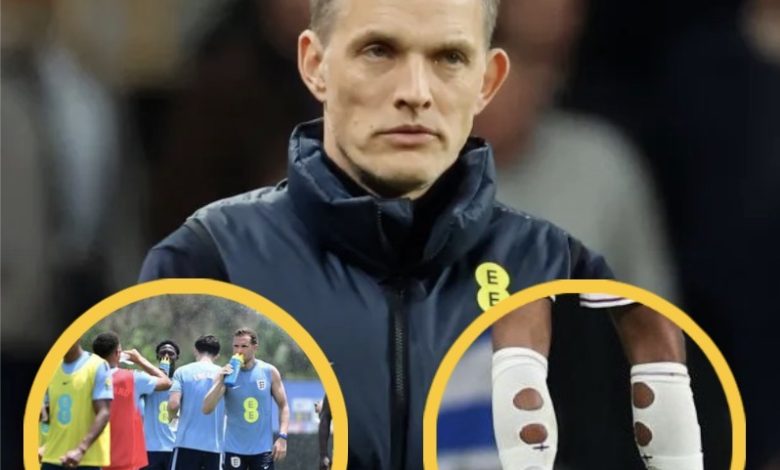
England’s preparations for the 2026 FIFA World Cup have been handed an unwelcome complication as concerns continue to grow over the fitness of a key 24-year-old attacker ahead of the Three Lions’ opening group-stage clash against Croatia.
With the tournament now underway and expectations surrounding England higher than ever, attention has shifted from tactical plans and possible starting lineups to the physical condition of one of the team’s most important attacking players. The attacker has been managing an Achilles problem for several months, and while he remains determined to represent his country on football’s biggest stage, questions remain about whether he can perform at his highest level throughout the competition.
England manager Thomas Tuchel has openly acknowledged that the attacker is not yet operating at one hundred percent fitness and will require careful management during the tournament. Reports from the England camp suggest that the player has struggled to train consistently on consecutive days, forcing the coaching and medical staff to adopt a cautious approach. Despite those concerns, the attacker has made it clear that he is willing to take risks in order to help England pursue World Cup glory. (Reuters)
A Growing Concern Ahead of a Crucial Match
England’s opening fixture against Croatia is widely regarded as one of the most significant matches of the group stage. Victory would place England in a strong position to qualify for the knockout rounds and potentially finish top of Group L.
However, the fitness concerns surrounding the 24-year-old attacker have created uncertainty at a critical moment. The player has become one of the most influential figures in England’s attack over recent years, providing creativity, pace, goals, and the ability to change matches in an instant.
Losing such a player, even temporarily, would represent a major setback for a side that entered the tournament with ambitions of lifting the World Cup trophy for the first time since 1966.
Tuchel knows the importance of having his strongest players available for the biggest occasions. Yet he also understands the dangers of rushing a player who is still recovering from an injury that has already required careful management throughout the latter stages of the club season. (Flashscore)
The Achilles Problem That Refuses to Disappear
The injury dates back to March and has continued to affect the attacker’s preparations ever since.
Although he continued playing at club level and contributed significantly during the closing stages of the domestic campaign, the discomfort never completely disappeared. The player frequently required special treatment, recovery sessions, and a reduced training workload to remain available for matches.
According to reports from England’s training camp, the attacker is still unable to complete every training session without limitations. Tuchel has admitted that the player remains in a rebuilding phase physically and must be protected carefully throughout the tournament. (Reuters)
In modern football, Achilles injuries are among the most difficult issues to manage. Even when players are technically fit enough to participate, discomfort can limit explosive movements, acceleration, sharp turns, and repeated sprints.
For an attacker whose game relies heavily on speed, quick changes of direction, and attacking defenders in one-on-one situations, any reduction in physical sharpness can have a noticeable impact.
That reality explains why England’s medical team has taken a cautious approach despite the player’s eagerness to feature.
The Mental Battle Behind the Physical Challenge
Perhaps the most remarkable aspect of the situation is the player’s willingness to continue competing despite the discomfort.
The 24-year-old attacker recently acknowledged that footballers often face difficult decisions when carrying injuries. They can choose to protect themselves and remain on the sidelines, or they can accept the risks associated with playing while not fully fit.
For many elite athletes, representing their country at a World Cup is the ultimate honour. Opportunities are limited, and no player wants to miss such a moment.
The attacker has therefore indicated that he is prepared to push through the pain barrier if necessary.
That mentality reflects the determination and commitment that have made him such an important figure within the England setup. It also highlights the enormous pressure elite footballers face when competing at the highest level. (Reuters)
Thomas Tuchel’s Difficult Dilemma
For Tuchel, managing the situation is far from straightforward.
On one hand, the attacker remains one of England’s most dangerous offensive weapons. His ability to create opportunities, stretch defences, and produce moments of brilliance could be decisive in a tournament environment where margins are often extremely small.
On the other hand, overusing him too early could risk aggravating the injury and potentially ruling him out for later stages of the competition.
The England manager must therefore balance immediate needs with long-term objectives.
Starting the attacker against Croatia may be the obvious solution from a football perspective, but there will likely be detailed discussions regarding how many minutes he can safely play.
Tuchel has already suggested that it may be unrealistic to expect the player to start and finish every match during the tournament. That statement alone demonstrates the level of concern surrounding his condition. (The Guardian)
Why England Need Their Attacker at His Best
England possess one of the strongest squads at the World Cup.
The team is packed with talent across every position, including experienced defenders, creative midfielders, and world-class attacking options.
Yet the importance of the 24-year-old attacker cannot be overstated.
His ability to unlock stubborn defences has repeatedly proven vital for both club and country. He offers direct running, intelligent movement, technical quality, and an eye for goal.
When England dominate possession, he provides creativity in tight spaces. When England are forced to counterattack, he offers pace and penetration.
Those qualities make him one of the most complete attackers in the squad.
A fully fit version of the player could be one of England’s most important weapons throughout the tournament.
A restricted version, however, would inevitably alter some of the tactical plans Tuchel hopes to implement.
The Croatia Challenge
Croatia represent a difficult opening opponent.
Although several members of their famous golden generation have moved on, Croatia remain a nation with an impressive tournament pedigree.
Their experience, tactical discipline, and ability to control possession make them dangerous opponents for any team.
England understand that a positive result against Croatia could establish momentum early in the competition.
History has shown that strong starts often provide a foundation for successful World Cup campaigns.
That reality only increases the significance of the fitness concerns surrounding the 24-year-old attacker.
If he is available and effective, England’s chances of securing victory improve considerably.
If he is unavailable or limited, other players will need to step forward and assume greater responsibility.
Squad Depth Could Be Crucial
One positive development for England is the quality of alternatives available.
Modern international tournaments are often won by squads rather than starting elevens.
Managers frequently rely on substitutes and rotation players to make the difference during long competitions.
England possess several attacking options capable of filling important roles if required.
That depth may allow Tuchel to protect the 24-year-old attacker without significantly weakening the team.
The manager’s challenge will be deciding when to use his star attacker and when to preserve him for future matches.
If England progress deep into the tournament, intelligent squad management could prove just as important as tactical preparation.
Lessons From Previous Tournaments
England have experienced similar situations before.
Major tournaments frequently test the physical resilience of key players.
History is full of examples where teams have had to adapt after injuries disrupted their plans.
Some sides have struggled to cope, while others have discovered unexpected heroes who seized their opportunities.
Tuchel will be hoping England fall into the second category if the attacker’s fitness problems persist.
At the same time, nobody within the England camp wants to contemplate a scenario where one of their most influential attackers is unavailable for an extended period.
The ideal outcome remains a gradual improvement in fitness as the tournament progresses.
Support From Medical Staff
Another encouraging factor is the cooperation between club and country medical teams.
Reports indicate that communication regarding the attacker’s recovery has been strong, ensuring continuity in his treatment plan.
This collaborative approach has helped England understand exactly how the player should be managed.
Modern sports science plays a major role in tournament football, and the England staff will use every available resource to maximize the player’s chances of remaining available.
Recovery sessions, training modifications, workload monitoring, and specialist treatment will all form part of the strategy moving forward. (The Guardian)
The Bigger Picture
Ultimately, England’s World Cup ambitions extend far beyond a single group-stage match.
The nation’s supporters believe this squad possesses the quality to challenge for the trophy.
Tuchel was appointed with the clear objective of transforming England from contenders into champions.
Achieving that goal will require a combination of talent, discipline, tactical intelligence, and good fortune.
Injuries are often one of the defining factors in major tournaments, and England will hope the concerns surrounding their 24-year-old attacker do not develop into something more serious.
For now, the situation remains one of cautious optimism.
The attacker is determined to play.
The manager remains hopeful.
The medical staff continue to monitor his progress carefully.
And England’s supporters wait anxiously for further updates ahead of the Croatia clash.
Conclusion
As England prepare for one of the most important matches of their World Cup campaign, the fitness of their 24-year-old attacker remains a major talking point. His Achilles issue has created uncertainty, forced Thomas Tuchel into difficult decisions, and raised questions about how England will manage one of their most valuable attacking assets throughout the tournament.
Despite the concerns, there is still confidence within the camp that the attacker can play an important role in England’s quest for World Cup success. Whether he starts against Croatia, comes off the bench, or has his minutes carefully managed, his presence alone offers England a significant boost.
The coming days will reveal whether the attacker is ready to make an immediate impact or whether patience will be required. Either way, England’s hopes of lifting the World Cup may depend heavily on the fitness and effectiveness of one determined 24-year-old attacker who is prepared to fight through adversity for his country.