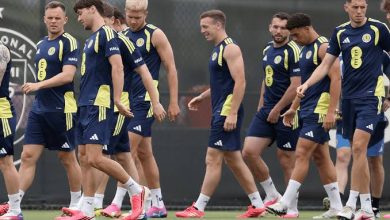
Scotland Player Out Of The World Cup Due To Injury Suffered From Allergies – Replacement Will Be A Scottish Premiership Player


Scotland Player Out Of The World Cup Due To Injury Suffered From Allergies – Replacement Will Be A Scottish Premiership Player
## A Major Setback for Scotland Ahead of Their World Cup Campaign
Scotland have suffered an unexpected blow ahead of their World Cup campaign after third-choice goalkeeper Ross Doohan was ruled out of the tournament following complications stemming from a severe allergic reaction that resulted in an injury during treatment and recovery.
The news has come as a surprise to both supporters and members of the Scottish camp, with the goalkeeper having travelled expecting to play his part in the squad throughout the competition. Medical staff monitored his condition closely over the past few days, but after further examinations it was determined that he would be unable to recover in time to participate safely.
As a result, Scotland’s coaching staff have moved quickly to identify a replacement, calling up Dundee United goalkeeper Jack Walton to join the squad for the remainder of the tournament.
## Unexpected Circumstances Force Late Change
World Cup tournaments are often defined by unexpected moments, but few could have predicted that Scotland would lose a goalkeeper because of complications arising from allergies.
Initially, the issue appeared manageable, with team doctors optimistic that the player would recover after receiving treatment. However, further complications reportedly led to an injury that significantly delayed his recovery process, leaving the medical team with no option but to recommend his withdrawal from the squad.
The Scottish Football Association and the coaching staff prioritised the player’s health above all else, deciding that returning home for further assessment and rehabilitation was the best course of action.
While disappointment surrounds the camp, there has also been widespread support for the goalkeeper, with teammates sending messages wishing him a full and speedy recovery.
## Jack Walton Earns His Opportunity
The decision to replace Doohan with Dundee United goalkeeper Jack Walton has been welcomed by many supporters, who believe his performances in the Scottish Premiership have earned him recognition on the international stage.
Walton has established himself as one of the league’s most dependable goalkeepers, producing a series of impressive displays that have helped his club in difficult matches throughout the season. His shot-stopping ability, command of the penalty area and calm distribution have attracted praise from fans and pundits alike.
Although he was not originally included in Scotland’s World Cup squad, his consistent form meant he remained firmly on the national team’s radar.
Receiving the call to join the squad represents one of the proudest moments of his career, transforming what was expected to be an ordinary week into the opportunity of a lifetime.
## Importance of the Goalkeeping Unit
Some may view the loss of a third-choice goalkeeper as a minor issue, but within a World Cup environment every squad member plays an important role.
Goalkeepers train together every day, helping maintain the sharpness of the starting goalkeeper while also providing vital competition during preparations. They must also be ready to step into the team at a moment’s notice should injuries or suspensions occur.
The coaching staff therefore needed a replacement who could integrate quickly into the group while possessing the quality and experience required at international level.
Jack Walton fits that profile and is expected to settle rapidly into Scotland’s training environment.
## Steve Clarke Faces Another Selection Challenge
Manager Steve Clarke has built Scotland’s recent success on organisation, resilience and squad unity. While the late withdrawal is undoubtedly disappointing, it also provides an opportunity for another player to contribute to the national cause.
Clarke is expected to retain full confidence in his first-choice goalkeeper, but the addition of Walton ensures Scotland continue to have reliable depth between the posts.
The manager has consistently emphasised that every member of the squad must be prepared for their chance, regardless of whether they are first-choice or a late replacement.
That philosophy will now be tested as Scotland continue their World Cup journey.
## Fans React Across Scotland
The announcement sparked immediate reaction across social media, where supporters expressed sympathy for Ross Doohan while congratulating Jack Walton on his call-up.
Many fans described the situation as heartbreaking for the goalkeeper forced to withdraw, particularly after working so hard to earn a place in the national team setup.
At the same time, there was excitement over Walton’s inclusion, with supporters praising his performances in the Scottish Premiership and expressing confidence that he can provide valuable cover if called upon.
Several former players and football analysts also highlighted how quickly fortunes can change in football, noting that major tournaments have often created unexpected heroes from late replacements.
## Bigger Implications for Scotland
Although Scotland’s immediate plans are unlikely to change dramatically, the incident serves as a reminder of how fragile tournament preparations can be.
Injuries and unforeseen medical issues have disrupted countless World Cup campaigns over the years, forcing managers to adapt at short notice.
Scotland will now hope that this proves to be the only major setback they encounter, allowing the squad to focus entirely on their performances on the pitch.
For Jack Walton, meanwhile, the challenge is clear. He arrives with little time to settle but with the chance to represent his country on football’s biggest stage—a dream shared by every Scottish footballer.
As one goalkeeper begins the difficult journey back to full fitness, another steps into the spotlight, ready to seize an opportunity that few could have anticipated.