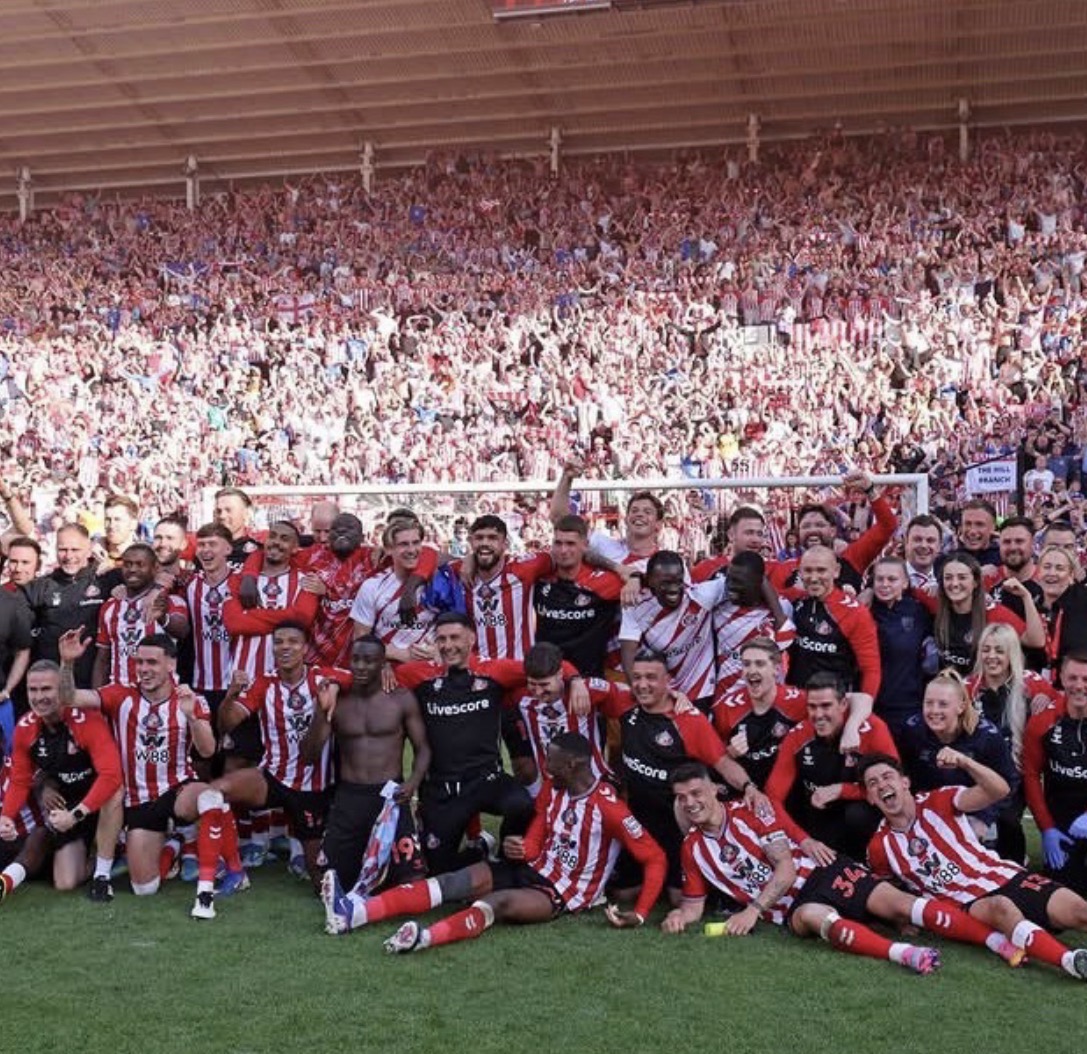
Sunderland Fans’ New Chant Goes Viral After Newcastle Dig as Wear-Tyne Rivalry Reignites
Few rivalries in English football carry the emotional weight, regional identity and raw supporter culture of the battle between Sunderland A.F.C. and Newcastle United F.C.. Even during periods when the two clubs are separated by divisions, the tension never truly disappears. This week, that rivalry exploded back into the spotlight after a newly recorded Sunderland supporters’ chant spread rapidly across social media, drawing huge reactions from fans across the country for its sharp mockery of Newcastle United.
The chant, first heard among travelling supporters before quickly circulating online through fan accounts and matchday videos, has already been described by supporters as one of the most memorable pieces of football banter to emerge from the North East in recent years. While football chants have always been part of terrace culture in England, this one stood out because of the timing, delivery and the unapologetic disrespect aimed toward Sunderland’s fiercest rivals.
For many fans, it was another reminder that the Wear-Tyne rivalry remains one of the most culturally powerful feuds in British football — regardless of league position.
How the chant emerged
The song reportedly gained momentum during recent Sunderland gatherings following the club’s strong resurgence under their youthful squad project. With optimism growing around the Black Cats and frustration beginning to build among sections of Newcastle supporters despite recent progress under Eddie Howe, Sunderland fans seized the opportunity to strike psychologically through humour.
Videos from pubs, away coaches and supporter sections quickly spread online, with neutral fans also joining the conversation due to the chant’s creativity and brutal wording.
Unlike many repetitive terrace songs, this chant reportedly combined:
Historical references to Newcastle disappointments
Taunts about Sunderland’s recent rebuilding process
Humorous jabs about fan culture in the North East
References to modern football finances and expectations
The result was a chant that felt both contemporary and deeply rooted in traditional English football rivalry culture.
Why the Wear-Tyne rivalry still matters
To supporters outside the North East, it can sometimes be difficult to understand the emotional intensity between Sunderland and Newcastle. But within the region, the rivalry stretches beyond football.
It reflects:
Economic history
Industrial identity
Civic pride
Family divisions across generations
Cultural competition between Wearside and Tyneside
Historically, derby matches between the clubs have produced some of the fiercest atmospheres in English football. Sunderland famously enjoyed a dominant derby period during the 2010s, winning six consecutive league meetings between 2013 and 2015 — a run still celebrated by Black Cats supporters today.
Names such as:
Jermain Defoe
Steven Fletcher
Fabio Borini
remain legendary figures among Sunderland fans largely because of their derby contributions.
Meanwhile, Newcastle supporters continue to point toward the club’s recent Premier League progress, Champions League qualification and long-term financial power under Saudi-backed ownership as evidence that the balance of power has shifted permanently.
That contrast is exactly why chants between the two fanbases remain so emotionally charged.
The role of football chants in English supporter culture
Football chants have always been central to matchday identity in the UK. In many stadiums, chants become unofficial historical records of club success, failure, heroes and humiliation.
Some chants celebrate:
Promotion triumphs
Cup victories
Legendary players
Others are designed purely for psychological warfare against rivals.
The Sunderland chant appears to belong firmly in the second category.
Across English football history, some of the most iconic chants emerged during periods of imbalance between rival clubs. Supporters often use humour to reclaim confidence even when results on the pitch are mixed.
This latest Sunderland anthem fits that pattern perfectly. It reflects a fanbase determined to remain loud, culturally relevant and emotionally connected despite years outside the Premier League.
Sunderland’s changing identity under the current project
Part of the reason the chant resonated so strongly is because Sunderland’s wider story has changed dramatically over the past few years.
Following relegations, ownership instability and the damaging public exposure from the documentary series Sunderland ‘Til I Die, many outside observers believed the club would struggle to recover.
Instead, Sunderland rebuilt with:
Younger recruitment
Long-term planning
Data-driven scouting
Greater financial discipline
The emergence of talented young players and a renewed atmosphere around the club has gradually restored belief among supporters.
Fans now see Sunderland as:
A sleeping giant with Premier League ambitions
A club reconnecting with its identity
A modern football project without abandoning traditional supporter culture
That combination explains why moments like this chant carry emotional significance beyond simple banter.
Newcastle’s position adds extra tension
Ironically, Newcastle’s recent rise has intensified the rivalry again.
Under Eddie Howe, Newcastle have:
Returned to European competition
Improved defensively
Invested heavily in infrastructure and squad quality
Re-established themselves among the Premier League’s stronger sides
Players such as:
Bruno Guimarães
Alexander Isak
Anthony Gordon
have transformed expectations at St James’ Park.
But increased expectations also create vulnerability. Rival supporters become even more eager to mock setbacks, underachievement or perceived arrogance.
Sunderland fans understand this dynamic well. Many see Newcastle’s new status as an opportunity to create even louder backlash whenever results dip or pressure increases.
That is why the chant gained traction so quickly online.
Social media reaction from UK and Nigerian fans
The reaction online has been predictably explosive.
Many Sunderland supporters celebrated the chant as:
“Proper football banter”
“Peak North East culture”
“One for the history books”
Meanwhile, Newcastle fans largely dismissed it publicly while still engaging heavily in debates online — something Sunderland supporters immediately pointed out.
Interestingly, Nigerian football fans also joined the conversation in large numbers. The Premier League’s enormous popularity in Nigeria means regional English rivalries often gain international attention very quickly.
Some Nigerian fans compared the Sunderland-Newcastle rivalry to:
Rangers vs Celtic in Scotland
Shooting Stars vs Enyimba historically in Nigeria
Major city rivalries driven by identity rather than trophies alone
Others simply enjoyed the humour and creativity of the chant culture itself, something that remains deeply appreciated among African football audiences.
In Nigerian football communities online, English terrace culture continues to hold massive fascination, especially when chants become creative enough to go viral internationally.
Could the rivalry return fully on the pitch?
One major reason this story has attracted attention is because many supporters now believe another competitive Wear-Tyne derby may not be far away.
Sunderland’s long-term ambition is clear: Premier League promotion.
If achieved, English football could once again witness:
Packed derby stadiums
Heightened police operations
Massive television audiences
One of the loudest atmospheres in British football
Historically, these matches have rarely disappointed.
The intensity comes from authenticity. Unlike manufactured rivalries driven purely by modern media narratives, Sunderland vs Newcastle is built on generations of lived regional tension.
That authenticity explains why even a single chant can dominate football discussion for days.
What this says about football fandom in 2026
Modern football is increasingly corporate, global and commercially managed. Yet moments like this prove traditional supporter culture still matters enormously.
Fans continue to value:
Humour
Local identity
Rivalry traditions
Organic terrace creativity
The Sunderland chant resonated because it felt spontaneous rather than manufactured for social media engagement.
In many ways, it represented old-school English football culture surviving within the modern digital era.
Even supporters from neutral clubs admitted online that the chant reminded them why football rivalries remain such a powerful part of the sport’s emotional appeal.
Conclusion
Sunderland’s latest viral chant may appear on the surface to be simple football mockery, but its impact reflects something much deeper about the culture of the English game.
The Wear-Tyne rivalry remains alive because it is rooted in identity, history and emotion rather than temporary league standings. Sunderland supporters used humour and timing to remind Newcastle United — and the wider football world — that rivalries are never truly decided by finances or league tables alone.
Whether Newcastle fans view the chant as irritating, amusing or disrespectful, its success is undeniable. It captured attention across the UK, spread internationally and reignited discussion around one of football’s most historic regional feuds.
And if Sunderland continue progressing toward Premier League football again, this may only be the beginning of a new chapter in one of England’s fiercest rivalries.












Post Comment