REASON WHY MANCHESTER UNITED GOAL WAS AWARDED DESPITE IT WAS A HANDBALL LEFT EVERYONE FURIOUS- FA RELEASE SHOCKING STATEMENT
A Decision That Sparked Outrage
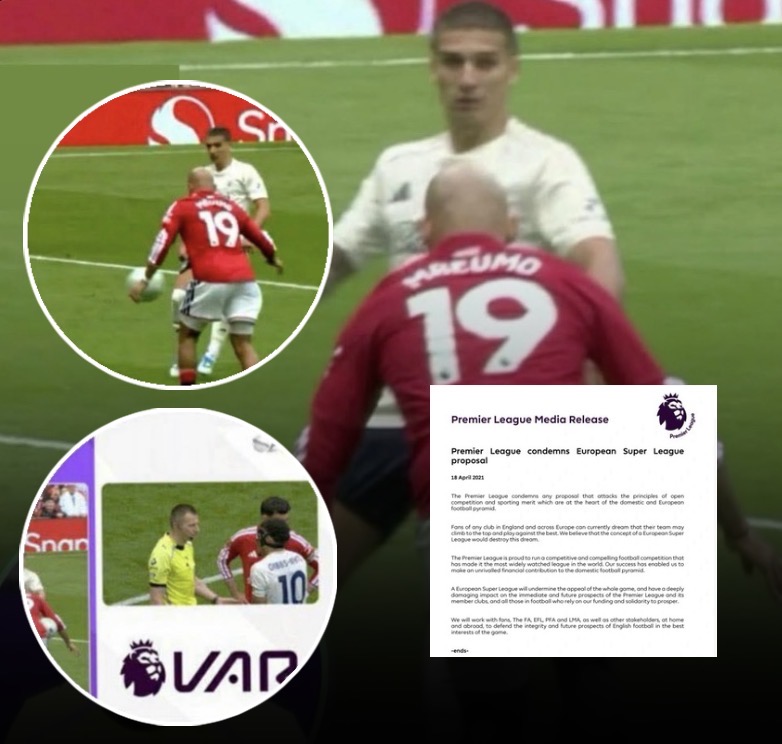
Football once again found itself at the center of controversy as Nottingham Forest were left furious following a highly disputed goal awarded to Manchester United. What should have been a routine Premier League fixture quickly escalated into a storm of debate after what appeared to be a clear handball in the build-up to a decisive goal was ignored—even after intervention from VAR.
The decision has since triggered widespread backlash, with fans, pundits, and former players questioning not only the interpretation of the rules but also the consistency of officiating in the modern game. As pressure mounted, the The Football Association released an official statement attempting to clarify the reasoning behind one of the most controversial calls of the season.
Timeline of the Controversial Incident
The flashpoint moment came during a crucial phase of the match, with both sides battling intensely for control. Manchester United pushed forward with purpose, crafting an attacking move that would ultimately change the course of the game.
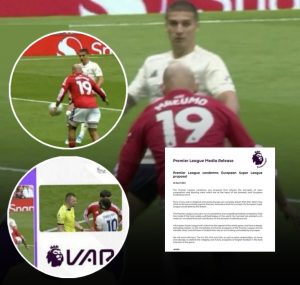
As the ball was played into the box, a United attacker appeared to make contact with it using his arm before continuing the move that led to the goal. Instantly, Nottingham Forest players reacted—arms raised, voices loud, appealing for a handball.
- The referee initially allowed play to continue
- Forest players surrounded the official in protest
- VAR stepped in to review the incident
- After a brief check, the goal was awarded
Replays shown across multiple angles suggested there was indeed contact between the ball and the player’s arm. Yet, despite what many believed was clear evidence, the decision stood—fueling anger both inside the stadium and across global audiences.
FA’s Explanation – “Natural Position” and No Clear Error
In response to the backlash, the FA issued a statement defending the decision, pointing to the interpretation of the handball law under current guidelines.
According to the FA:
- The contact with the arm was deemed accidental
- The player’s arm was in a natural position relative to his movement
- There was no clear and obvious error by the on-field referee
The statement emphasized that not all handball incidents are punishable and that intent, proximity, and body positioning all play a role in determining whether an offence has occurred.
Crucially, VAR’s role is not to re-referee the game but to correct obvious mistakes. In this case, officials concluded that the referee’s original decision did not meet the threshold for intervention.
Breaking Down the Handball Law
To fully understand the controversy, it’s important to examine how handball is currently defined in football laws.
Under IFAB guidelines:
- A handball is usually penalized if the arm makes the body unnaturally bigger
- Deliberate movement of the arm toward the ball is punishable
- Accidental contact may not be penalized—especially in dynamic situations
However, the law becomes more complicated in attacking scenarios. In previous seasons, any accidental handball in the build-up to a goal was automatically penalized, but recent adjustments have introduced more flexibility—leading to greater subjectivity.
This is where the problem lies.
Many fans and analysts argue that the rules have become too open to interpretation, creating inconsistency. What is deemed “natural” in one match might be judged differently in another.
Nottingham Forest’s Reaction
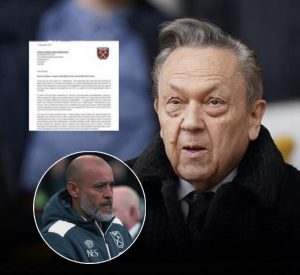
Understandably, the reaction from Nottingham Forest was one of disbelief and frustration. Players reportedly confronted the referee at full-time, while the club later issued a strong statement demanding accountability.
From Forest’s perspective:
- The handball directly influenced the goal
- The decision cost them a crucial result
- VAR failed in its duty to ensure fairness
There is also a growing sentiment among fans that decisions of this nature tend to favor bigger clubs—adding another layer of controversy to an already heated debate.
Fan Reactions Across the Globe
The reaction wasn’t limited to England. Across the footballing world—especially in football-loving nations like Nigeria—fans voiced their anger.
In the UK:
“We’ve seen softer handballs given this season—this is inconsistent.”
“VAR is supposed to remove controversy, not create it.”
“That’s a clear handball. No explanation can justify it.”
“Smaller teams always suffer these decisions—it’s becoming predictable.”
Social media platforms were flooded with clips of the incident, analysis breakdowns, and heated debates. Hashtags related to VAR and officiating errors quickly began trending.
What This Means for the Premier League
This incident has once again raised serious concerns about officiating standards in the Premier League.
Key concerns include:
- Consistency: Similar incidents have been judged differently across matches
- Transparency: Fans are often left confused by decisions with limited explanation
- Trust: Confidence in VAR continues to decline
For Nottingham Forest, the impact could be significant. In a league where margins are tight, losing points due to controversial decisions can have long-term consequences—whether in the race for survival or mid-table positioning.
Tactical Impact of the Decision
Beyond the controversy, the goal itself altered the tactical dynamics of the match.
Before the incident:
- Forest were compact and defensively organized
- Manchester United were struggling to break through
After the goal:
- Forest were forced to open up and chase the game
- United gained confidence and control
- The match tempo shifted entirely
This highlights how a single decision—especially a controversial one—can reshape not just the scoreline but the entire flow of a match.
What Needs to Change?
Following this incident, calls for reform are growing louder.
Experts suggest:
- Clearer definitions of “natural position”
- Greater transparency in VAR decisions (e.g., audio explanations)
- Consistent application of rules across all matches
Some have even called for a return to stricter handball interpretations in attacking phases to eliminate ambiguity.
Final Thoughts
The controversy surrounding this decision is not just about one goal—it reflects a deeper issue within modern football. While technology like VAR was introduced to enhance fairness, its effectiveness continues to be questioned when decisions like this occur.
For Nottingham Forest, the frustration is understandable. For Manchester United, it’s a moment that worked in their favor—but one that will be debated for weeks to come.
Until greater clarity and consistency are achieved, moments like this will continue to divide opinions and dominate headlines—reminding us that, even in the age of technology, football remains beautifully—and sometimes painfully—subjective.







Post Comment