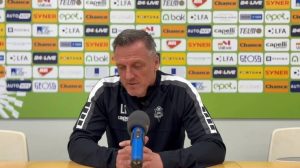
In the wake of a tense and ill-tempered UEFA Conference League play-off first leg at Ibrox, European football’s governing body has opened a formal investigation into the events surrounding Rangers’ narrow 1-0 victory over Czech side FK Jablonec. The decision follows strong post-match comments from Jablonec head coach Luboš Kozel, who has publicly called for “justice” and raised questions about key refereeing decisions that he believes skewed the outcome of the tie.
The match, played on Thursday evening in Glasgow, saw Rangers take a slender advantage into next week’s return leg in northern Czechia. Ryan Naderi’s 50th-minute goal proved decisive, but the game will be remembered as much for the late drama involving a VAR-reviewed red card as for the quality of the football on show. With emotions still running high less than 24 hours later, UEFA’s Control, Ethics and Disciplinary Body has confirmed it is examining several aspects of the fixture, including the application of video assistant referee technology and the conduct of match officials.
A Night of Frustration at Ibrox
Derek McInnes’s Rangers side entered the contest under considerable pressure. Having been eliminated from the Europa League qualifying rounds by Polish side Jagiellonia Białystok earlier in the month, the Glasgow club found themselves in the Conference League play-offs for the first time in their recent history. A 5-1 League Cup win over St Mirren the previous weekend had offered some relief after a difficult start under the new manager, yet the first half against Jablonec quickly drained any lingering optimism among the home support.
Rangers dominated possession but struggled to create clear chances. Vanja Dragojević dragged an early effort wide and later struck the base of the post after clever link-up play with Naderi. James Penrice forced a save from goalkeeper Jan Hanuš, while Djeidi Gassama fired over. The half-time whistle was met with boos from sections of the Ibrox crowd, a clear sign of discontent with a performance that lacked tempo and precision.
The second half began more brightly. Five minutes after the restart, Dan Neil delivered an excellent cross to the far post. Japanese winger Daisuke Yokota, alert and determined, headed the ball back across goal, allowing Naderi to steer it high into the net from close range. The German striker’s finish gave Rangers a lead they had long threatened but failed to convert. Moments later Gassama squandered a glorious opportunity to double the advantage, volleying over from six yards after being found unmarked by Naderi.
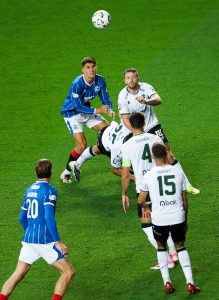
Then came the flashpoint that has triggered the current controversy. Substitute Cammy Devlin, introduced only minutes earlier, was involved in a challenge with Jablonec defender Jiří Sláma near the edge of the penalty area. Devlin went to ground claiming a foul, and many inside the stadium initially believed a penalty check was underway. Instead, Romanian referee Marian Barbu was summoned to the pitchside monitor by VAR official Cătălin Popa. After reviewing the footage, Barbu produced a straight red card for a high challenge that caught Sláma on the shin.
Television replays showed Devlin’s boot raised as he attempted to shield the ball, making contact that officials deemed reckless and dangerous. The Australian midfielder appeared stunned, as did McInnes on the touchline. Rangers were forced to play the final 16 minutes with ten men. Jablonec, despite the numerical advantage, created little of note and failed to seriously test goalkeeper Ivor Pandur. The visitors finished with an expected goals tally of just 0.16 from five attempts, underlining their limited threat in the final third.
Kozel’s Call for Justice
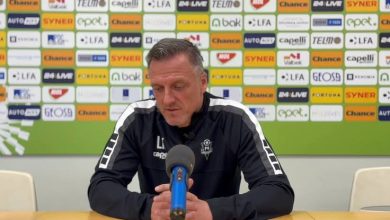
In his post-match media duties, Luboš Kozel was measured about his side’s performance but far less restrained when discussing the broader context of the result. The Jablonec coach, whose team had arrived in Glasgow on the back of a strong domestic and European run, acknowledged that his players had not done enough to punish Rangers after the red card. Yet he reserved particular criticism for what he described as inconsistencies in decision-making that he felt favoured the home side.
“We came here to compete and we showed character, but football must be fair,” Kozel said. “There were moments that changed the game, and we need clarity. I demand justice for my players and for the competition. If decisions are made under pressure or without the proper standard, then the integrity of the tie is affected. UEFA must look at this properly.”
Kozel’s comments focused on the red card incident itself and an earlier VAR check involving a challenge on Naderi inside the Jablonec box that did not result in a penalty. He also referenced the overall management of the match by the Romanian officiating team. While stopping short of accusing deliberate bias, the coach’s language was strong enough to prompt formal channels of communication between the Czech club and UEFA.
Jablonec, a side that finished fifth in the Czech top flight last season and had won six consecutive matches prior to the trip to Scotland, now face a difficult second leg at their compact Stadion Střelnice. The club’s hierarchy has reportedly formally requested a review of the first-leg decisions, providing video evidence and written submissions to support their case. Sources close to the club indicate that the primary focus is whether the red card was correctly applied under the Laws of the Game and whether other potential fouls were given equivalent scrutiny.
UEFA’s Response and the Scope of the Probe
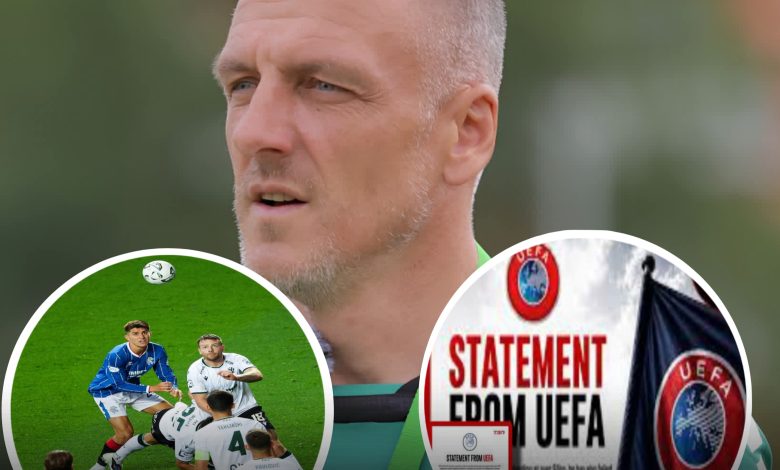
UEFA moved swiftly. A statement issued on Friday confirmed that the organisation’s disciplinary services had opened a full probe into the match. The investigation will examine the performance of the match officials, the use of VAR technology, and any related procedural matters. It will also consider the conduct of both clubs and their representatives in the immediate aftermath of the game.
Such probes are not uncommon in European competition when high-profile controversies arise, particularly in qualifying stages where the financial and sporting stakes are significant. Progression to the Conference League league phase brings guaranteed revenue and a platform for further progress. For Rangers, already navigating a transitional period under McInnes, elimination would represent another setback. For Jablonec, reaching the group stage would be a landmark achievement and a major boost to a club of their size.
The timing of the investigation is sensitive. The second leg is scheduled for next Thursday in Czechia. UEFA has not indicated whether any interim measures, such as additional observer appointments or changes to the officiating team, will be applied. Historically, the governing body prefers to allow ties to proceed while completing its review, reserving the right to impose retrospective sanctions if serious breaches are identified.
Rangers have so far maintained a relatively low profile on the matter. McInnes focused his post-match remarks on the need for greater clinical edge and the importance of the result despite the difficult circumstances. Club sources have indicated that they will cooperate fully with any UEFA inquiry and that they believe the red card decision was correctly reached after thorough review. Devlin himself is understood to have accepted the decision once he saw the replay, though the midfielder remains available for the return leg unless further disciplinary action is taken.
Broader Context and Implications
The controversy arrives against a backdrop of heightened scrutiny around VAR across European football. Critics frequently argue that the technology, while designed to eliminate clear and obvious errors, can introduce new layers of subjectivity and delay. In this case, the length of the review and the initial confusion among players and supporters about whether a penalty or a red card was being considered have fuelled debate.
For Rangers supporters, the victory offered temporary relief after a challenging start to the season, yet the performance left many unconvinced that the team is ready for the demands of the Conference League proper. McInnes has two wins in succession, but the manner of the display against a well-organised but limited Jablonec side has prompted calls for further reinforcements before the transfer window closes.
Jablonec, by contrast, will travel home believing they remain very much in the tie. Their defensive organisation limited Rangers to three shots on target despite 13 attempts overall. With home advantage and a passionate crowd expected at their 6,000-capacity stadium, the Czechs sense an opportunity to overturn the deficit and cause an upset.
As the probe unfolds, both clubs must prepare for a decisive second leg while navigating the administrative process. UEFA’s investigators will review match footage, official reports, and submissions from the parties involved. Any findings could result in warnings, fines, or more serious sanctions, though retrospective changes to the result of a completed match remain extremely rare.
The coming days will test the patience and professionalism of everyone connected with the tie. Luboš Kozel has drawn a line in the sand by demanding justice. UEFA has responded by launching a formal investigation. Rangers, holding a one-goal lead and the experience of European nights at Ibrox, must now focus on closing out the job in Czechia. Whatever the outcome of the probe, the footballing contest itself remains finely balanced, and the second leg promises to be every bit as intense as the first.
In the high-stakes world of UEFA competition, controversy often travels as far as the teams themselves. This time, the journey from Glasgow to Jablonec carries not only sporting ambition but the weight of an official inquiry that could shape the narrative long after the final whistle of the return leg.