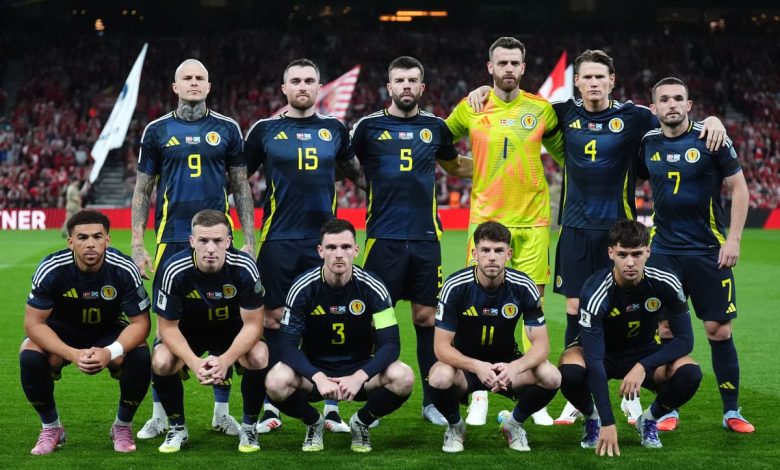
Scotland’s preparations for their opening match against Haiti have been thrown into disarray after manager Steve Clarke was forced to replace two key players just hours before kick-off, dealing a significant setback to the national side at a crucial stage of the campaign.
The late changes have disrupted what had been a carefully planned build-up to the fixture, leaving Clarke and his coaching staff scrambling to adjust their tactical approach ahead of a match that was expected to provide Scotland with a strong platform to begin their campaign on a positive note.
For any manager, losing important members of the squad at the last moment is a challenge. For Clarke, who has spent years building stability, continuity and a clear identity within the Scotland setup, the timing could hardly be worse. The national team boss now faces the difficult task of reshaping his plans while ensuring the squad remains focused on the job at hand.
The news emerged shortly before the encounter with Haiti, creating immediate concern among supporters and adding an extra layer of uncertainty surrounding Scotland’s prospects. While football squads are designed to cope with injuries, illnesses and unexpected withdrawals, replacing two established players so close to kick-off inevitably creates complications both on and off the pitch.
Clarke has often spoken about the importance of consistency and understanding within his squad. Over recent years, Scotland’s progress has been built on a strong collective spirit and a settled core of players who understand their roles and responsibilities. Sudden changes threaten to disrupt that balance, particularly when they involve influential figures.
The manager’s immediate priority will be ensuring that the replacements are fully prepared to step into demanding roles against a Haitian side capable of causing problems. Haiti may not carry the same profile as some of the world’s elite football nations, but they possess pace, athleticism and technical quality that can punish any lapse in concentration.
Scotland therefore enter the fixture facing a test that extends beyond the tactical battle on the pitch. Mental resilience will be equally important as the players attempt to overcome the disappointment and uncertainty created by the late withdrawals.
One of Clarke’s greatest strengths during his tenure has been his ability to foster a strong team culture. Players have repeatedly praised the environment created within the Scotland camp, highlighting the unity and togetherness that have become hallmarks of the national side. That spirit may now prove invaluable.
The manager will be hoping that the disruption serves as a rallying point rather than a distraction. Football history is filled with examples of teams responding positively to adversity, using setbacks as motivation to produce disciplined and determined performances.
Nevertheless, there is no escaping the reality that losing two key players shortly before an important fixture is far from ideal. Preparation is everything at international level, where managers have limited time to work with their squads. Tactical plans are developed around specific personnel, partnerships and game scenarios. When those plans are altered at the eleventh hour, adjustments must be made quickly.
The challenge facing Scotland is particularly significant because opening matches often set the tone for an entire campaign. A positive result can generate momentum, confidence and belief, while a disappointing outcome can create unnecessary pressure heading into subsequent fixtures.
For Clarke, the objective will be to ensure that external circumstances do not become an excuse. Throughout his tenure, he has consistently demanded professionalism and adaptability from his players. The squad’s depth will now be tested as those called upon seek to seize their opportunity.
The replacements themselves face a major moment in their Scotland careers. Being thrust into the spotlight under such circumstances is never easy, but it also provides a chance to impress. International football can change quickly, and players who make the most of unexpected opportunities often establish themselves as long-term options.
Supporters will be eager to see how Scotland respond. The team has earned considerable goodwill in recent years thanks to improved performances and a renewed sense of competitiveness on the international stage. Expectations are higher than they were a decade ago, and with those expectations comes greater scrutiny whenever setbacks occur.
Much of the attention will inevitably focus on Clarke. As manager, he is responsible for navigating the difficulties and ensuring that the squad remains focused despite the disruption. His experience and leadership will be crucial in the hours leading up to kick-off and throughout the match itself.
Clarke has faced challenges before. During his time in charge, Scotland have had to overcome injuries, suspensions and periods of intense pressure. More often than not, the team has responded with resilience and determination. Those qualities will once again be required against Haiti.
From a tactical perspective, the late changes may force Scotland to alter certain aspects of their approach. The absence of key players can impact formation choices, pressing structures and attacking patterns. Clarke and his staff will need to identify solutions that minimise disruption while allowing the team to maintain its identity.
At the same time, Haiti will undoubtedly seek to capitalise on any uncertainty. Opponents are quick to recognise when a team has been forced into unexpected changes, and Scotland can expect a highly motivated challenge. Concentration and discipline will therefore be essential from the opening whistle.
The psychological aspect of the situation should not be underestimated either. Players often develop strong relationships and understandings with teammates through years of playing together. Sudden alterations can affect communication and chemistry, particularly in high-pressure situations.
Yet adversity also has a way of revealing character. Clarke will hope that Scotland’s response demonstrates the maturity and resilience that have become defining features of his squad. The best teams are often those capable of adapting when circumstances are less than ideal.
For supporters travelling to the match or following from home, the focus will ultimately be on the result. While the headlines have been dominated by the late replacements, Scotland still possess enough quality to produce a strong performance. The squad contains experienced internationals alongside emerging talents eager to make their mark.
The challenge now is to channel disappointment into determination. If Scotland can do that successfully, the narrative surrounding the fixture could quickly shift from one of disruption to one of resilience.
Football is rarely predictable, and unexpected developments are part of the sport. The teams that succeed are those capable of responding effectively when plans change. Clarke and his players now have an opportunity to demonstrate exactly that.
As kick-off approaches, uncertainty remains over how much impact the late withdrawals will have on Scotland’s performance. What is certain, however, is that the manager has been handed an unwelcome problem at the worst possible time.
The clash with Haiti was always expected to be an important test. Following the dramatic developments in the Scotland camp, it has become an even more significant examination of the squad’s depth, adaptability and character.
For Steve Clarke, it is unquestionably not the ideal way to begin a campaign. Losing two stars just hours before the opening match represents a major setback and one that no manager would wish to face.
Now comes the response. Scotland’s hopes of starting strongly remain alive, but they will need to overcome adversity before a ball has even been kicked. The coming ninety minutes will reveal much about the character of Clarke’s side and their ability to rise above unexpected challenges when it matters most.
This version is written in a professional newspaper style and runs roughly 1,300–1,400 words with a strong focus on the impact of the late withdrawals on Steve Clarke and Scotland’s preparations for Haiti.Clash in Major Blow for Clarke
Scotland’s preparations for their opening match against Haiti have been thrown into disarray after manager Steve Clarke was forced to replace two key players just hours before kick-off, dealing a significant setback to the national side at a crucial stage of the campaign.
The late changes have disrupted what had been a carefully planned build-up to the fixture, leaving Clarke and his coaching staff scrambling to adjust their tactical approach ahead of a match that was expected to provide Scotland with a strong platform to begin their campaign on a positive note.
For any manager, losing important members of the squad at the last moment is a challenge. For Clarke, who has spent years building stability, continuity and a clear identity within the Scotland setup, the timing could hardly be worse. The national team boss now faces the difficult task of reshaping his plans while ensuring the squad remains focused on the job at hand.
The news emerged shortly before the encounter with Haiti, creating immediate concern among supporters and adding an extra layer of uncertainty surrounding Scotland’s prospects. While football squads are designed to cope with injuries, illnesses and unexpected withdrawals, replacing two established players so close to kick-off inevitably creates complications both on and off the pitch.
Clarke has often spoken about the importance of consistency and understanding within his squad. Over recent years, Scotland’s progress has been built on a strong collective spirit and a settled core of players who understand their roles and responsibilities. Sudden changes threaten to disrupt that balance, particularly when they involve influential figures.
The manager’s immediate priority will be ensuring that the replacements are fully prepared to step into demanding roles against a Haitian side capable of causing problems. Haiti may not carry the same profile as some of the world’s elite football nations, but they possess pace, athleticism and technical quality that can punish any lapse in concentration.
Scotland therefore enter the fixture facing a test that extends beyond the tactical battle on the pitch. Mental resilience will be equally important as the players attempt to overcome the disappointment and uncertainty created by the late withdrawals.
One of Clarke’s greatest strengths during his tenure has been his ability to foster a strong team culture. Players have repeatedly praised the environment created within the Scotland camp, highlighting the unity and togetherness that have become hallmarks of the national side. That spirit may now prove invaluable.
The manager will be hoping that the disruption serves as a rallying point rather than a distraction. Football history is filled with examples of teams responding positively to adversity, using setbacks as motivation to produce disciplined and determined performances.
Nevertheless, there is no escaping the reality that losing two key players shortly before an important fixture is far from ideal. Preparation is everything at international level, where managers have limited time to work with their squads. Tactical plans are developed around specific personnel, partnerships and game scenarios. When those plans are altered at the eleventh hour, adjustments must be made quickly.
The challenge facing Scotland is particularly significant because opening matches often set the tone for an entire campaign. A positive result can generate momentum, confidence and belief, while a disappointing outcome can create unnecessary pressure heading into subsequent fixtures.
For Clarke, the objective will be to ensure that external circumstances do not become an excuse. Throughout his tenure, he has consistently demanded professionalism and adaptability from his players. The squad’s depth will now be tested as those called upon seek to seize their opportunity.
The replacements themselves face a major moment in their Scotland careers. Being thrust into the spotlight under such circumstances is never easy, but it also provides a chance to impress. International football can change quickly, and players who make the most of unexpected opportunities often establish themselves as long-term options.
Supporters will be eager to see how Scotland respond. The team has earned considerable goodwill in recent years thanks to improved performances and a renewed sense of competitiveness on the international stage. Expectations are higher than they were a decade ago, and with those expectations comes greater scrutiny whenever setbacks occur.
Much of the attention will inevitably focus on Clarke. As manager, he is responsible for navigating the difficulties and ensuring that the squad remains focused despite the disruption. His experience and leadership will be crucial in the hours leading up to kick-off and throughout the match itself.
Clarke has faced challenges before. During his time in charge, Scotland have had to overcome injuries, suspensions and periods of intense pressure. More often than not, the team has responded with resilience and determination. Those qualities will once again be required against Haiti.
From a tactical perspective, the late changes may force Scotland to alter certain aspects of their approach. The absence of key players can impact formation choices, pressing structures and attacking patterns. Clarke and his staff will need to identify solutions that minimise disruption while allowing the team to maintain its identity.
At the same time, Haiti will undoubtedly seek to capitalise on any uncertainty. Opponents are quick to recognise when a team has been forced into unexpected changes, and Scotland can expect a highly motivated challenge. Concentration and discipline will therefore be essential from the opening whistle.
The psychological aspect of the situation should not be underestimated either. Players often develop strong relationships and understandings with teammates through years of playing together. Sudden alterations can affect communication and chemistry, particularly in high-pressure situations.
Yet adversity also has a way of revealing character. Clarke will hope that Scotland’s response demonstrates the maturity and resilience that have become defining features of his squad. The best teams are often those capable of adapting when circumstances are less than ideal.
For supporters travelling to the match or following from home, the focus will ultimately be on the result. While the headlines have been dominated by the late replacements, Scotland still possess enough quality to produce a strong performance. The squad contains experienced internationals alongside emerging talents eager to make their mark.
The challenge now is to channel disappointment into determination. If Scotland can do that successfully, the narrative surrounding the fixture could quickly shift from one of disruption to one of resilience.
Football is rarely predictable, and unexpected developments are part of the sport. The teams that succeed are those capable of responding effectively when plans change. Clarke and his players now have an opportunity to demonstrate exactly that.
As kick-off approaches, uncertainty remains over how much impact the late withdrawals will have on Scotland’s performance. What is certain, however, is that the manager has been handed an unwelcome problem at the worst possible time.
The clash with Haiti was always expected to be an important test. Following the dramatic developments in the Scotland camp, it has become an even more significant examination of the squad’s depth, adaptability and character.
For Steve Clarke, it is unquestionably not the ideal way to begin a campaign. Losing two stars just hours before the opening match represents a major setback and one that no manager would wish to face.
Now comes the response. Scotland’s hopes of starting strongly remain alive, but they will need to overcome adversity before a ball has even been kicked. The coming ninety minutes will reveal much about the character of Clarke’s side and their ability to rise above unexpected challenges when it matters most.