“I’M DECLARING MYSELF A HUGE ENEMY OF ENGLAND” — CROATIA COACH FUMES AS ENGLAND’S CHANTS BECOME PART OF A NIGHT TO FORGET

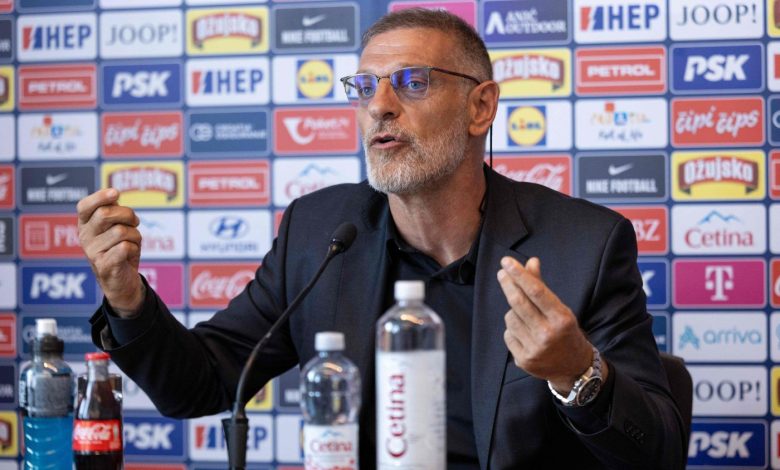
Croatia’s humiliating 7–0 defeat to England in Rijeka has left plenty for the Croatian camp to analyse, from defensive organisation to the team’s inability to respond once England gained control of the contest.
The match was expected to be a demanding Nations League encounter between two experienced international sides, but it quickly developed into a one-sided evening as England produced one of their most emphatic performances under Thomas Tuchel.
Harry Kane and Bukayo Saka both scored twice, while Jude Bellingham, Anthony Gordon and substitute Morgan Rogers also found the net as England overwhelmed Croatia from start to finish.
The result was confirmed by multiple reports, with Reuters describing England’s victory as a 7–0 rout and highlighting Bellingham’s three assists alongside his goal.
“I’m declaring myself a huge enemy of England” — captures the frustration that can emerge when an opponent’s supporters, atmosphere and performance combine to make an already difficult night even harder.
However, the biggest issue for Croatia was not the chanting itself.
It was what happened on the pitch.
England were able to establish control and repeatedly expose spaces in Croatia’s defensive structure.
Once the visitors found their rhythm, Croatia struggled to slow the game down or regain control of midfield.
Bellingham was particularly influential, contributing a goal and three assists, while Kane and Saka provided the finishing quality that turned England’s dominance into a huge scoreline.
For Croatia, the challenge became psychological as much as tactical.
Every England attack appeared to create another problem.
Every missed opportunity to clear the ball or regain possession allowed England to build further pressure.
And as the goals arrived, the atmosphere around the Croatian side inevitably became more difficult.
This is where the discussion surrounding the chants becomes interesting.
Football supporters understand that songs and chants can influence the emotional atmosphere of a match.
They can create confidence for one team and increase frustration for the other.
But experienced international players are normally expected to remain focused on the football itself, particularly when playing at this level.
If the reported Croatian reaction was genuinely influenced by England’s chanting, it would nevertheless be difficult to explain such a heavy defeat through atmosphere alone.
England’s superiority was visible in the statistics and, more importantly, in the football.
The Three Lions pressed aggressively, moved the ball quickly and repeatedly attacked Croatia’s defensive weaknesses.
The result was not simply a narrow victory that was affected by an unfortunate moment or controversial decision.
It was a comprehensive performance.
England led 4–0 at half-time before continuing their dominance after the interval, eventually matching the biggest winning margin in Nations League history.
For Croatia, that should make the post-match review uncomfortable but necessary.
Blaming the atmosphere would risk overlooking the tactical problems that allowed England to create so many opportunities.
The Croatian midfield struggled to protect the defence, while England’s movement made it increasingly difficult for defenders to maintain their shape.
The pressure eventually became relentless.
Even a side with Croatia’s experience can find it difficult to recover once an opponent gains that level of momentum.
England also deserve credit for refusing to ease off.
Tuchel had spoken before the game about maintaining focus and managing the physical demands placed on his players, and his side delivered an energetic performance from the beginning.
The performance was particularly significant because Croatia had already suffered a 4–1 defeat against Spain earlier in the international window.
Two heavy defeats in a short period inevitably raise questions about defensive organisation, squad balance and the team’s ability to compete against the strongest opponents in the group.
For England, meanwhile, the victory provides another indication of the attacking options available to Tuchel.
Kane’s two goals took his international tally to 89, while Saka also demonstrated why he remains such an important part of England’s attacking structure.
Bellingham’s performance may have been even more influential.
His ability to contribute goals while also creating opportunities for teammates gave England another dimension that Croatia struggled to contain.
The biggest lesson from the match, therefore, should probably be about concentration.
A team cannot allow frustration, crowd noise or an opponent’s momentum to dictate its performance.
Once England started moving the ball with confidence, Croatia needed to find a way to interrupt that rhythm.
Instead, the game moved further and further away from them.
That is why the reported anger over England’s chants, while understandable as an emotional reaction, should not become the central explanation for the defeat.
The scoreboard tells a much larger story.
England were clinical, aggressive and organised, while Croatia were unable to respond effectively to the intensity of the contest.
For Croatian supporters, the 7–0 result will be remembered as a painful night.
For the coaching staff, however, it should become a detailed lesson in how quickly a competitive international match can disappear when defensive organisation breaks down.
England’s travelling supporters, meanwhile, witnessed one of the most memorable victories of the Tuchel era.
The chants may have added another layer to the atmosphere, but the decisive factor was what happened on the pitch.
England scored seven goals.
Croatia could not find one.
And after such a result, the Croatian camp will have considerably more to discuss than the noise coming from the stands.